Mohammad ElBaradei, former International Atomic Energy Agency (IAEA) chief, used to say using the so-called “carrot and stick approach” on Iran – simultaneous use of sanctions and incentives to induce cooperation – is doomed to fail, because “Iran isn’t a donkey”. Others would go further and say that Iran is a proud civilization, and an ambitious regional power, which will not give up an iota of its nuclear ambitions, no matter how painful the price.
Exactly Which “Terror Plots” Are Relevant to the Bulgarian Bombing?
Cypriot investigators believe the Lebanese they suspected of planning to harm Israeli tourists was acting alone, not working for Hezbollah.
Military Intervention in Syria: No
Whatever our humanitarian concerns might be, real decisions about direct military intervention will be made with little regard for Syrian civilians, Syrian civil society, or Syria’s national survival – all of which will suffer consequences that could last a generation or more. A U.S./NATO air war against Syria would likely not end like Libya’s – with no western casualties and a quick exit. Given Syria’s military, especially air capacity, it will look far more like Iraq than Libya.
African Migrants and the Israeli Apartheid Debate
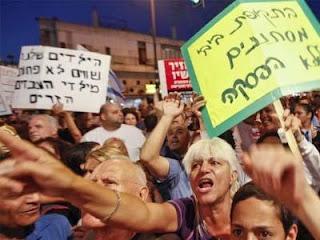
The name of the neighborhood could not have been more symbolic. Located in southern Tel Aviv, the impoverished Hatikva quarter has always born the stigma of sharing a name with Israel’s national anthem, while playing home to some of the poorest, most marginalized Jews in the country—as well as a growing population of African asylum seekers, mostly from Eritrea and South Sudan.
As Drones Grow More Precise, Their Targets Become Increasingly Vague
The CIA seems to think the accuracy of drones is an excuse to worry less about who’s targeted.
Divesting from All Occupations
The Palestinian solidarity struggle would be considerably strengthened if, instead of calling for divestment specifically from companies supporting the Israeli occupation, the call was for divestment from companies supporting all foreign belligerent occupations.
Tunisia’s Culture War: Salafists Run Amok
The strategies and acts of Salafists in Tunisia parallel those in Egypt, Yemen, Libya, and Syria.
Review: Bahrain, Shouting in the Dark
During the democratic uprisings that began in the Arab world in 2011, the entire world has focused on Tunisia, Egypt, Yemen, and now Syria. On February 16, Bahrainis participated in what the Qatar-based television station Al Jazeera has called a “secret revolution,” one that was “abandoned by Arabs, forsaken by West and forgotten by the world.” With no international reporters in Bahrain to capture the uprising, Al Jazeera documented, in trembling closeness, the courage demonstrated by the Bahraini protesters, and then the horrors and bloodshed that ensued once the ruler’s forces commenced their attack.
Review: China and the Persian Gulf
China’s rise, according to many analysts, has been the world’s most significant geopolitical and economic development of the 21st century. Central to China’s rise has been the energy it needs to fuel economic growth. Importing over 42 percent of its crude oil from the Persian Gulf, Beijing views the region as vital for this economic development. China growing influence in the world’s most oil-rich region is the subject of Bryce Wakefield and Susan L. Levenstein’s China and the Persian Gulf: Implications for the United States.
AQ in Iraq Has a Funny (Ha, Ha) Way of Observing Ramadan
Al Qaeda in Iraq mounted its deadliest attacks of the year.