The White House neither confirms nor denies the air war in Yemen.
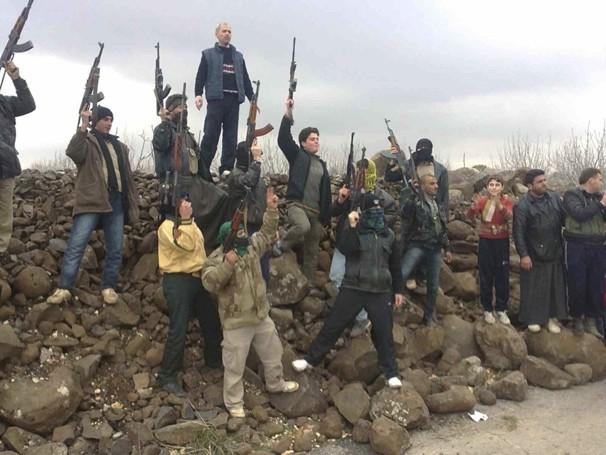
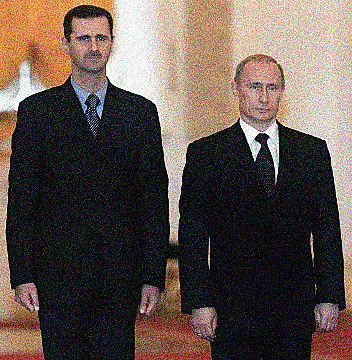
In the chorus of condemnation that resounded after the massacre, Russia’s voice stood out for its glaring ambiguity.
The recently concluded negotiations between Iran and the world powers, the so-called P5+1, was perhaps the first serious attempt at resolving the Iranian nuclear impasse since the 2009 botched negotiations. Both sides entered the talks with a strong sense of cautious optimism, thinking maybe this time would be different. Even former top American diplomats joined the euphoric run up to the Baghdad talks. According to the former lead U.S. negotiator on Iran, Nicholas Burns, “for the first time in 32 years, since the Iranian revolution, there is the possibility of serious, substantive and sustained talks with Iran.”
Iran may or may not have the ability to mount cyberattacks of its own.
A political solution cannot occur without a military one, but a military solution alone does not guarantee stability or security, even in the short term.
The essays in The Journey to Tahrir: Revolution, Protest and Social Change in Egypt, 1999-2011 validate Hannah Arendt’s famous quote that “revolutionaries do not make revolutions. The revolutionaries are those who know when power is lying in the street and then they can pick it up.” Journey to Tahrir, edited by Jeannie Sowers, rejects the mainstream media’s often monolithic and melodramatic portrait of a random pro-democracy uprising in Egypt. Instead the contributors meticulously dissect the numerous components that coalesced in November 2011 in a mass social upheaval that brought down the Mubarak regime.
This May, for the first time in their history, Egyptians voted for president in a largely free and fair election. For the second time in less than a year, a new democratic regime is emerging from the outgrowth of the Arab Awakening.
Thanks to fuzzy accounting, civilians killed in drone strikes are liable to be categorized as militants posthumously.
Earlier this month, the House of Representatives passed a dangerous piece of legislation (H.R. 4133) which would undermine the Israeli-Palestinian peace process, weaken Israeli moderates and peace advocates, undercut international law, further militarize the Middle East, and make Israel ever more dependent on the United States.
Still, the situation on the ground has not changed much in the past week, with continuing mass arrests of demonstrators.