As Japan’s nuclear crisis deepened, Gaddafi revealed that he would cancel oil contracts with Europe and sign up instead the BRIC countries.

Is There a Cause and Effect Between Fukushima and Attacking Libya?
read more

As Japan’s nuclear crisis deepened, Gaddafi revealed that he would cancel oil contracts with Europe and sign up instead the BRIC countries.
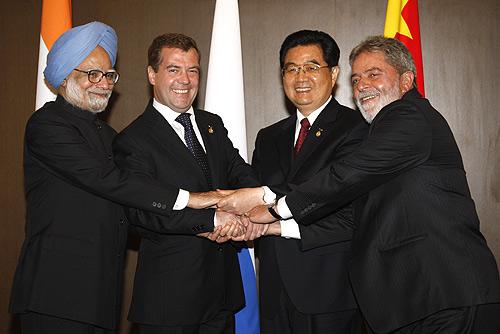
Following the vote at the UN Security Council, the United Kingdom, France, and the United States have embarked on military action against Gaddafi’s forces in Libya. They have been careful to include a few Arab states in this new coalition of the willing. But these three countries are the driving force behind the imposition of a no-fly zone and the attacks on the government’s military positions and forces. Yet among the permanent and non-permanent member of the Council who were asked to authorize “all necessary measures” to protect civilians rebelling against the regime, the BRIC powers of Brazil, Russia, India, and China were conspicuously absent.
However different the two, Libya could still end up like Iraq today: a nation deeply divided not by sect and language but by geography and tribe.
Unless the world is prepared to stand by and watch Libyans massacred, there is clearly a need for intervention.
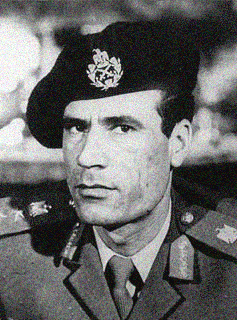
Unlike the despots in Egypt and Tunisia, Libyan leader Muammar Gaddafi is resisting the popular revolutions sweeping the Arab world. As of this writing, the pro-democracy rebels successfully control Benghazi, Libya’s second largest city, and most of the eastern part of the country. Gaddafi still controls most of the military, revolutionary committees, and foreign mercenaries. More importantly, Gaddafi controls the capital city of Tripoli with a population of 2.5 million out of a total population of 6.5 million. Gaddafi is attacking the rebels, taking back Zawiya, Ras Lanof, and pushing forward east to take more rebel areas.
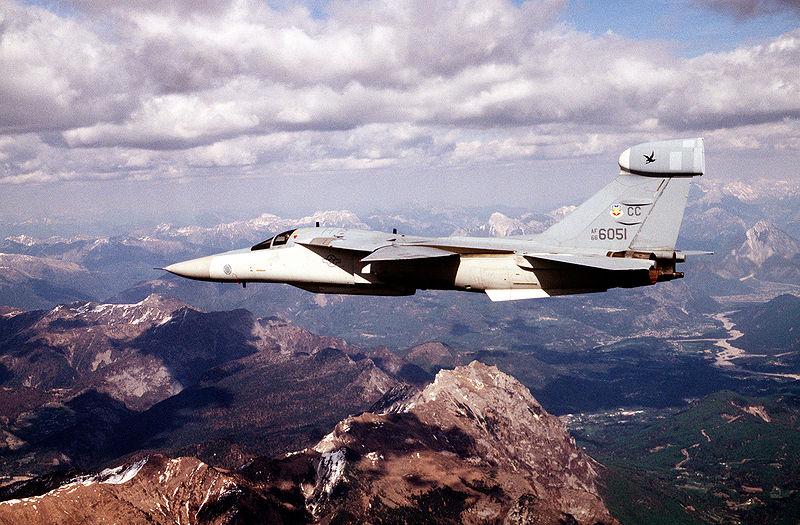
With Libyan government forces advancing towards the rebel capital of Benghazi, the time for possible military intervention by the U.S. and its NATO or other allies appears to be running short.
Just how American bullets make their way into Bahraini guns, into weapons used by troops suppressing pro-democracy protesters, opens a wider window into the shadowy relationships between the Pentagon and a number of autocratic states in the Arab world.

The revolutionary democrats of the Arab world have an opportunity to bring about the next stage in the global democratic revolution. Will they accept the challenge, or will they withdraw back to private life, as some have indicated, leaving older generations of politicians to come to center-stage with their tired, archaic western models of representative democracy?

Why mess with success? We lied our way into war with Iraq — why not Iran, to?
The Western world finally sees real Muslims in action.