The breast-feeding fatwa may have made a laughingstock of the sheik who issued it. But it’s indicative of the strange ways in which the minds of male theologians of all religions work.
Friday Fun: Imams Gone Wild
read more

The breast-feeding fatwa may have made a laughingstock of the sheik who issued it. But it’s indicative of the strange ways in which the minds of male theologians of all religions work.

On the heels of the firing of Gen. McChrystal, the $3 billion in cash openly flown out of Kabul International Airport in the past three years provides further impetus for the drawdown of our troops from Afghanistan.

Israel risks painting itself into a corner with its talk of preemptive strikes against Iran. Meanwhile, Iran once again finds itself the odd man out in the shopworn Israel-Iran-Arab triangulation game.
Iran’s nuclear program has become the focal point of international discussions about the region’s future, and the United States and its allies have made the resolution of the nuclear standoff a precondition for future discussions of Iran’s broader interests. Therefore, despite President Obama’s emphasis on diplomacy, U.S. relations with Iran remain strained. It would be in the best interest of both countries to put aside their history of conflict and often baseless mutual suspicion in favor of a more forward-looking approach.

Learning what actually transpired in the Gaza Flotilla attack was apparently of little interest to the 87 senators who signed the letter defending the attack. Despite the apparent whitewash forthcoming in the internal Israeli investigation, the senate letter supported Israel’s alleged intention to carry out “a thorough investigation of the incident.”
Things are heating up for Iran. The international community, responding to doubts over the intentions of the Iranian nuclear program, has passed three sanctions packages over the past three weeks.
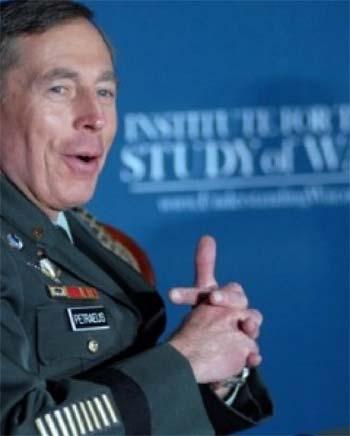
In recent years, there has been a growing tendency for think tanks and military brass to jointly pursue policy objectives, some of which are opposed by the public or the White House—take, for example, the campaigns to build support for the troop “surges” in both Iraq and Afghanistan. This trend, say critics, raises important questions about the appropriate role of the military in promoting particular policies and whether there is enough transparency and accountability in the work of policy groups. And, just as importantly, will there be a new joint campaign aimed at pressuring the Obama administration to delay troop withdrawal from Afghanistan?

Few decisions of the Obama administration have outraged the peace and human rights community as much as its successful efforts to block an international inquiry into May’s Israeli aid flotilla attack. Instead, supported by leading Republican and Democratic members of Congress, the Obama administration has thrown its weight behind an investigative committee handpicked by right-wing Israeli Prime Minister Benyamin Netanyahu to examine the incident.
Surely, generals play an important role in winning and losing wars. But it is misleading to imagine that they determine the outcome of a conflict whose causes stem from the underlying political and social system.
Obama has stated that, despite firing Gen. McChrystal, our Afghanistan strategy will remain the same. The appointment of Gen. Petraeus to succeed him suggest otherwise — for better or worse.