Middle East & North Africa

Learning from the Soviets in Afghanistan

This year marks the 20th anniversary of the Geneva accords that facilitated the Soviet withdrawal from Afghanistan. On April 14, 1988, in Geneva, representatives of the governments of Pakistan and Afghanistan signed three bilateral agreements intended to end the war in Afghanistan. These agreements addressed the principles of mutual relations, in particular non-interference and non-intervention as well as the voluntary return of Afghan refugees.

read more

AFRI(OIL)COM

The number of Americans who believe that the war in Iraq was a mistake has surpassed the number who felt the same way about Vietnam during that war. At the same time, a much quieter U.S. military build-up is underway on another continent. The ultimate objective of the two efforts is the same: securing Big Oil’s access to the regions’ oil. The impact in Africa will likely be the same as in Iraq: perpetual occupation, instability, and growing anti-Americanism.

read more

Obama’s Right Turn?

In many respects, presumptive Democratic presidential nominee Barack Obama has played right into the hands of cynics who have long doubted his promises to create a new and more progressive role for the United States in the world. The very morning after the last primaries, in which he finally received a sufficient number of pledged delegates to secure the Democratic presidential nomination and no longer needed to win over voters from the progressive base of his own party, Obama – in a Clinton-style effort at triangulation – gave a major policy speech before the national convention of the America-Israel Public Affairs Committee (AIPAC). Embracing policies which largely backed those of the more hawkish voices concerned with Middle Eastern affairs, he received a standing ovation for his efforts.

read more

Lebanon Intrusion

On the eve of the 50th anniversary of the first U.S. military intervention in Lebanon, and 25 years after a second U.S. military intervention which left hundreds of Americans and thousands of Lebanese dead, the U.S. House of Representatives recently passed a resolution by a huge bipartisan majority which may lay the groundwork for a third one. At a minimum, this move has crudely and unnecessarily inserted the United States into Lebanon’s complex political infighting.

read more

McClellan Right: Press Too Deferential

When Bush’s former press secretary admits that the administration used a “political propaganda campaign” to sell its case for war and calls the mainstream media “deferential, complicit enablers” – as Scott McClellan does in What Happened – it’s time to examine just how badly the press failed.

read more
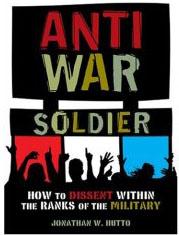
An Interview with Jonathan Hutto

An Interview with Jonathan Hutto

After five years of war and little end in sight, much of the anti-war movement has acquired a case of “war fatigue.” Over the last two years, some of the most energized movements opposing the war have not been those made up of civilians but those who have served on the front lines.

read more

When Sanctions Are Not Sanctions

As the American-Israel Public Affairs Committee (AIPAC) goes around meeting with Members of Congress this week, they will be arguing for stronger sanctions against Iran. Their latest focus will be “sanctions” on refined petroleum products to Iran.

read more

A Moral Burden on U.S. Soldiers

A fighter pilot would never cut the throat of an innocent woman or child. However, the same pilot drops bombs into enemy territory to kill enemy personnel, knowing he may also kill innocent civilians. The luxury of a large distance between the bullet or a bomb used to kill suspected enemies in Iraq is a luxury many of our soldiers do not have.

read more

Does Protest Embolden the Iraqi Insurgency?

Recently, as I braved the cold and wet weather demonstrating for an end to the occupation of Iraq, I was vociferously assailed by a rather annoyed passer-by who proclaimed his patriotism by accusing me of “emboldening” the enemy. He explained that “my kind” refuse to understand what is apparent to all true patriots. That is, by protesting against the war, I was giving hope and encouragement (aid and comfort) to the insurgents thereby prolonging the conflict, threatening America’s ability to achieve victory, demoralizing the troops, and, perhaps, most tragic, increasing the number of casualties on both sides.

read more