Middle East & North Africa

Rep. Kucinich: Stop Funding the War

Dennis Kucinich is a Democratic congressman from Ohio. He was one of only 14 Democrats to oppose the current Iraq supplemental bill, which sets a deadline for a withdrawal of U.S. troops from Iraq. The bill, the Iraq Accountability Act, did not, however, cut funding for the war. Here he speaks with Michael Shank about the reasons for his vote, his fears of an attack on Iran, his concerns about the future of the Democratic Party, and his faith that new American leadership will craft a different partnership with the world community.

read more

Unbalanced Security: The Divide between State and Defense

On February 7, 2007 Secretary of State Condoleeza Rice informed the House Foreign Relations Committee that she had requested 129 military employees to fill State Department positions in support of the President’s new Iraq plan. Officials at the Pentagon, including Secretary of Defense Robert Gates, bristled at the request—insisting that they had personnel shortages of their own. This vignette may appear to be just another incident of bureaucratic turf battles, yet it has dramatic and far-reaching implications, both for national security and for the U.S. Government. Beneath this tussle lies a first order national security policy dilemma: What should our government’s division of labor be for the post Cold War security environment? And, how should manpower and funding resources be distributed to prepare for this environment?

read more

Left-Right Alliance Against War?

Americans opposed to war are a distinct minority. If the Iraq War were going well, most Americans would support it. Yet the Iraq venture has been such a disaster for America that peace groups have a chance to expose the pro-war interests in the nation and advance an alternative foreign policy based on law and international cooperation. Incredible war costs, a growing police state at home, loss of allies, and tremendous anti-Americanism abroad have given most Americans pause about our foreign policies.

read more

No Thanks

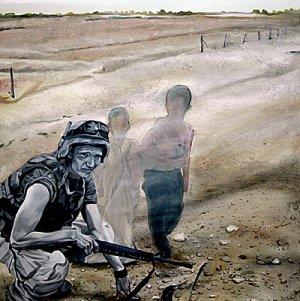
The U.S. public wants out of Iraq. The Iraqis themselves want the occupation to be over. What’s a poor U.S. soldier to do?

read more

Regional Implications of the Iraq War

President George W. Bush’s vision for the Iraq War was nothing if not expansive. Liberal democracy and popular sovereignty were to supplant tyranny not only in Baghdad, but in nearby capitals as well. And the force of U.S. arms would not be needed to accomplish the latter missions. As Bush asserted to eager applause at the American Enterprise Institute on February 25, 2003, “a new regime in Iraq would serve as a dramatic and inspiring example of freedom for other nations in the region.” Democracy, the war party believed, would be contagious.

read more

Another Casualty: Coverage of the Iraq War

Iraq is the most dangerous place in the world for journalists. Along with names and dates, the Brussels Tribunal has listed the circumstances under which Iraqi media personnel have been killed since the U.S.-led invasion of Iraq in March 2003. This extremely credible report cites 195 as dead. If non-Iraqi media representatives are included, the figure goes beyond 200. Both figures are well in excess of the media fatalities suffered in Vietnam or during World War II.

read more

An Open Letter to My Fellow Veterans

As we enter our fifth year of occupation, and as Iraq continues to degenerate into sectarian violence and civil war, I think it important that we talk, vet to vet. Real talk, talk from the heart, as we did back in Iraq, in the Nam, in Korea, on the battlefields of Europe and the Pacific. Let us put aside, for a moment, all the bunk we have been fed over the years by those who were not there. You know who I mean. The politicians and war strategists who cavalierly make war, decide tactics, and send us off to fight, bleed, and die for a cause that is uncertain or non-existent. Self-proclaimed "patriots" who, while remaining safe at home, try to convince us that the threat to our way of life – – to America and to freedom – – is real and grave and that the disruption of our lives and the sacrifices we make, and that our brothers and sisters make, are necessary and glorious.

read more

Iraq and the Transatlantic Alliance

The Iraq War tore at the already frayed fabric of transatlantic security relations. Although European countries declared their solidarity with the United States after September 11, they were increasingly uncomfortable with Washington’s emphasis on unilateralist approaches to global problems. After President Bush took office in 2001, his administration upset many European leaders by refusing to sign the Kyoto Protocol on global warming, opposing the International Criminal Court, and killing the Anti-Ballistic Missile Treaty. In October 2001, Washington was reluctant at first to use the North Atlantic Treaty Organization (NATO) in the campaign to oust the Taliban in Afghanistan. While taken aback by U.S. reluctance, NATO leaders and Europeans generally approved of the U.S.-led operation.

read more

The War Not Worth the Cost

Congress will soon consider another $100 billion for this year in additional war spending requested by the Bush administration. If it acquiesces, the total tab for the Iraq War will hit nearly half a trillion dollars.

read more