Return to Haifa, an Israeli’s adaptation of a Palestinian’s novella, is playing in Washington.

Israel’s Premier Theatre Company Presents Explosive Palestinian Drama
read more

Return to Haifa, an Israeli’s adaptation of a Palestinian’s novella, is playing in Washington.

“Gaza Youth Breaks Out” set an example by pointing a finger at oppression across the political spectrum.
If Israel or Washington attack Iran, peace with the Palestinians will be the least of Middle-East concerns.

The most recent East Jerusalem protest ensued on October 25th after the Israeli police gave 231demolition orders to Palestinian families all across East Jerusalem, including Silwan, an Arab neighborhood in close proximity to the Old City. According to Human Rights Watch, Israeli demolitions of Palestinian homes peaked this year, reaching 141 in July. This is the largest number of demolitions per month since 2005. Meanwhile, the Israeli government subsidizes Jewish settlements all over the occupied territories and in East Jerusalem as well.
Though Israel places most its inexcusable violent measures under the banner of “security,” this particular form of destruction is purely discriminatory and does not fall into the category of Israeli defense. If Israel intends to continue the peace process, it must stop demolishing Palestinian homes and building Jewish settlements in East Jerusalem.

Published less than two months after Israeli commandos boarded an international aid flotilla bound for Gaza and killed nine activists, Midnight on the Mavi Marmara is, in the words of editor Moustafa Bayoumi, “the first book about the attack,” but “will likely not be the last.” This collection of some four dozen essays from eyewitnesses and “activists, novelists, academics, analysts, journalists, and poets,” serves many purposes. Some essays are expressions of simple outrage. Others probe more deeply into Israel’s broader political strategy in the region and its human costs for Palestinians in the Occupied Territories. Author and Harvard scholar Sarah Roy’s essay offers a detailed and rigorous accounting of Gaza’s humanitarian and economic woes, while well-known academic and blogger Juan Cole’s excellent contribution emphasizes the deeper problem of Palestinian statelessness, the political fact of which the Gaza blockade and even the Israeli occupation itself are merely symptomatic.
Widespread reports that members of IDF abuse Palestinian youths makes you wonder just what childrearing practices they’re a product of.
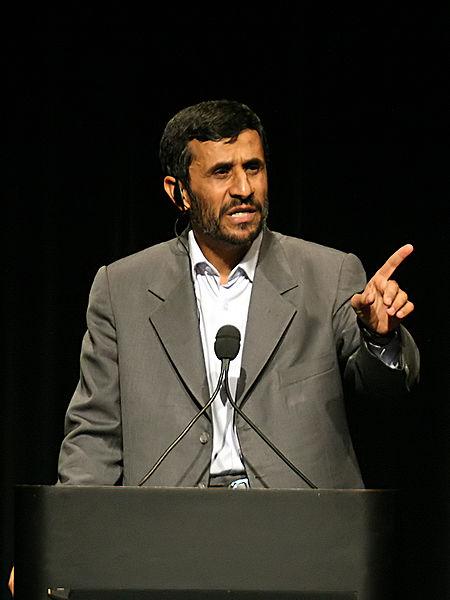
A chorus of pundits has lately been arguing that an Israeli attack against Iran’s nuclear facilities is either inevitable or commendable. Recently, Jeffery Goldberg predicts in The Atlantic that Israeli will strike by next July. Reuel Marc Gerecht, an editor for the Weekly Standard, urges that regional stability calls for Israel wasting no more time in launching a pre-emptive hit. These arguments predictably come from the neoconservative crowd who urged the United States to topple Saddam Hussein as an avenue toward reaching regime change in Iran.
Something resembling genocide is gaining currency among elements of the Israeli government and public.
In Congress, Democratic leaders find common ground with their Republican counterparts in their effort to defend the Israeli assault on unarmed humanitarian aid flotillas. In a sharp contrast with the broad international consensus, a number of democratic representatives and senators proclaimed that the murder of nine activists, which took place in international waters, were inevitable and justified as Israel’s “right to self-defense.”
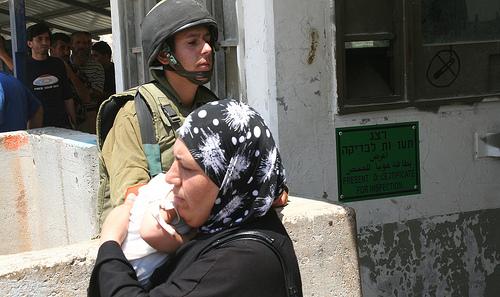
The recent Israeli raid on the flotilla bringing aid to Gaza — which resulted in the deaths of nine civilians, more injuries, and near-global condemnation for Israel’s actions — has brought a lot of attention to Gaza in the past few weeks. Unfortunately, much of the discourse has centered on the specific incident itself (such as who fired first and whether Israeli troops were right to protect themselves), and not about the politics and conditions in Gaza overall.