Instead of a torpedo, was the Cheonan sinking the result of grounding, a collision, or friendly fire?
Reader Challenge: Do Alternate Cheonan Narratives Ring True?
read more

Instead of a torpedo, was the Cheonan sinking the result of grounding, a collision, or friendly fire?
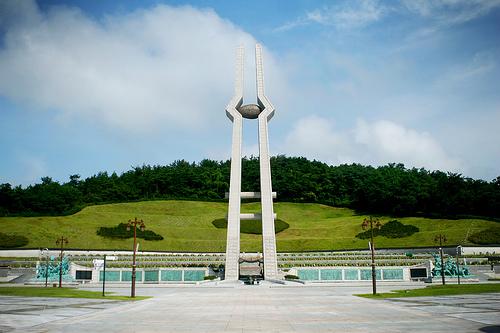
Last week marked the 30th anniversary of the Kwangju Citizens’ Uprising in South Korea, a pivotal event that inspired the Korean democratic movement through its ultimate victory in the late 1980s. In Kwangju, where hundreds died in the uprising, the event was marked by solemn remembrances and the presence of political leaders from both left and right, including representatives of President Lee Myung-bak, South Korea’s most conservative leader in over a decade. But the event drew hardly a passing glance in the United States, which is South Korea’s closest ally.

It was probably North Korea behind the sinking of the South Korean ship. But we still need to respond with a hand and not a fist.
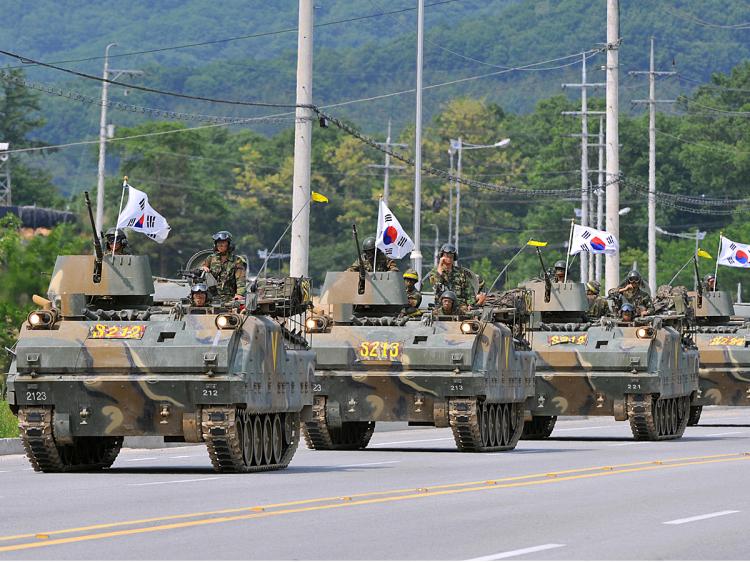
The Republic of Korea has rapidly increased its defense budget in recent years. Last year’s spending of 26.6 trillion won represents a twofold increase from ten years ago. Now the Ministry of National Defense projects an annual average increase of 7.6 percent to 53.3 trillion won by 2020, another doubling over the next decade. South Korea, notably, raised its defense spending at a higher rate than North Korea at a time when Seoul was taking a more conciliatory policy of engagement. While the Roh Moo-hyun administration increased defense spending ostensibly in response to its policy goal to build a more autonomous military, the U.S.-Korea alliance motivated and shaped South Korea’s military transformation. This article examines the degree to which external threats, domestic interests, and the alliance have affected the South’s military spending and transformation.
Social workers are fond of saying that they must start where their clients are. This basic principle of social work is not theoretical. It comes from decades of practice. Simply telling people what they should do rarely translates into their actually doing “the right thing.” So instead, social workers have turned the tables by beginning not with the desired endpoint, as determined by the social work profession, but with the client’s articulated fears and concerns.
In the blockbuster 2000 film JSA, two South Korean soldiers accidentally find themselves on the North Korean side of the Joint Security Area, at the border between the two countries. They meet their North Korean counterparts. But instead of fighting, the four soldiers become friends and arrange several midnight get-togethers. At the height of their secret fraternization, one of the South Korean soldiers brings over several Choco Pies, cookies with marshmallow covered in chocolate that are wildly popular in South Korea.
Since the formation of South Africa’s Truth and Reconciliation Commission (TRC) to come to terms with the legacy of apartheid and colonialism, Commissions have sprung up in many countries that have sought to come to terms with painful legacies of colonialism, war, and internal strife. Nations with international and domestic traumas as diverse as Chile and Argentina, East Timor, and Sierra Leone have established TRCs.

North Korea fired hundreds of artillery shells into waters near the disputed western sea border with the South last week, and the South Korean military returned warning shots, heightening the already high tension on the peninsula. The rising tension came amidst recent signals from Pyongyang that it wanted to negotiate a peace treaty to formally end the Korean War. If peace negotiations began, Pyongyang could return to the Six Party Talks on ending its nuclear programs.
(Editor’s Note: This article will also appear in The Asia-Pacific Journal.)
Editor’s Note: This essay is a condensed version of a paper originally commissioned by the Korea Economic Institute (KEI) for its Academic Paper Series.
South Korea is currently engaged in a large-scale, expensive modernization of its military that aims to provide the country with a more robust and self-sufficient defense. The timing of this considerable increase in military spending might seem, at first glance, rather odd. Korean economic growth has been relatively anemic in the past few years. Meanwhile, the conventional military power of its chief adversary, North Korea, has steadily declined and, until recently, South Korean leaders were committed to expanding inter-Korean cooperation. In another irony, the current Lee Myung-bak administration has simultaneously pushed a much harder line on North Korea and reduced the level of spending projected by the previous Roh Moo-hyun government.