
Around the world, millions of women rely on the drug mifepristone for abortion care. That’s put access to the drug in the crosshairs of anti-abortion activists both in the United States and in other countries. Yet as false claims about reproductive health care spread, other countries are offering a compelling alternative to fact checking: storytelling.
The U.S. Supreme Court recently decided not to block access to the drug via telemedicine for now, while lower court cases play out. But those lower court decisions — and the broader policy debate around the medication — have echoed misinformation and false narratives spread by anti-abortion activists.
For example, the previous Fifth Circuit Court ruling cited “irreparable harm” to the state of Louisiana, noting that the state spent public funds on care for two women “harmed by mifepristone,” and repeated debunked claims that up to 4.6 percent of women taking it require “emergency care.”
Days later, the Iowa State Senate passed a bill banning remote prescription of mifepristone. In the floor debate Sen. Jason Schultz repeatedly called it “poison.” And in March, as U.S. Senators launched a probe to crack down on mifepristone manufacturers and online sales, Sen. Cindy Hyde-Smith claimed, “More than 1 in 10 women who take mifepristone will experience a serious adverse event.”
The problem is, these things aren’t true.
Mifepristone’s alleged harms are junk science and false narrative propagated by an antiabortion group. Over a hundred scientific studies overwhelmingly prove mifepristone’s safety and efficacy. When patients taking it visit the ER, it’s often for monitoring or to confirm they are no longer pregnant. Adverse effects are far below 1 percent. In fact it’s not mifepristone, but the campaign to restrict it putting patients at risk, a report by Congressional Democrats concluded.
Still, such false narratives are everywhere these days. In my fields — family planning, demography, gender-based violence — misinformation and disinformation flood the zone. Correcting the record can be an exhausting, Sisyphean task.
For example, claims that hormonal contraceptives cause health damage, from fertility loss to depression to heart trouble, are false. It’s actually the anti-birth control movement that harms women. That hasn’t stopped posts about hormonal birth control’s supposed harms from getting billions of hits on TikTok and other platforms.
Hormonal birth control is up to 99 percent effective at preventing pregnancy, while the “rhythm method” might be the choice of some couples but is among the least effective forms of birth control. That hasn’t stopped online influencers from touting it, or menstrual tracking apps like 28 (funded by billionaire Trump donor Peter Thiel) from marketing themselves as superior alternatives to hormonal birth control. Not incidentally, those apps glean data about users’ cycles that could potentially be weaponized against them if they seek an abortion.
How are health and rights advocates supposed to counteract false, gaslighting, toxic narratives like these? One way is to reframe them with truthful, forthright, nontoxic ones. When public discourse devolves into fictional storytelling, fictional storytelling can evolve into impactful forms of public discourse.
False narratives have harmful effects. Fact-based entertainment narratives can have beneficial ones.
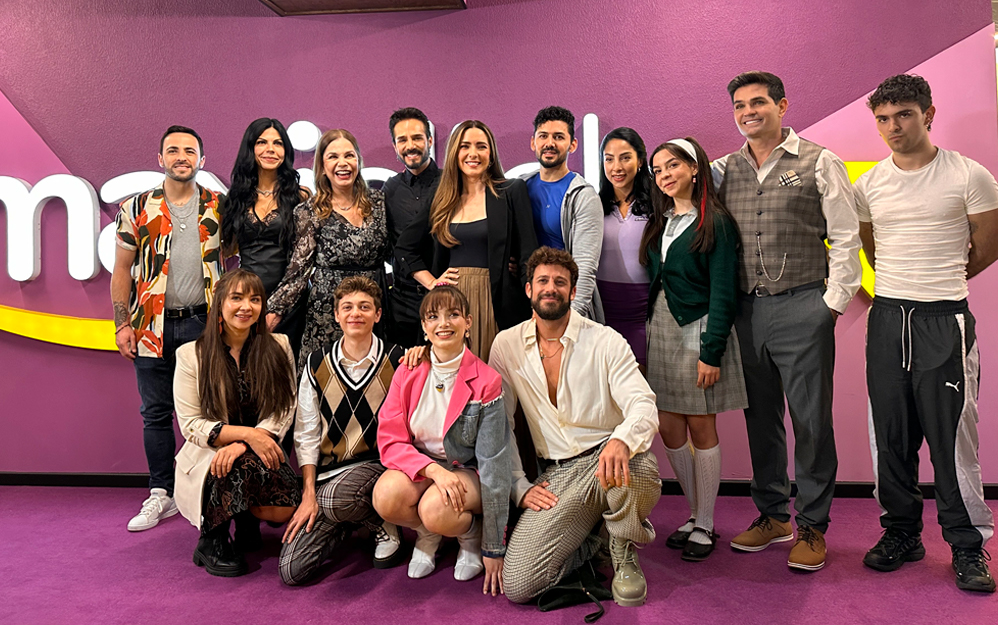
For example TelevisaUnivision’s hit telenovela “Papás Por Conveniencia” (“Family of Convenience”) worked with researchers and field experts to tell honest, compelling stories about teen pregnancy, sexually transmitted infections, and gender-based violence. It attracted millions of viewers in Mexico and the United States, demonstrably shifting attitudes toward contraceptive use and talking openly about prevention.
“Toma Mi Mano” (“Take My Hand”) started out as a radio drama on community stations, caught on with audiences in Guatemala, Mexico, and the United States, and recently became a TikTok series. Its characters grapple with teen pregnancy, sexual abuse, gender-based violence, and gang violence. Epilogues engage audiences in discussions of these issues, offering accurate information and resources to help deal with them.
Zambia has high rates of early marriage, teen pregnancy, gender-based violence, and HIV. When these issues were confronted honestly in a call-in radio talk show, a radio drama miniseries, and a comic book roadshow, contraceptive awareness grew and social norms began to shift.
Such stories don’t just entertain — they change lives and improve public health, and amid disruption in foreign aid, they do it cost-effectively. “Papás Por Conveniencia” reached 6 million people a night in Mexico City alone and had measurable impacts. The price tag for addressing social issues directly in the drama? A little over $10,000 per episode. Compare that to the $15 billion a year teen pregnancy costs governments in Latin America and the Caribbean.
Similar programming in the United States could make a world of difference when it comes to public attitudes about abortion care, birth control, mifepristone access, or related issues.
At a recent Social Impact Entertainment event my organization co-sponsored, Jane Fonda spoke about the primary importance of storytelling for positive change. “It’s the storytellers and educators…that are on the front lines,” she said. “Because we get into people’s heads and hearts. We change how people think.”
Storytelling, not reactive rebuttal, is where the true power of communication lies. Misinformation has grown so rampant that it’s no longer enough, and maybe no longer possible, to correct the record point-by-point. To be effective advocates, it’s now imperative to shift the narrative itself.