Could Japan and China — the number two and three largest economies in the world — really get into a punch-out over five tiny islands covering less than four square miles?

Japan v. China: Smoke or Fire?
read more

Could Japan and China — the number two and three largest economies in the world — really get into a punch-out over five tiny islands covering less than four square miles?

Actress Sandra Oh has taken on a new starring role: North Korean adoption activist. In a new ad, Oh pulls heartstrings for the rescue of North Korean children who have escaped and who “are living alone and without family in foreign lands” like China. “They need us,” she says against a backdrop of fleeting images of emaciated children. But who are these children?

The Obama administration’s “Pacific pivot” gives a prominent place for India, which came as a surprise to many observers. In his maiden visit to India in the first week of May, U.S. Secretary of Defense Leon Panetta piled on, calling defense cooperation with India “a linchpin in U.S. strategy” in Asia. But while India has largely opened its arms, Indian leaders are wary about being drawn into a Cold War with China.

A year ago, Secretary of State Hillary Clinton signaled a major transformation in U.S. foreign policy in an article titled “America’s Pacific Century,” which announced the U.S. “pivot” toward Asia, the Pacific, and the strategically important Indian Ocean. The expansion comes at a price for the region’s people.

The Bangkok meeting of the United Nations Framework Convention on Climate Change (UNFCCC) ended this week, with no progress among countries to commit to increasing the level of emission reductions for this decade. Why are the climate talks stalemated and what should be done to break the deadlock?
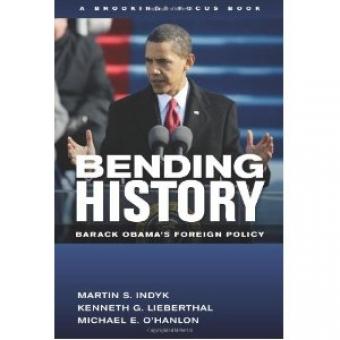
As a presidential candidate, Barack Obama wanted—at least rhetorically—to bend the arc of history towards justice, freedom, progress, and prosperity. A new book examines whether his foreign policy has born that vision out.

What has been largely been reported as a civil war in Syria is, in fact, no such thing. In reality, Syria is a geopolitical battleground for rival foreign powers – with the United States, United Kingdom, France, Germany, the Gulf regimes, and Israel on one side and Russia, China, and Iran on the other.

Worried critics decry the similarities between the corruption-laden late 19th-century American Gilded Age and the crony capitalism of today, but similar historical lessons surrounding the problems of global trade and foreign policy have gone neglected.

Syrian rebels have been fighting Bashar al-Assad’s forces for nearly a year and a half in a conflict that has caused 20,000 deaths. As the world watches in horror, much confusion remains about the nature of the rebel troops, the identity of the regime’s supporters, and what actions — if any — should be taken by the rest of the world.

China’s rise, according to many analysts, has been the world’s most significant geopolitical and economic development of the 21st century. Central to China’s rise has been the energy it needs to fuel economic growth. Importing over 42 percent of its crude oil from the Persian Gulf, Beijing views the region as vital for this economic development. China growing influence in the world’s most oil-rich region is the subject of Bryce Wakefield and Susan L. Levenstein’s China and the Persian Gulf: Implications for the United States.