The U.S. cannot confront climate change, growing economic inequality, and the deterioration of our infrastructure and education system without reducing the $1 trillion it spends annually on defense.
Each year Conn Hallinan looks aghast at news stories and newsmakers that beggar belief.
Although allies continue to hope for more, Germany’s new foreign policy plans spell out more of the same – including a return to normalcy in the relationship with the United States.
Not Enough Stock Dividends From a Peace Dividend In 2001, military spending, as a function of the over-all American economy, was, at six per cent, the lowest it had been since the Second World War. … In much the same way that the peace dividend expected with the...
To get out of the echo chamber, we need to present a vision of a democratic foreign and security policy that would tie our many campaigns together into a coherent whole, from the local to the global. Such a platform would provide hope to the many who sense that something is wrong with corporate capitalism, with U.S. foreign policy, and with the military-industrial complex. It would set the basis for a principled alliance between the peace movement and the labor, immigrant rights, women’s, economic, social, and racial justice movements that are its natural allies.
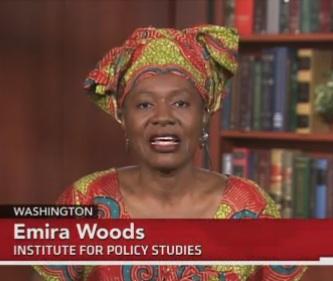
“There cannot be a military solution to this crisis in Mali,” said Emira Woods, co-director of Foreign Policy in Focus at IPS. “The crisis has its roots in political and also economic processes.”
Anyone expecting Obama to be decidedly more pro-peace this time around is likely to be sorely dispirited. However, there is a diverse, growing peoples’ movement in the United States linking human and environmental needs with a demand to end our wars and liberate the vast resources they consume.
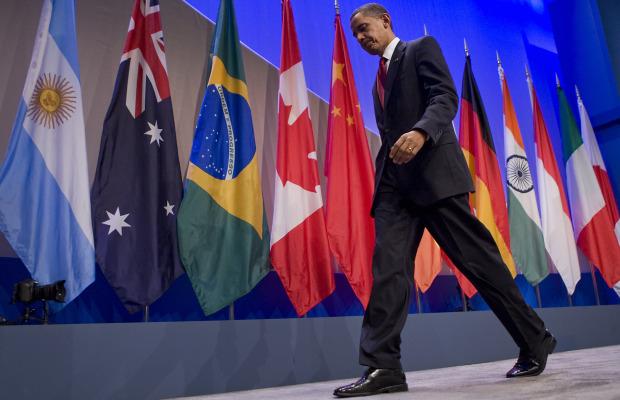
The United States, under Obama, is finally coming to terms with the fact that the world is multipolar. The notion that one man – or one country – can change this multipolar world is fast becoming antiquated. Accustoming Americans to this power shift may ultimately be Obama’s chief legacy.
The big question for foreign policy is whether Legacy Obama will be a bolder advocate for peace than the disappointing Campaign Obama. The president will need to recast a foreign policy that has been weak or downright contradictory in standing up for the principles he himself has espoused.
As many pundits have noted, if the rest of the world were voting in the U.S. presidential election, the third presidential debate would probably have proceeded differently. But since only about 200 million people on earth are eligible to vote for the man whose policies will impact all of us, the final stretch of the campaign has turned into a bipartisan exercise in imperial chest-thumping.