The United States has tacit, if not official, congressional approval for its war on the Islamic State.

U.S. Military Campaign Against the Islamic State: If It Looks Like a War
read more

The United States has tacit, if not official, congressional approval for its war on the Islamic State.
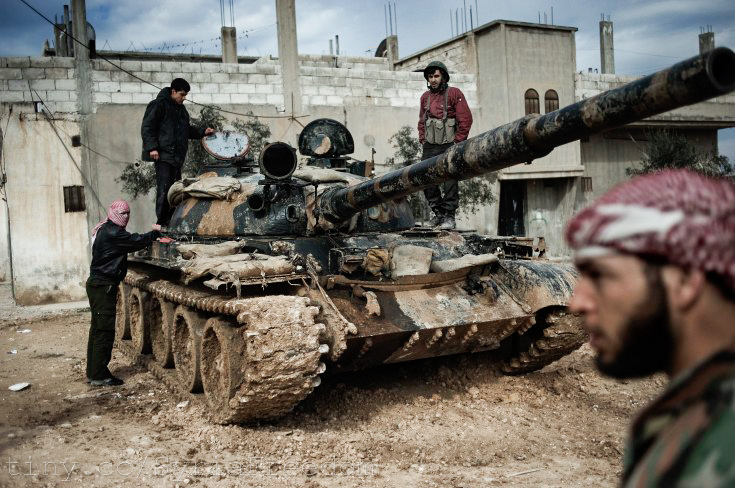
There may be a responsible way to fight the Islamic State, but the U.S. will have to leave its boots in the closet and the drones in the hangar.

Under the guise of fighting ISIS, Turkey’s president is re-igniting a bloody war with the Kurds for his own political purposes.
Saudi Arabia, Turkey, and Israel appear constitutionally incapable of prioritizing the Islamic State as a threat.

In their latest deal to fight ISIS, Washington and Turkey are treating the Middle East’s largest stateless minority like pawns. That’s a huge mistake.

The Islamic State has two advantages over the chaotic violence of Iraq and the murderous Assad regime in Syria: services and justice.
Those expecting the Iran nuclear deal to lead to regional security cooperation between the United States and Iran may be disappointed.

Hamas fears recent attacks in Gaza may be the responsibility of militants affiliated with the Islamic State.

The unfolding intervention against the Islamic State shows that oil doesn’t just guide U.S. foreign policy. It constrains our ways of thinking about it.

A poll indicates that Saudi citizens seem to find the Islamic State’s repressiveness and barbarism less objectionable than the House of Saud’s corruption.