We can save $440 billion over a 10-year period without compromising national security.

Fact Sheet: “Rebalancing our National Security: The Benefits of Implementing a Unified Security Budget”
read more

We can save $440 billion over a 10-year period without compromising national security.
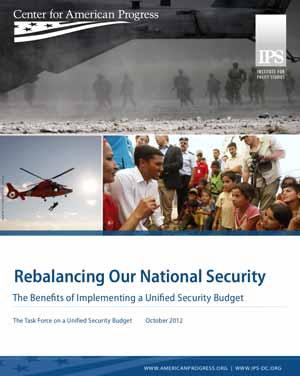
A team of experts recommend ways to rebalance our national security budget.

As deserts expand and droughts persist, desperate people begin fighting over the water that remains. Elsewhere, rising sea levels create mass migrations. These portraits of human tragedy caused by climate change have become environmental security threats that the U.S. military now worries about.

Although the clash between Washington and Tokyo over U.S. military bases on Okinawa has been officially treated as a relatively minor dispute, it has laid bare very serious underlying problems that will continue to plague the alliance. The United States expects greater Japanese engagement and cost-sharing to ensure regional security. To maintain regional stability, Japan must either become more engaged (requiring increases in military spending, and the political and social will to change existing laws and norms) or the alliance must remain asymmetric. Both of these alternatives face perhaps insurmountable obstacles in the local opposition to base expansion and the financial realities facing Japan and the United States.
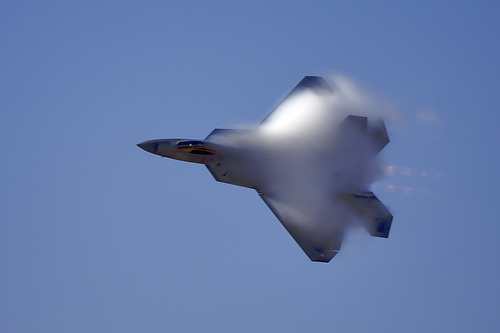
With his decision to boost defense spending, President Obama is continuing the process of re-inflating the Pentagon that began in late 1998 — fully three years before the 9/11 attacks on America. The FY 2011 budget marks a milestone, however: The inflation-adjusted rise in spending since 1998 will probably exceed 100 percent in real terms by the end of the fiscal year. Taking the new budget into account, the Defense Department has been granted about $7.2 trillion since 1998, when the post-Cold War decline in defense spending ended.

The U.S. military now views the massive disruptions that will result from global warming, in the absence of concerted international action, as a likely precipitant of increased violent conflict around the world.
Two subway cars on Washington, D.C.’s Red Line — which I usually ride to work — recently collided. It was the worst accident in this subway’s history, killing nine D.C. residents and injuring scores of others. The National Transportation Safety Board’s advice to the local transit authority soon came to light: Replace older-model subway cars, including the ones that crashed. The NTSB had said this three years ago, but the transit authority hadn’t had the money to do it.
Over the past decade, Africa’s status in U.S. national security policy has risen dramatically, for three main reasons: America’s growing dependence on Africa’s oil exports, Africa’s importance as a major battlefield in America’s “Global War on Terrorism,” and Africa’s central position in the global competition between America and China for economic and political power.
Accepting his Nobel Peace Prize, Al Gore called on the nations of the world to mobilize to avert climate disaster “with a sense of urgency and shared resolve that has previously been seen only when nations have mobilized for war.”
This report measures in fiscal terms how far our own nation has to go to reach that goal.
Albert Beveridge was a promising politician in his thirties when he stood up to speak in favor of war and the promotion of democracy to his peers in the U.S. Senate. A historian, Beveridge unabashedly called for the United States to remake the globe. “We will not renounce our part in the mission of our race, trustee, under God, of the civilization of the world,” Beveridge proclaimed. “And we will move forward to our work, not howling out regrets like slaves whipped to their burdens but with gratitude for a task worthy of our strength and thanksgiving to Almighty God that He has marked us as His chosen people, henceforth to lead in the regeneration of the world.”