Military spending combines the two certainties in life: death and taxes. U.S. taxpayers are paying more than anyone else on Earth to support an industry devoted to death.
Death and Taxes
read more

Military spending combines the two certainties in life: death and taxes. U.S. taxpayers are paying more than anyone else on Earth to support an industry devoted to death.

Every year, in the last two weeks of their final semester, a group of seniors in the 20th-century world history class at my high school played a mysterious game. They were honor-bound not to tell anyone what they were doing. All we knew was that, while their fellow seniors goofed off and marked time until graduation, this group of students were completely obsessed with…something. They were constantly in whispered negotiations, passing notes back and forth, passionately gesticulating. They seemed to be involved in a very serious, very adult activity. The rest of us were all intensely envious even as we made fun of their dorkiness.
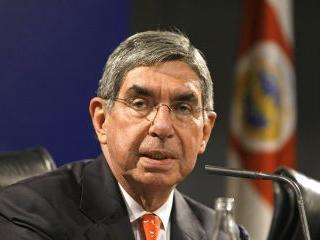
When I was a child, Costa Rica endured a war of its own, though it did not receive any attention in the pages housed in this building. When the war ended in 1948, Costa Rica made a voluntary decision that no other country had ever undertaken: to abolish its army and declare peace to the world. By doing this, my country promised me, and all its children, that we would never see tanks or troops in our streets. My country promised me, and all its children, that it would invest, not in the weapons of our past, but in the tools of our future; not in barracks, but in schools, hospitals, and national parks; not in soldiers, but in teachers, doctors, and park guards. My country promised to dismantle the institutions of violence, and invest in the progress that makes violence unnecessary. Quite simply, my country invested in its people.
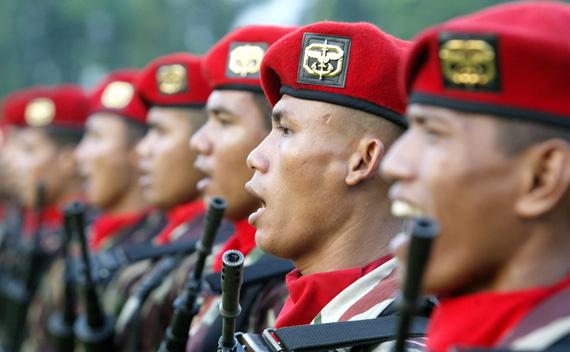
The geopolitical centre of gravity, as measured in arms spending and transfers, has shifted to Asia.
The top five arms importers over the last five years, according to new data from the Stockholm International Peace Research Institute (SIPRI), are from Asia. And, led by deep-pocketed China, Asia is poised to overtake Europe for the first time in modern history in overall military spending. The Cold War ended in Europe in the early 1990s. But Asia continues to buy and sell weapons as if the Cold War never went out of style.

When Hu Jintao took over as the leader of China in 2002, U.S. companies welcomed his accession as a “good sign for American business.” Political analysts described Hu as a fourth-generation member of the Communist party leadership who might very well turn out to be a “closet liberal.” Playing it safe, the media tended to portray him as a pragmatic enigma. In the wake of 9/11 and high-level cooperation on counter-terrorism, Hu proved to be a reliable U.S. partner, prompting Colin Powell to remark in 2003 that U.S.-China relations were the best since 1972.
Can we close the Futenma U.S. Marine Base in Japan Without Constructing Additional Marine Bases in Okinawa?

The NATO intervention in Libya is likely to produce a more militarized and insecure world, and this will be its most enduring legacy. The military “success”in Libya has increased the possibility of new wars. There is a widespread perception that NATO has achieved an easy victory against Gaddafi, and the resulting sense of hubris augments the risk of future military actions against Iran, Syria, and other possible targets. Politicians in NATO countries surely welcome the public distraction that war provides, especially in the context of the world-wide economic slump, and this may prove an additional motivation for new military action.
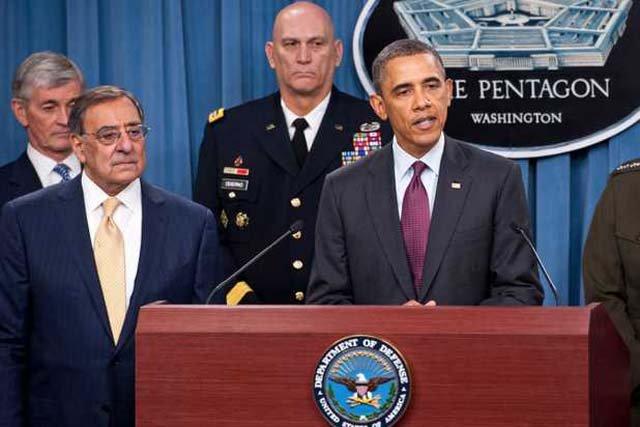
President Barack Obama ordered up yet another strategic review last year. This one explicitly aimed at bringing the nation’s military posture into line with something we can afford.
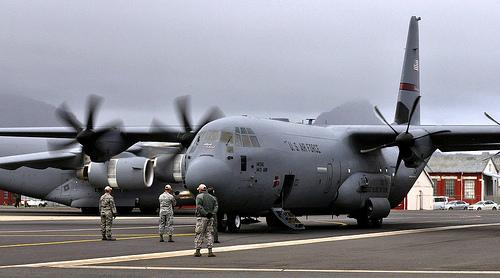
A study commissioned by the largest defense industry trade association says that military spending creates jobs. The facts, however, indicate otherwise.
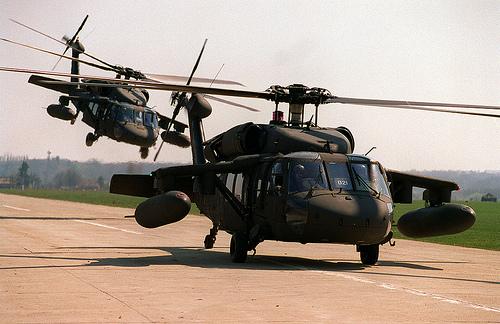
Even if sequestration cuts across all military programs, this sort of ham-handed approach is safely doable.