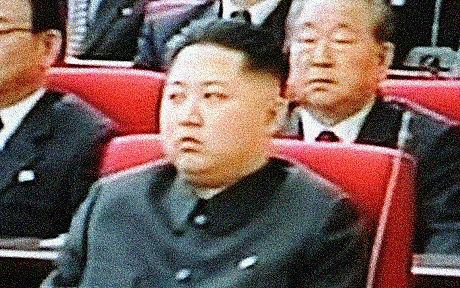
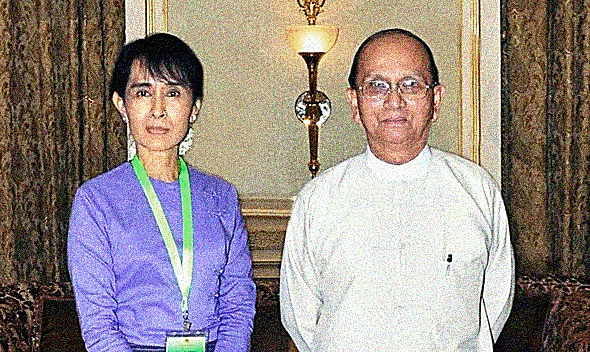
North Korean leader Kim Jong Il consolidated communist rule. Czech leader Vaclav fought against corrupt communists. Yet they had some things in common, besides dying a week before Christmas. They both abandoned careers in the arts to become reluctant politicians, and they stabilized their respective countries during difficult times.
Lost in Transition? Nork’s Nuclear Command and Control
It’s not exactly clear who, with Kim Jong-il’s death, exerts command and control over North Korea’s nuclear weapons.
North Korea on the Verge of a New Era?
For the last two decades, U.S. administrations have come in like a lion and out like a lamb with their policies on North Korea. Determined to demonstrate Washington’s resolve, U.S. presidents have played hardball with Pyongyang in an effort to precipitate regime change or at least bully the intransigent country into knuckling under.
Asia Stands Poised to Join 2011’s Global Revolution
If Asia takes a cue from the Arab Spring and Occupy Wall Street, the world’s governments might face the haunting specter of working people of all countries uniting.
Architects of Change
More than a decade ago, I sat down with the head of the academy of architecture in Pyongyang. The school was housed in a large, drafty building in the center of North Korea’s capital. Students were building models out of cardboard and wood. A few were in front of state-of-the-art desktops using the computer-aided design software that had become indispensible to modern architects. But there was one element missing from the architecture program. North Korean builders paid virtually no attention to energy efficiency.
“Great Successor” Kim Jong-un Needs Unalloyed Support of Military
The test of Kim Jong-un’s leadership will be to convince the military to throw its support behind him.
The Kims: Like Grandfather, Like Son?
Don’t look for reform in North Korea in the foreseeable future.
Two Leaders, Two Deaths
North Korean leader Kim Jong Il and Czech leader Vaclav Havel occupied the opposite ends of the political continuum. One fought against the corrupt communist powers; the other consolidated communist rule. One tried to inject morality into the practice of politics while the other pursued political ends with little or no reference to morality. Having made their marks first in the artistic sphere, they were both in some sense reluctant politicians. Once in power, they managed to stabilize their respective countries during difficult times. But they failed in their efforts at more dramatic transformation.
Succession Questions Persist in Wake of Kim Jong-il’s Death
Kim Jong-il reportedly kept his son Kim Jong-un on the sidelines for fear of a challenge to his authority.
Showing Juntas Some Love
North Korea and Burma have been the beneficiary of foreign policy initiatives by China and the United States respectively.