Without technology and know-how, even the world’s largest oil reserves are worthless.
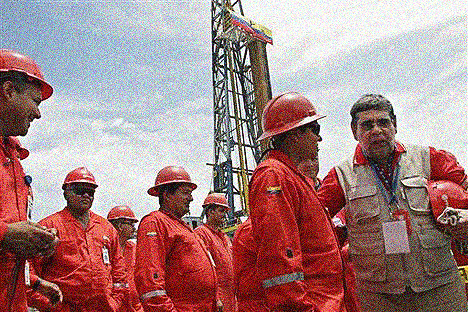
WikiLeaks: Venezuela’s Crude Awakening
read more

Without technology and know-how, even the world’s largest oil reserves are worthless.

For most states, oil wealth spells, to a certain extent, an end to ethics. Not Norway.

Leading congressional Democrats are outraged at British Petroleum and others responsible for the massive oil spill in the Gulf of Mexico. But that stands in sharp contrast to their outspoken support of those responsible for a major oil spill in the eastern Mediterranean in 2006, the largest in that region’s history.
Big oil spills are no longer news in Africa. The Niger Delta, where the wealth underground is out of all proportion with the poverty on the surface, has endured the equivalent of the Exxon Valdez spill every year for 50 years by some estimates
Spills, leaks and deliberate discharges are happening in oilfields all over the world and very few people seem to care.
Noted author and Hampshire College professor Michael Klare, whose latest book Rising Powers, Shrinking Planet describes the geopolitics of the energy crisis, will talk about the causes behind the Gulf oil spill.
It took President Obama 24 days to finally get publicly angry and “rip” into BP and its partners for the catastrophic oil leak in the Gulf of Mexico. What was he waiting for? The pattern has been obvious enough: however bad you thought it was, or anyone said it was at any given moment, it’s worse (and will get worse yet).

This century has witnessed China’s emergence as the main challenger to the superpower status of the United States. In a dramatic fashion, China is beginning to establish its foothold in the highly strategic, energy-rich region of the Middle East by forging strong ties with regional powers and gradually challenging the U.S.-Israeli regional dominance. Thanks to decades of double-digit economic growth and accelerating military modernization, China now has both the need for and the capability of engaging the Middle East.
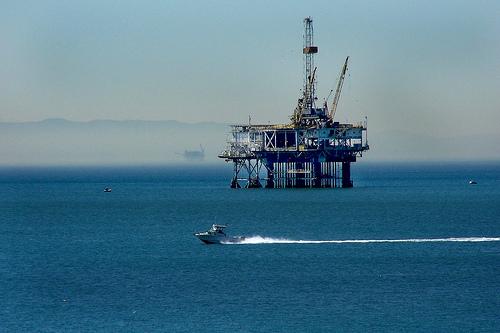
Once upon a time, “There’s Only So Much Oil in the Ground” was a popular song that could be heard on the radio. The year was 1974, and Tower of Power, an Oakland-based soul and funk band, was enjoying some commercial success. They made the year’s top 100 with “What is Hip?” In addition to the important topics of being young, hip, and falling in and out of love, they sang about the energy crisis. Following a brief OPEC oil embargo, the price of crude oil (in today’s dollars) jumped from $23 per barrel in 1973 to $41 in 1974. Everyone was thinking about the world’s finite and diminishing supplies of oil. As the song continued, “Sooner or later there won’t be much around.”
As the Obama administration struggles to devise a strategy for dealing with Iran’s intransigence on the uranium enrichment issue, it appears to be gravitating toward the imposition of an international embargo on gasoline sales to that country. Such a ban would be enacted if Iranian officials fail to come up with an acceptable negotiating plan by the time the UN General Assembly meets in late September — the deadline given by the White House for a constructive Iranian move.