Janez Jansa has steered one of the most liberal countries in East-Central Europe right off the road.

The Trump of Slovenia
read more

Janez Jansa has steered one of the most liberal countries in East-Central Europe right off the road.
In 1990, the large national debt, stagnation, and Serbian nationalism threatened to tear apart the Yugoslav state.

The countries of the former Warsaw Pact are not knuckling under to pressure from Russia. They’re trying to avoid a new cold war.
Blind to the political and economic sources of their troubles, many Europeans are lashing out at gays, Jews, migrants, and the European project itself.
Cross-posted from JohnFeffer.com. John is currently traveling in Eastern Europe and observing its transformations since 1989. In 1990, when I was in Romania, inter-ethnic conflicts broke out in Transylvania. Although the cause of the conflict in March 1990 in Targu...

Slovenia has virtually vaulted into Western Europe while Bulgaria has remained behind the informal Iron Curtain that continues to divide the developed from the developing parts of the region.
The Erasure took place in 1992, the first organization of the Erased was founded in 2002, and victory was secured in 2012.
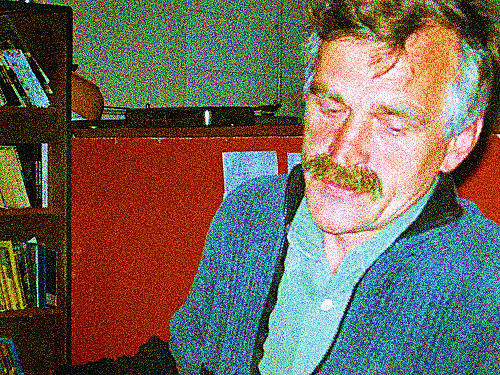
When Yugoslavia fell apart in the early 1990s, most people simply became citizens of what had once been its constituent republics: Croatia, Bosnia, etc. But for some, it was not a simple process.
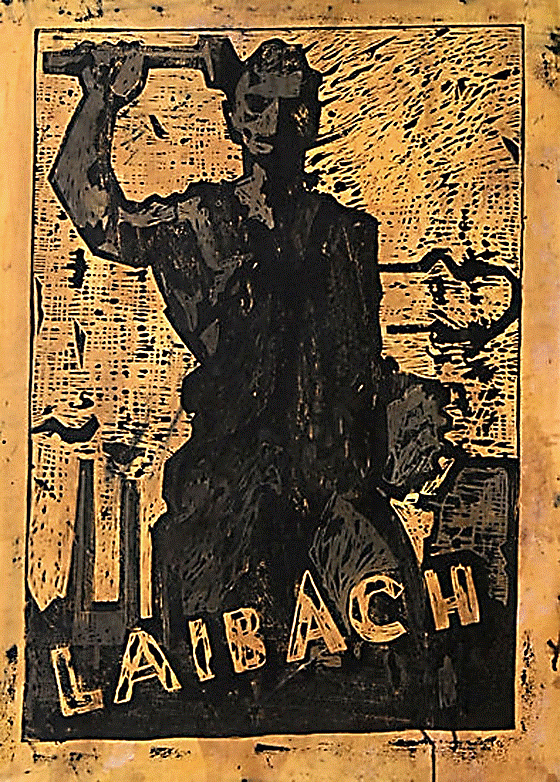
Rock music substituted for the absence of political and social criticism.

Vojko Volk, Slovenia’s ambassador to Croatia, speaks about the challenges that Slovenia currently faces, especially economic.