South Korea

A Green Bulldozer?

South Korea’s new president underwent his own personal green revolution when he became mayor of Seoul. In charge of major construction projects at Hyundai for three decades, Lee Myung-bak reversed himself in the new millennium. He made rivers spring from concrete and grass grow where there had once been only cars.

read more

The Paradox of East Asian Peace

At the center of East Asia lies the Demilitarized Zone (DMZ) on the Korean peninsula. The DMZ has been called the most dangerous place on earth. Hundreds of thousands of soldiers face one another across this divide. And yet, the DMZ is also the lifeline between North and South Korea. It connects the two countries by way of the Kaesong Industrial Complex. Electricity, transportation, and communications lines connect the two sides across this dangerous rift. Perhaps most paradoxically, the DMZ itself is a quiet, largely undisturbed zone that is home to perhaps the greatest biological diversity on the peninsula. Unification is, of course, a life-and-death issue for Koreans. It is therefore fitting that the DMZ is a life-and-death zone.

read more
Postcard from…Pusan

Postcard from…Pusan

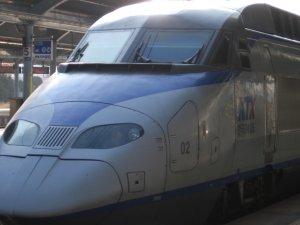
With their new high-speed train system, South Koreans can travel the full length of their country, from Seoul in the north to Pusan on the southern coast, in under 3 hours. In the next phase of construction, new tracks will cut this travel time in half again. The KTX train (pictured to the left) puts the U.S. rail system to shame. And puts Korea on par with Japan for quality of train service.

read more

Summit: Post-Playground Politics

When two young boys square off in the school playground, they will often appeal to higher powers. "My big brother can beat up your big brother!" they cry out as a scare tactic. Even if the two kids don’t come to blows, one will still try to impress the other by claiming that his elder brother is stronger, richer, or more successful.

read more

Summit Signals New Regional Order

When two young boys square off in the school playground, they will often appeal to higher powers.  “My big brother can beat up your big brother!” they cry out as a scare tactic. Even if the two kids don’t come to blows, one will still try to impress the other by claiming that his elder brother is stronger, richer, or more successful.

read more

Three Hard Truths

After finally receiving $24 million in frozen assets, North Korea shut down its nuclear reactor at Yongbyon in July. The optimists cautiously celebrated the move as the first step toward the denuclearization of the Korean peninsula and the eventual establishment of diplomatic relations between Washington and Pyongyang. The pessimists drolly pointed out that we’re back to where we were in 2002, except that now North Korea has a whole lot more nuclear material and possibly a bomb to boot.

read more
All Fall Down

All Fall Down

Ten years after the Asian financial cataclysm of 1997, the economies of the Western Pacific Rim are growing, though not at the rates they enjoyed before the crisis. The region has been indelibly scarred by the crisis. There is greater poverty, inequality, and social destabilization than before the crisis. South Korea’s painful labor market reforms, for instance, have produced the quiet desperation behind one of the highest suicide rates among developed countries.

read more

Earth to Bush: Iraq isnt South Korea

The Bush Administration recently pointed to the over-five-decades-long US military presence in South Korea as a successful model for Iraq. The implications of this comparison seemed to escape them. General Raymond T. Odierno, who oversees daily military operations in Iraq, called it “a great idea,” as if agreeing with the suggestion by a colleague to order take-out sushi for lunch.

read more

Raw Deal Between Washington and Seoul

In recent weeks, tens of thousands of South Koreans have demonstrated their opposition to a sweeping free trade agreement (FTA) signed on April 1 by the United States and South Korean governments. Although polls show that a slight majority of Korean citizens support the pact, Korean workers and farmers want their parliament to reject the agreement and have demanded that President Roh Moo-Hyun hold a public referendum on the issue. Leading politicians, including the former chairman of the ruling Uri Party, have participated in hunger strikes to protest the pact, and two activists have taken the extreme step of lighting themselves on fire to call attention to economic disparities in their country that will be exacerbated by the agreement.

read more