After the war in Iraq, is it feasible to invoke the Responsibility to Protect doctrine to protect civilians from ISIS?

The “Responsibility to Protect” Is Buried in Iraq
read more

After the war in Iraq, is it feasible to invoke the Responsibility to Protect doctrine to protect civilians from ISIS?

It may only be Sudan that can pave the way towards sustainable peace in South Sudan.

A studied refusal to pay attention to South Sudan’s colonial history helped ignite the current crisis.

Sudan might have been better off undivided.

Cross-posted from the United to End Genocide blog. In a reprehensible move, Sudanese President and International Criminal Court indictee Omar al-Bashir applied for a United States visa to attend the opening of the United Nations General Assembly next week. If granted...
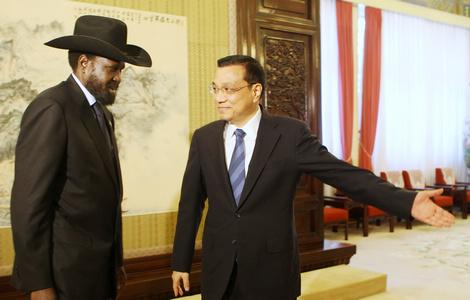
Sudan and China have enjoyed cordial relations for decades, developing a fruitful economic and political partnership dating back to their mutual estrangement from the West in the late 1980s and early 1990s. But Sudan’s 2011 partition has presented China with a new set of challenges. Namely, Beijing will be challenged to advance its interests in the Sudans while upholding its foreign policy principle of non-intervention in other states’ affairs.
The larger question facing our nation about the U.S. role in the world and how the candidates themselves would define what is in the national security interest of the United States was almost completely ignored.

The status of the province of Abyei is an unresolved issue from the June 2011 détente between Sudan and South Sudan. In the year since South Sudan’s independence, the two countries have managed to avoid a full-scale war. But minor skirmishes on the border and illegitimate air raids on the Heglig oil field in April 2012, however, have disrupted that faulty peace.
The Sudanese government turn protests into a sting operation by publicizing fake ones online and arresting those who show up.
South Sudanese politicians are using security as an excuse to dodge transparency on oil revenues.