Executive power in Venezuela has been so -centric that it’s anybody’s guess who would replace him were he unable to govern.
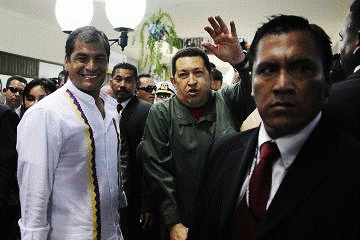
Chavez’s Cult of Personality Creates Succession Problems
read more

Executive power in Venezuela has been so -centric that it’s anybody’s guess who would replace him were he unable to govern.
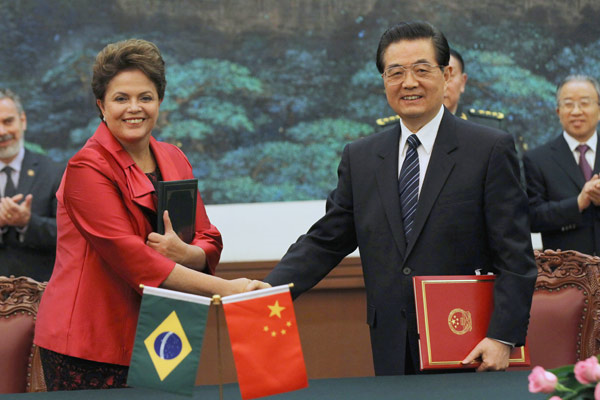
In the wake of Obama’s recent tour of Latin America, media reports and commentators claimed that China has been economically outmuscling the United States in the region. The reality, however, is that Beijing’s economic presence has not come at the expense of the United States. Although Washington still maintains an overwhelming edge, its influence is decreasing. This decline will be exacerbated by Obama’s focus on boosting U.S. exports to the region rather than importing more of Latin America’s manufactured goods.
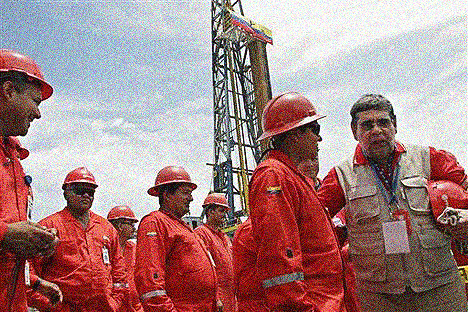
Without technology and know-how, even the world’s largest oil reserves are worthless.
Venezuela tests the fast-food waters. Expansion to U.S. unlikely though because it’s subsidized by the government.

As the United States continues to isolate Iran over its nuclear program, the Islamic regime is engaging in a foreign policy counter-attack with profound strategic consequences. The theater of strategic warfare between the United States and Iran has expanded well beyond the Middle East.From sub-Saharan Africa to Latin America, Iran is selling arms, offering aid and investments, and otherwise establishing a new pattern in south-to-south relations as it battles what President Mahmoud Ahmadinejad calls “Western arrogance.”
It might be easier to talk Venezuela off the nuclear-weapons ledge if the U.S. weren’t so intent on filling the coffers of its own nuclear-weapons industry.
“False positive” is the Colombian armed forces operation that murdered civilians and dressed them up in insurgent uniforms to fake the success of the army’s counterinsurgency strategy.
Senator John McCain presents himself as a what-you-see is what-you-get presidential candidate: clean, pragmatic, following his convictions even when not politically expedient. He considers himself to be someone who would make an excellent foreign policy president.
Gene Sharp, an 80-year-old scholar of strategic nonviolent action and veteran of radical pacifist causes, is under attack by a number of foreign governments that claim that he and his small research institute are key players in a Bush administration plot against them.

On the first day, Colombian military and police forces launched an attack on an encampment of the Colombian guerrilla group Fuerzas Armadas Revolucionarias de Colombia (FARC) in Ecuadorian territory, killing over 20 people.