
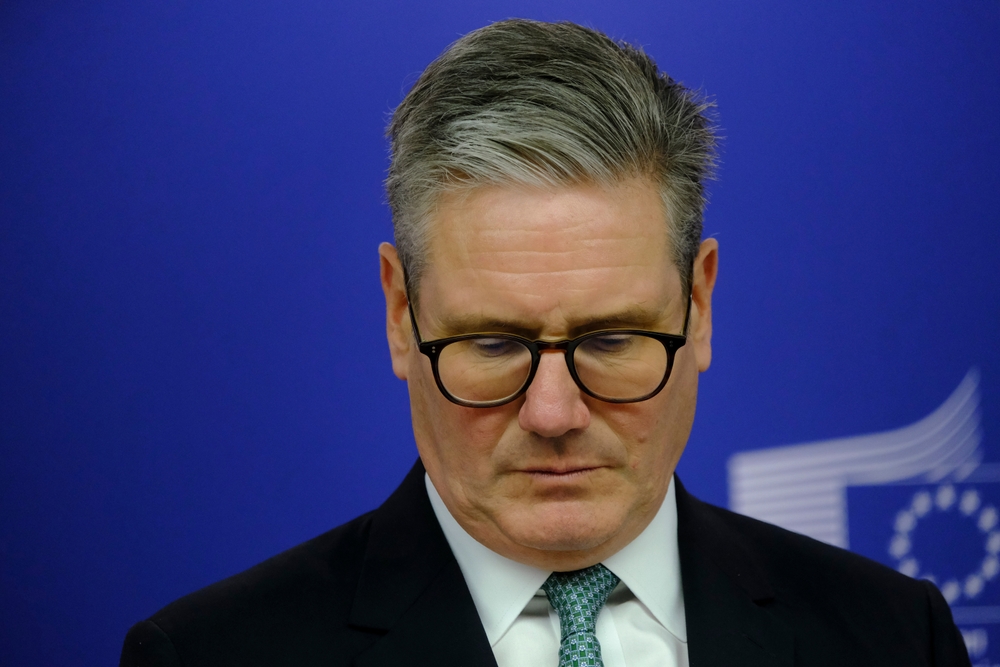
Britain’s recent local elections revealed more than a routine midterm backlash. Labour’s heavy losses, the continuing erosion of Conservative support, and the rise of the far-right Reform UK point towards a deeper crisis unfolding within one of the West’s traditional middle powers. Nearly a decade after Brexit, Britain still lacks both a coherent political settlement at home and a clear sense of its role abroad.
Across roughly 5,000 council seats contested in England, Labour lost more than 1,000 seats while Reform UK gained over 1,400 councillors, consolidating support from Essex to former industrial Labour strongholds in the Midlands and the North. The Conservatives continued their post-Brexit decline while nationalist, Green, and Liberal Democrat forces advanced elsewhere.
The cumulative effect is clear. Britain has entered a prolonged period of political “unfreezing” in which cultural, territorial, and generational cleavages increasingly shape political behaviour without stabilizing into a coherent new order.
The Unfreezing of British Politics
Seymour Martin Lipset and Stein Rokkan argued that European party systems were shaped by social cleavages produced during industrialization and nation-state formation. In Britain, class became the dominant organizing principle expressed through the Labour-Conservative duopoly that structured twentieth-century politics. These alignments eventually froze into durable partisan identities and relatively predictable governing coalitions.
But cleavage systems are not immutable. Under conditions of economic dislocation, institutional strain, and social transformation, old alignments may weaken before new ones crystallize.
Britain today appears to be precisely in such an intermediary phase. Class still matters, but it no longer organizes political behaviour consistently. Labour simultaneously loses support among economically left-behind voters in post-industrial towns and socially liberal metropolitan professionals increasingly attracted to the Greens and nationalist voters in Scotland and Wales. The Conservatives, meanwhile, have struggled to reconcile affluent market liberals with culturally nationalist and anti-immigration constituencies mobilized by Brexit. Reform UK’s success reflects the emergence of a new cleavage centered on sovereignty, immigration, and distrust of institutions that cuts across older class identities. Territorial divergences have further weakened the assumptions of a unified national electorate upon which the traditional Westminster system depended. Elections increasingly unfold across partially separate political arenas with differing constitutional priorities and political cultures.
Stable foreign policy depends upon relatively stable political coalitions. Britain’s prolonged party-system unfreezing has therefore become not only a domestic problem, but an increasingly geopolitical one. Fragmented societies struggle to sustain coherent long-term strategy, particularly when economic stagnation intensifies distributive conflict and weakens trust in institutions.
Britain’s productivity growth has been weak, averaging little more than 0.5 per cent annually since the 2007-09 financial crisis. Alongside entrenched regional inequality, deteriorating public services, and fiscal constraints, lack of growth has amplified these fractures without entirely causing them. Real wages across much of the country have still not meaningfully recovered from the post-2008 lost decade outside parts of London and the South East, while house prices remain far beyond the reach of the younger generation. Local government finances continue to operate under severe strain after more than a decade of austerity and post-pandemic borrowing. Under such conditions, distributive politics increasingly assumes a zero-sum character in which cultural and territorial cleavages become more politically salient.
These conditions have proven fertile terrain for populist mobilization. As Cas Mudde has argued, populism functions less as a fully developed ideology than as a “thin-centered” moral framework opposing a supposedly authentic people to a detached elite. Such movements become particularly potent when traditional parties lose both social rootedness and public legitimacy. Britain’s fragmentation therefore does not merely create electoral space for populism. It reinforces the anti-institutional narrative upon which populist politics depends, a dynamic visible not only at the ballot box but also in the anti-immigrant riots that erupted in Belfast on June 9, among the most serious episodes of political street violence seen in the United Kingdom in decades.
This helps explain the continuing salience of Nigel Farage and Reform UK. Their appeal cannot be understood simply as economic grievance or electoral protest. It reflects a broader revolt against what many supporters perceive as a governing class incapable of representing national interests or articulating a convincing post-Brexit settlement. Brexit itself succeeded because it condensed diverse frustrations into a simple narrative of sovereignty and democratic recovery through the promise to “take back control.” British politics since then has struggled to offer an equally compelling account of the country’s future direction.
The Failure of Global Britain
Britain increasingly appears caught between geopolitical identities. Brexit resolved the question of formal membership within the European Union but not the deeper question of Britain’s place in the world. The post-2016 promise of “Global Britain” sought to reconcile sovereign nationalism with continued international influence, yet successive governments have struggled to define what that role means beyond rhetoric.
From David Cameron’s referendum gamble and Theresa May’s procedural deadlock to Boris Johnson’s unfulfilled promises of renewal, Liz Truss’s brief experiment in ideological radicalism, and Rishi Sunak’s technocratic retrenchment, successive leaders have struggled to articulate a durable post-Brexit settlement. Keir Starmer, despite greater seriousness and discipline, has fared little better.
At times, Starmer’s predicament recalls Anthony Trollope’s novel The Prime Minister, in which the conscientious Plantagenet Palliser discovers that administrative seriousness alone cannot hold together a political world growing increasingly unstable and emotionally ungovernable. The recurring praise of Starmer as “decent” captures the problem precisely. Decency is a moral quality, not a political narrative. The growing speculation surrounding figures such as Andy Burnham reflects Labour’s wider search for leadership capable not merely of competent administration but of reconstructing a narrative that can persuade and inspire.
Britain has now had six prime ministers since 2016 and may soon face a seventh because no leader has succeeded in reorganizing the country’s fractured electoral coalitions into a durable post-Brexit settlement. Leadership churn reflects not merely parliamentary instability but the weakening ability of the political center to command durable consent.
This instability increasingly shapes Britain’s external posture. The optimistic language of post-Brexit sovereignty has gradually given way to a politics of resilience, border control, and strategic vulnerability management. Starmer’s recently published National Security Strategy reflects this shift. Rather than the expansive rhetoric once associated with “Global Britain,” it speaks the language of economic security, infrastructure protection, and geopolitical danger. Britain increasingly appears less like a confident liberal power projecting influence outward than a state attempting to manage vulnerability amid international fragmentation and domestic uncertainty.
One revealing expression of this transformation was the Rwanda asylum scheme pursued under successive Conservative governments. Presented as evidence that Britain could reassert sovereign control over migration after Brexit, the policy evolved into a symbolic test of parliamentary authority itself. The ensuing conflict among ministers, the courts, and international legal obligations exposed the tension between sovereignty politics and the liberal constitutional image upon which much of Britain’s post-war soft power depended.
Britain’s global influence has long rested not simply on military capacity or financial power but on institutional prestige, cultural openness, and political legitimacy. Universities, the BBC, the British Council, and the perception of Britain as a stable constitutional democracy formed part of this architecture. Yet Brexit, austerity, anti-immigration politics, repeated leadership crises, and social fragmentation have weakened that image considerably.
Britain Between Europe and the Emerging World
Britain’s global ambitions continue to depend upon migration, higher education, international connectivity, and diplomatic openness even as domestic politics becomes more shaped by sovereignty rhetoric and anxieties surrounding borders and national identity. The country remains internationally relevant, but the ideological foundations that once gave coherence to British influence are becoming less stable.
This tension is also visible in Britain’s search for economic partnerships beyond Europe. Starmer’s recently concluded trade agreement with India was presented as evidence that Britain could still secure prosperity and geopolitical relevance outside the framework of European integration. Yet the symbolism of such agreements arguably exceeds their immediate economic significance. They reflect a broader effort to reconstruct a post-Brexit geopolitical identity for a country still uncertain whether its future lies primarily in Atlanticism, renewed European engagement, or a more flexible role within an emerging multipolar order. Britain’s growing emphasis on India and the wider Global South likewise reflects a world in which economic and geopolitical influence is increasingly dispersed beyond the traditional centers of Western power.
This ambiguity increasingly defines Britain’s relationship with both Europe and the United States. Support for Ukraine has helped repair some of the distrust generated by Brexit and restored Britain’s importance within European security discussions. Starmer’s government has also pursued a cautious rapprochement with the European Union around defense and continental security cooperation, recognizing that Britain’s strategic interests remain deeply intertwined with European stability despite Brexit.
Yet Britain’s post-Brexit foreign policy has not simply reproduced older forms of Atlantic dependence. Starmer’s reluctance to permit offensive American strikes on Iran from British bases, alongside warnings against “regime change from the skies,” contrasted sharply with the automatic Atlanticism associated with the Blair era and reflected the continuing shadow of the Iraq War within British strategic thinking. Yet these gestures towards greater autonomy coexist uneasily with Britain’s dependence on the United States for security guarantees, intelligence integration, and strategic leverage. The result is not a coherent post-Brexit doctrine but an improvised balancing act between Atlanticism, European cooperation, and strategic autonomy.
Britain’s instability reflects more than electoral fragmentation or economic stagnation. As Max Weber understood, democratic authority requires legitimacy and purpose, not merely administrative competence. Since the Glorious Revolution, Britain derived legitimacy from the assumption that parliamentary sovereignty, constitutional continuity, and international influence formed part of the same historical story.
That assumption no longer appears entirely secure.