
The massive aerial assault unleashed upon Kyiv and its surrounding regions this week offers a sobering window into the raw, industrial nature of modern warfare. As Ukrainian air defenses struggled against what Kyiv described as one of the largest aerial barrages of the war—involving 73 missiles and more than 650 drones—the international conversation predictably gravitated toward familiar, well-worn tropes: political willpower, legislative financial packages, and the strategic calculus of the Kremlin.
Yet, the true crisis facing Western security architecture is not one of diplomatic resolve or moral courage. It is a crisis of raw arithmetic. From outside the transatlantic bubble, the arithmetic is even starker. The strategic ledger no longer balances. As Russia increasingly shifts toward sustained aerial bombardment amid stalled ground advances, and Ukraine expands its own long-range drone strike capability deep into Russian territory, the war is steadily mutating into an industrial contest of production endurance rather than territorial maneuver.
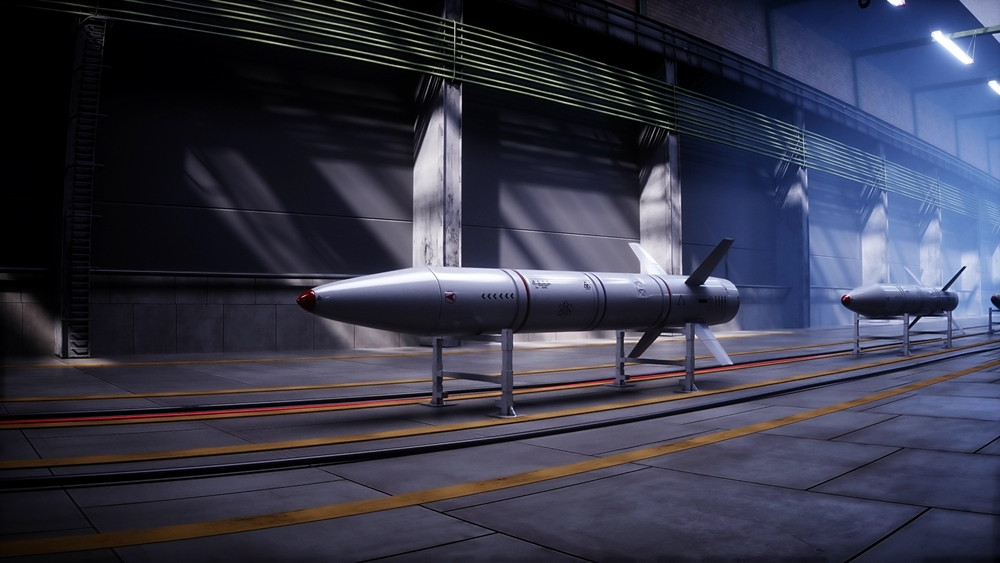
Concurrently, a quiet tremor has rippled through the defense establishments in Washington and Brussels following a devastating assessment published by the Center for Strategic and International Studies. Emerging data indicates that during the intense naval and aerial deployment in the recent Middle Eastern conflict, U.S. forces expended an unprecedented amount of their most advanced munitions, including hundreds of Tomahawk missiles, alongside hundreds of Patriot and THAAD interceptors. CSIS notes that some these interceptor lines produce only dozens of units per year, making this single campaign equivalent to multiple years of output. To put that figure in perspective: a campaign lasting just over a month absorbed multiple years of the entire production capacity of America’s premier precision munitions lines.
This convergence of events exposes a profound and deeply unsettling reality that the transatlantic alliance has spent decades avoiding. Since the end of the Cold War, the ultimate guarantor of global stability was not merely the moral authority of international law or the shared values of democratic states. It was the myth of the infinite warehouse, the deeply ingrained global belief that the American “arsenal of democracy” possessed a bottomless, rapidly deployable inventory of high-tech, precision deterrents capable of suppressing multiple global crises simultaneously. The West built its strategic posture on this myth, and its collapse marks a civic and geopolitical inflection point.
While Western political leaders continue to project an aura of total strategic dominance from podiums in Washington and Brussels, the physical lines of production tell a completely different story. According to the data, the Pentagon is staring at a timeline where replenishing these depleted missile stocks to pre-war levels will take until late 2030. The gap between Western rhetoric and Western capacity has never been wider. Adversaries can read the spreadsheet as clearly as anyone in NATO.
The Western defense apparatus was engineered for an era that no longer exists, a brief, historical parenthesis characterized by localized, asymmetric interventions against non-state actors where precision ammunition was used sparingly. It was never structured to sustain a protracted, high-intensity industrial conflict, let alone manage simultaneous flashpoints across the European, Middle Eastern, and Indo-Pacific theaters. Precision-guided missiles, advanced air-defense interceptors, and long-range strike capabilities are not digital commodities that can be scaled up with a software patch when a geopolitical crisis erupts. They are complex, slow-growing industrial crops requiring specialized supply chains, rare materials, and highly restricted manufacturing infrastructure that cannot be easily expanded. The West confused technological elegance with strategic resilience, a mistake that has now been exposed in real time.
The consumption rates witnessed over the past weeks demonstrate that deterrence is rapidly becoming a bluff. When Washington burns through years of accumulated missile stockpiles to contain a regional crisis in the Middle East, it inadvertently signals to adversaries in the Indo-Pacific that the Western shield is bounded by strict physical limitations. For planners in Beijing, the implication is stark: a United States that requires years to replenish critical missile inventories cannot credibly assume sustained deterrence simultaneously across Europe, the Middle East, and the Taiwan Strait. A deterrent that can be physically exhausted within months of intensive combat ceases to be an effective shield. It is instead a finite resource that can be deliberately out-produced, out-lasted, and overwhelmed by an adversary with a superior manufacturing base.
This reality places America’s allies, from the frontline states of Eastern Europe to the maritime borders of Southeast Asia, in an existential bind. As Ukraine’s Ministry of Defense has warned, intercepting ballistic threats remains an acute vulnerability when critical interceptors are lacking on the front lines. European capitals are beginning to recognize that the primary threat to their security is no longer an unpredictable shifting of political winds in Washington or the outcome of the next presidential election cycle but the hard reality of a depleted American inventory. The American shield is not lacking in political sympathy or strategic intent; it is simply running out of physical components.
For decades, the West substituted industrial capacity with high-tech sophistication, operating under the comfortable doctrine that superior precision could compensate for lower mass. Kyiv’s burning skyline and Washington’s strained logistical spreadsheets prove that in a peer-competitor conflict, mass still matters. The world is transitioning away from the era of diplomatic grandstanding and into a volatile new epoch where the global balance of power will not be determined by the elegance of treaties or the rhetoric of international summits but by the physical layout, workforce availability, and output velocity of precision assembly lines. The future of the international order will be decided not in conference halls but on factory floors.
By treating defense manufacturing as a transactional, just-in-time commercial endeavor rather than a core pillar of national strategy, the West has allowed its structural foundation to atrophy. This vulnerability cannot be quickly repaired with emergency funding or sudden political consensus; a Tomahawk missile cannot be printed into existence by a congressional appropriation. The choice before the West is stark: rebuild the arsenal or accept the twilight of the shield that protected it for generations.