
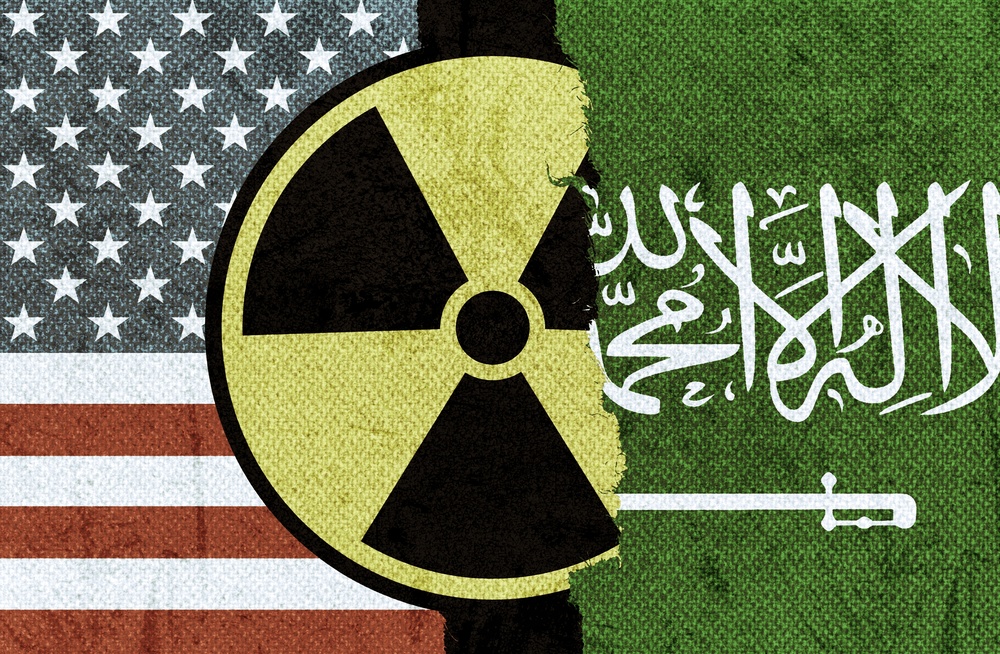
On July 23, Donald Trump announced that U.S. civilian nuclear cooperation with Saudi Arabia would proceed only if Riyadh joins the Abraham Accords and normalizes relations with Israel. More than a technical dispute, the condition raises a fundamental question about the nature of America’s security umbrella.
In international politics, great powers rarely provide anything for free. Among instruments of influence, however, none carries greater strategic value than security. Unlike weapons, oil, or technology, security is not merely a commodity. It is a political relationship capable of forging alliances, creating dependency, and shaping states’ strategic choices.
Consequently, when security shifts from a commitment to a conditional privilege, the very nature of regional order begins to change. Under such circumstances, the security umbrella is no longer extended only to protect allies. It becomes a mechanism for directing their behavior. Its message is simple: protection will continue but only as long as partners align themselves with the preferences of the dominant power.
Although focused on a specific policy issue, Trump’s decision on Saudi Arabia embodies this broader transformation. The core issue is neither nuclear energy nor the Abraham Accords. What matters is not that Washington has never attached conditions to cooperation, but Trump’s more transactional approach to American foreign policy. In this model, security guarantees, arms sales, technology transfers, and strategic partnerships are treated less as standing commitments than as benefits granted in exchange for accepting Washington’s geopolitical priorities.
Washington has long attached nonproliferation conditions to civilian nuclear cooperation. Section 123 agreements require safeguards and U.S. consent over sensitive activities; the 2009 UAE agreement went further, with Abu Dhabi forgoing enrichment and reprocessing. But the nuclear deterrence commitments that the United States extended to Japan and South Korea have traditionally operated differently: both are embedded in alliances and extended-deterrence consultations, rather than being tied to unrelated diplomatic concessions.
That makes the Saudi case notable. The July 22 announcement presented the agreement as a nuclear and nonproliferation partnership without tying it to Israel. Trump’s condition the next day added an explicit geopolitical quid pro quo.
The significance of this strategy becomes clearer when considered in the context of the recent Iran–U.S. war, which challenged long-standing assumptions about regional security. The conflict demonstrated that even America’s closest partners are not insulated from the consequences of regional wars. Military exchanges, disruptions to maritime trade and threats to energy infrastructure, rising insurance costs, and global market volatility underscored a simple reality: a great power’s security umbrella does not necessarily shelter states from conflict. In some cases, it brings them closer to its center.
Herein lies the contradiction of Trump’s approach. Security is presented as an incentive for normalization, yet the recent conflict demonstrated that imported security—particularly in the Middle East—often fails to produce stability and instead redistributes risk. The deeper a country becomes integrated into rigid military alliances, the greater the likelihood that it becomes part of the region’s deterrence and counter-deterrence dynamics.
For years, closer alignment with the United States and Israel was presented as a guarantee of stability and security. Recent developments, however, offer a more complex picture. Despite sophisticated missile defense systems, airports, ports, military bases, and oil infrastructure remained exposed to danger. Maritime shipping routes were disrupted, and Arab economies, despite not entering the conflict directly, still incurred substantial economic costs. These experiences suggest that sustainable security is not the product of accumulating advanced weaponry or expanding military alliances. Rather, it emerges from reducing structural tensions and managing regional crises.
Viewed through this lens, conditioning Saudi Arabia’s nuclear cooperation on normalization with Israel is less a diplomatic initiative than an attempt to instrumentalize an ally’s security needs. Civilian nuclear technology has become part of a broader package designed to reshape the Middle East’s geopolitical architecture according to Washington’s strategic preferences.
The problem with this approach is that it transforms security into a zero-sum game. The more a regional actor becomes integrated into this framework, the stronger the incentives for outside actors to enhance their deterrent capabilities in response. The result is not greater stability but intensified security competition—the cycle that has repeatedly characterized the Middle East over recent decades.
Riyadh’s official position indicates that Saudi Arabia is aware of this dilemma. The kingdom values technological cooperation and security ties with the United States. At the same time, it recognizes that accepting such conditions without reservation could constrain its regional autonomy and strategic flexibility. Saudi insistence that normalization with Israel must be preceded by a credible pathway toward Palestinian statehood thus reflects an effort to prevent the kingdom’s security from becoming an instrument through which external powers impose their broader geopolitical agenda.
What is unfolding extends beyond a disagreement over a nuclear agreement or Saudi-Israeli relations. The central issue is the changing nature of America’s relationship with its allies. Washington is no longer acting merely as a security provider. It is increasingly turning security into a bargaining instrument. Although this shift may serve short-term political objectives, it risks eroding strategic trust over time. Allies that perceive security commitments as conditional and transactional will begin exploring alternative partnerships and more diversified strategic options.
Perhaps this is the most important lesson of the recent war. Security, contrary to what some policymakers believe, is not a commodity that can be bought, sold, or exchanged for political concessions. Genuine security rests upon regional stability, dialogue, strategic balance, and mutual confidence-building. The more that security is employed as a tool of political coercion, the more likely it is to become a source of insecurity.
The logic of Trump’s policy assumes that conditioning strategic support can advance Washington’s preferred regional agenda. Yet the history of the Middle East suggests otherwise. Security built on political coercion and transactional bargaining rarely produces lasting peace. Instead, it deepens mistrust, intensifies strategic competition, and perpetuates regional instability. The fundamental flaw in this approach is treating security as a negotiable commodity. Once security becomes an object of political bargaining, it ceases to function as security. Thus begins a new phase of insecurity.