
On April 27, 2026, U.S. Ambassador to the United Nations Mike Waltz launched the Trade Over Aid Initiative from the floor of the New York Stock Exchange. The initiative was built on Secretary of State Marco Rubio’s argument that government-to-government aid breeds “dependency, inefficiency, and corruption” while free markets and private trade built every successful economy on earth. The resulting Trade Over Aid Declaration of Principles commits signatories to sovereignty, deregulation, low taxation, and “mutually beneficial and profitable trade partnerships between the private sectors of countries.” Forty-six countries have signed on.
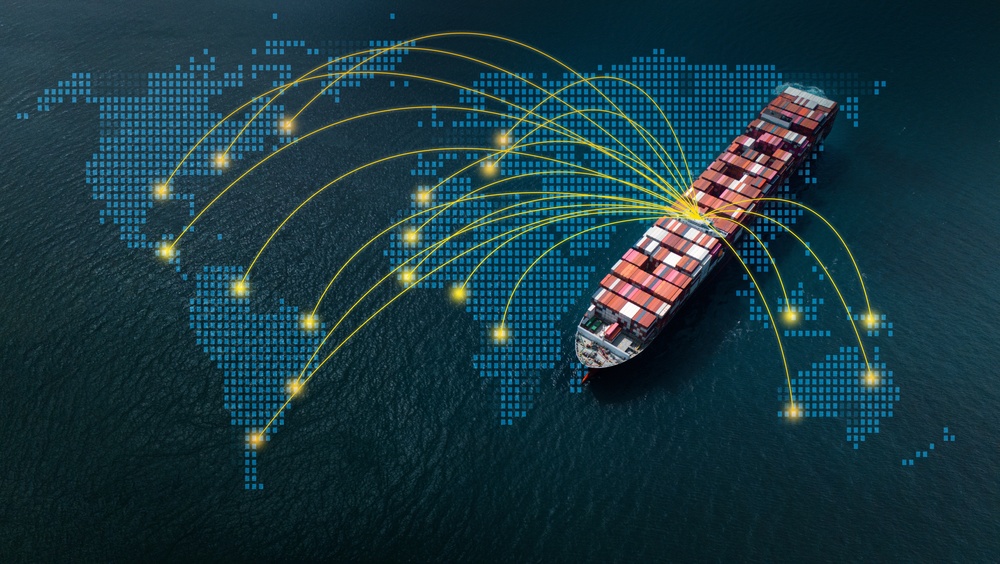
The idea that trade, not aid alone, can build stronger economies is not new, and there is some truth to it. But four months after that launch, the same administration selling the doctrine is presiding over the single largest disruption to global trade in a generation, one entirely of its own making. The UN Conference on Trade and Development now projects that global merchandise trade growth will decelerate sharply, from 4.7 percent in 2025 to just 1.5- 2.5 percent in 2026. Oil and gas are not reaching the manufacturers who depend on them, and the same waterway that no longer delivers fuel is also the route finished goods flow out through, a trade shock from both directions at once. The effects are landing hardest on low-income, export-dependent economies.
Since the United States and Israel launched their campaign against Iran on February 28, 2026, the Strait of Hormuz, the chokepoint for roughly a fifth of the world’s oil, has been mined, blockaded, and fought over almost continuously. Ship transits collapsed by as much as 97 percent in the war’s opening weeks and remain a fraction of pre-war levels. Talks have broken down. The U.S. Navy has redirected 55 commercial vessels under its ongoing blockade of Iranian ports, and Iran’s foreign minister declared this week that there is “no possibility” of resuming negotiations.
The Trade Over Aid Declaration says nothing about war. Its premise is that pro-business conditions attract trade and investment. What it never anticipated is that U.S. conduct of the war has made trade physically impossible for a market-oriented developing country. So far, countries across South and Southeast Asia have been hit hardest.
Bangladesh is the clearest test case: an export-oriented, private-sector manufacturing economy, exactly what the doctrine is meant to reward. None of that has insulated it. Bangladesh imports roughly 95 percent of its energy needs and around 80 percent of its crude and refined oil from the Middle East, most of it transiting Hormuz. When the Strait closed, Qatari LNG cargoes supplying three-quarters of its gas were caught in force majeure, and its garment sector, more than 80 percent of exports and 4.1 million jobs, has been throttled by 10-to-12-hour daily blackouts, factories running at 40 to 60 percent of capacity, and an estimated $5-7 billion in orders lost to competitors, with garment exports down more than 19 percent year-on-year in March.
Sri Lanka and Vietnam tell a similar story. Sri Lanka, in the middle of an IMF stabilization program, has seen 39 percent of its total imports directly exposed to the price shock and has resorted to a four-day workweek to manage fuel scarcity. Vietnam, which sources roughly 85 percent of its crude from the Middle East, has watched freight rates triple or quadruple as shipping reroutes around the Cape of Good Hope, putting an estimated $53 billion in textile exports at risk. Nearly 90 percent of the oil and gas that transits Hormuz is bound for Asia, meaning that the countries paying the highest price are, disproportionately, the ones Washington’s own doctrine holds up as the model.
The mismatch with aid numbers is huge. U.S. bilateral aid to Bangladesh totaled $572.5 million in FY2024; to Sri Lanka, $121.2 million; to Vietnam, roughly $305 million, a figure the Congressional Research Service notes may not have survived the administration’s own 2025 foreign-aid cuts. Set against Bangladesh’s loss of $5-7 billion in apparel orders, now migrating to competitors, or Vietnam’s $53 billion at risk, these aid totals are rounding errors. These countries were never meaningfully aid-dependent and were already doing what the Declaration asks of them. The war has threatened the trade relationship that was supposed to replace aid, and the homegrown development these countries built independently of the United States is held hostage to a peace agreement that isn’t as close as the Trump administration continually claims.
The Trade Over Aid Declaration insists that “foreign capital and other business will flow to countries that are consistent in promoting a pro-business environment.” But consistency is exactly what the Iran war has denied Bangladesh, Sri Lanka, and Vietnam. No tax reform or deregulation can route a container ship or fuel tankers through actual minefields. No property-rights guarantee reopens a blockaded strait, nor will it solve the political issues at the heart of the Strait of Hormuz’s blockage. The single greatest determinant of whether these economies can trade freely is a war waged by the United States and Israel against a third country, over which Dhaka, Colombo, and Hanoi have no influence whatsoever.
The Strait of Hormuz was never part of the administration’s long-term strategic calculus when it opted for confrontation with Iran, and that omission looks less like an accident of war and more like one of the defining failures of its pre-war planning. What was the point of a signature development doctrine built on trade if no one asked whether a war with Iran would choke off the very routes it depends on?
The foreign policy establishment cannot continue to ask the developing world to bet on free trade while fighting a war that has strangled the shipping lanes that trade and development depend on. The administration launched its Trade Over Aid Initiative with fanfare at the New York Stock Exchange, flanked by Goldman Sachs, J.P. Morgan, and the World Bank. Its first real-world stress test is playing out on the factory floors of Bangladesh, and it is failing. This is not an argument about whether the administration’s ideas are right or wrong but about real-world decisions that render those ideas largely irrelevant.