
On September 17, President Donald Trump said he was approaching a “major crossroads” in the war with Iran: whether to resume large-scale military operations in an effort to bring the conflict to an end. After more than six months of fighting, the statement captured the central problem facing Washington. The United States retains enormous military power, but it still lacks a convincing answer to a more basic question: How does this war end?
That question matters because the conflict is beginning to revive an older American strategic problem. Iran is not Vietnam, and the military circumstances are plainly different. But the danger is that Washington may again find itself in a prolonged conflict in which military superiority proves easier to demonstrate than to translate into an attainable political outcome.
Trump entered the war expecting a relatively rapid result. Instead, Washington’s proposed endgames have repeatedly shifted—from military victory to negotiations, economic pressure, blockade and intermittent military strikes. By late August, the administration was still considering different ways to end the war.
The problem is not simply that the conflict has lasted longer than expected. It is that the means have continued to change while the political end state remains uncertain. The United States wants to pressure Iran into concessions, restore secure passage through the Strait of Hormuz, demonstrate American power, avoid an indefinite war, and eventually reduce its involvement in the region. The longer the conflict continues, the harder those objectives are to reconcile.
Diplomacy has exposed the same difficulty. In June, Washington and Tehran signed a 60-day negotiating framework intended to end military operations, facilitate commercial passage through Hormuz, and create space for negotiations toward a broader agreement. The arrangement did not produce a durable settlement, and military confrontation resumed.
Washington subsequently returned to sanctions, blockade, and episodic military pressure. Those measures can impose significant costs on Iran. What they have not yet produced is a political mechanism capable of turning that pressure into a sustainable end to the conflict.
The Strait of Hormuz illustrates the problem. Continued disruption has created uncertainty across global energy markets, but even the scale of that disruption has become difficult to measure. Estimates of oil flows through the strait differ dramatically, partly because tankers have been increasingly operating without normal tracking signals. The uncertainty surrounding the waterway has become another cost of a conflict without a stable political resolution.
Domestic pressure is also growing. Some Trump aides, concerned about the approaching November elections, have wanted to keep the war relatively quiet before the midterms. A Reuters/Ipsos poll found that only a quarter of Americans considered the war worthwhile.
Former Defense Secretary Leon Panetta has warned that the conflict risks becoming another “forever war” in the Middle East. That warning points to a larger historical issue.
The lesson of Vietnam was not simply that the United States could suffer military defeat. It was that overwhelming military capabilities did not guarantee political success when escalation became disconnected from a sufficiently clear and attainable political objective. As commitments accumulated, withdrawing became politically harder even when continuing the war offered no obvious route to the outcome originally sought.
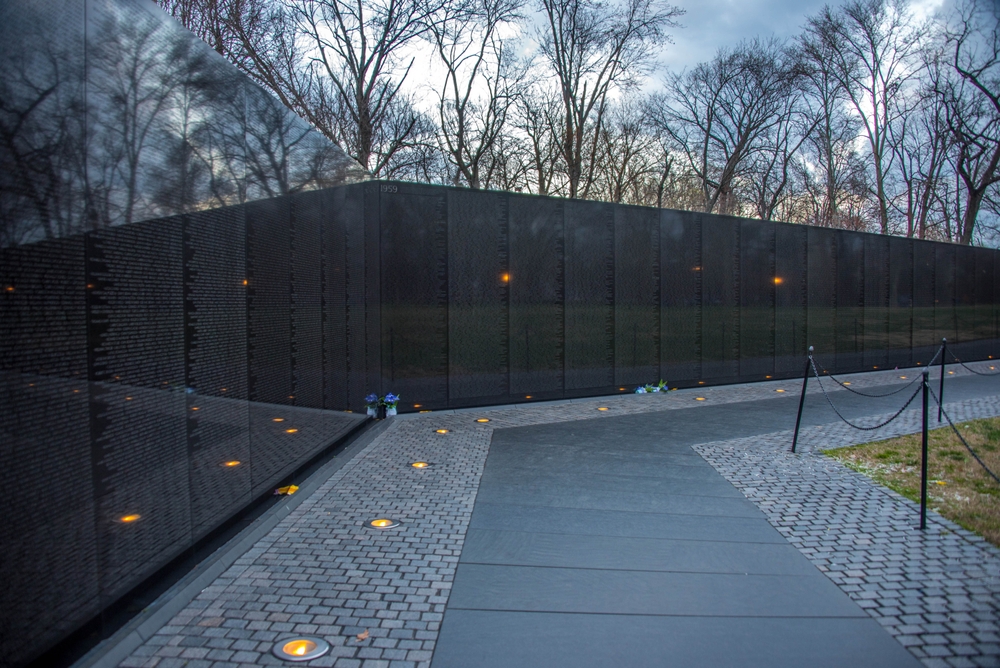
Vietnam subsequently produced what became known as the “Vietnam Syndrome”—a deep American reluctance to enter military conflicts without clear objectives, convincing endgames and sufficient domestic support.
A renewed Vietnam Syndrome would not require the Iran war to resemble Vietnam militarily, nor would it necessarily require a comparable battlefield defeat. It could take a different form: a renewed public suspicion that American presidents can launch wars far more easily than they can bring them to a politically sustainable conclusion.
That possibility carries a particular irony for Trump, who built much of his political identity around opposition to America’s “endless wars.” The risk to that legacy is not simply that the Iran conflict continues. It is that the war reinforces precisely the kind of skepticism toward prolonged American military intervention that Trump promised to leave behind.
The consequences also extend beyond the Middle East. The Iran conflict is widening the strategy gap in Asia by consuming military resources and political attention even as Washington identifies the Indo-Pacific as a central strategic priority. A prolonged Iran war therefore competes with other commitments the United States itself considers important.
Washington currently faces uncomfortable choices. It cannot easily declare victory while central disputes remain unresolved and Iran retains the ability to retaliate. It cannot indefinitely sustain confrontation without accumulating additional political, military, and economic costs. Yet returning to diplomacy requires identifying terms for sanctions relief, maritime security, and de-escalation that both sides have so far been unable to sustain.
That is the logic of a quagmire: continuing the war does not necessarily bring victory closer, while ending it carries political costs of its own.
The danger is not that Iran will become another Vietnam in any literal sense. It is that the war may revive the question Vietnam left behind: What happens when American military power can get the country into a conflict faster than diplomacy can get it out?