
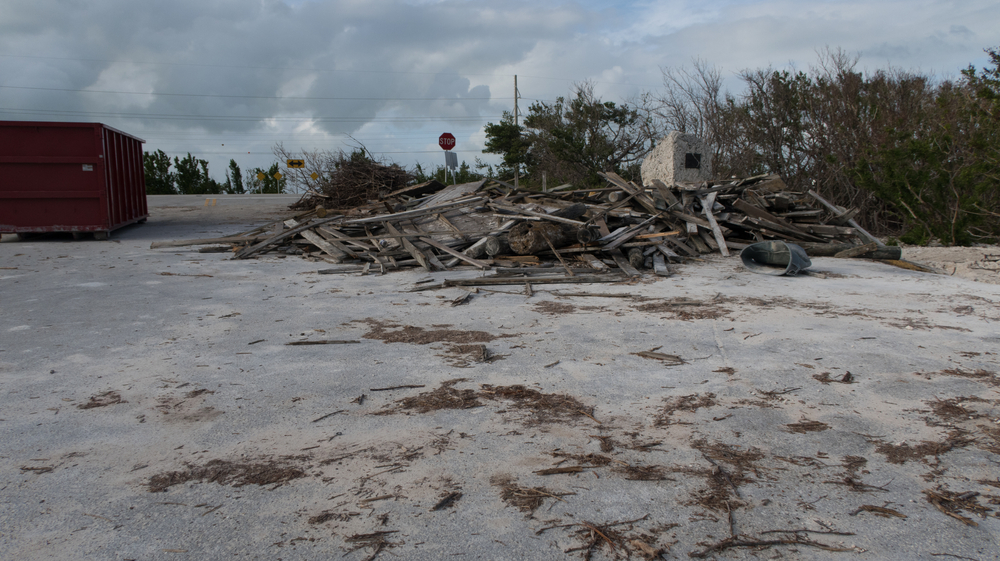
Extreme weather has swept across large parts of the United States this month, bringing dozens of tornadoes, flooding, softball-sized hail, and winds near 200 miles per hour. Although much of it hit Texas, the Midwest, and Vermont, the extreme weather extended to Guam and the Commonwealth of the Northern Mariana Islands (CNMI).
These islands, technically territories of the United State but really more like colonies, are home to about 220,000 U.S. citizens and closer to Japan than Hawai’i. They suffered through one of the largest typhoons (hurricanes) ever recorded outside of the typhoon season. The “monstrous” 500-mile-wide Super Typhoon Sinlaku had winds reaching 150–185 miles per hour and battered the islands for 48–72 hours.
The CNMI was hardest hit: homes and businesses were blown away, trees were uprooted, cars flipped, boats sank, and an entire harbor was destroyed. Six crew members went missing after a cargo ship capsized; one has been found dead. More than 1,000 people were displaced to Red Cross shelters in the CNMI and Guam. Many still lack electricity and running water. People wait hours for drinking water, fuel, and other supplies.
“Sometimes [they] have to leave empty-handed,” local activist Monaeka Flores told me via WhatsApp. “Help isn’t coming fast enough.”
Increasingly frequent storms, which have left people homeless and rebuilding from the Midwest to the Marianas, show how human-caused heating of the planet is driving dangerous weather worldwide. Last week’s storms came after parts of the United States experienced record-breaking heat in March, which researchers say is “virtually impossible without human-induced climate change.”
The damage inflicted on the Marianas reflects ironically misplaced federal priorities. Across five presidential administrations, billions of dollars have gone to building up the military presence on the islands while efforts to combat global heating or prepare the Marianas for extreme weather have been neglected. No other institution in the world emits more of the greenhouse gasses that cause global heating and climate change than the U.S. military. Its buildup in the Marianas and worldwide has contributed to fueling the massive storms damaging the islands, while harming locals in other ways.
The United States colonized Guam, the largest of the Mariana islands, as part of the settlement of the 1898 war with Spain, and it has ruled the Northern Mariana Islands since World War II. Although Guam and the CNMI have gained more rights over time, both remain in colonial relationships with the federal government (alongside Puerto Rico, the U.S. Virgin Islands, American Samoa, and Washington, DC). The Indigenous Chamorro and others born on the islands are U.S. citizens without a vote for president or voting representation in Congress.
The U.S. government has maintained this colonial relationship to keep a military presence in the western Pacific Ocean, especially in Guam (Guåhan in Chamorro), where the Navy and Air Force control nearly 30 percent of the island. For two decades the military has been building up its presence on the islands as part of a dangerous multi-billion-dollar military buildup in the Pacific to “contain” a supposed threat from China.
The construction and maintenance of huge bases like those in the Marianas are a major reason, along with weapons production, war training, and wars themselves, that the U.S. military is a large contributor to global heating. Although the Pentagon at times has portrayed itself as environmentally friendly, efforts to “green” the military have been superficial compared to the scale of U.S. operations. The military’s greenhouse gas emissions exceed those of nearly 140 countries.

The U.S. military budget currently exceeds $1 trillion a year—more than all other federal discretionary spending combined. Those expenditures come at the expense of investments to combat global heating and protect communities from extreme weather.
Indigenous Chamorro anthropologist Theresa Arriola is supporting disaster relief and leading a local movement opposed to the growing military presence in the Marianas and its harmful impacts on health, the environment, sovereignty, and Indigenous life. “These things are interlinked,” Arriola said about how stronger storms are connected to the greenhouse gas emissions of the military, weapons makers, and the larger Military Industrial Complex that profits off endless wars.
“Increasingly strong natural disasters fueled by the Military Industrial Complex place us in a more vulnerable position than we already are,” Arriola told me, “forcing us to respond to urgent community needs and taking away our ability to resist militarization.”
Arriola’s words apply equally nationwide: communities are struggling to respond to extreme weather events as the government prioritizes skyrocketing military spending over people’s basic needs. While the Federal Emergency Management Agency (FEMA) and U.S. Army Corps of Engineers are providing aid, locals in the Marianas have responded to the latest super typhoon, as before, by organizing mutual aid, emergency relief distribution, and fundraising for families, communities, and islands.
“There are many people on the ground responding and it’s been amazing to witness and help where I can,” activist Monaeka Flores told me.
Arriola says resisting war and militarization and advancing community care “go hand in hand. We’re learning how to be more self-sufficient through resistance by relying on our community.”