
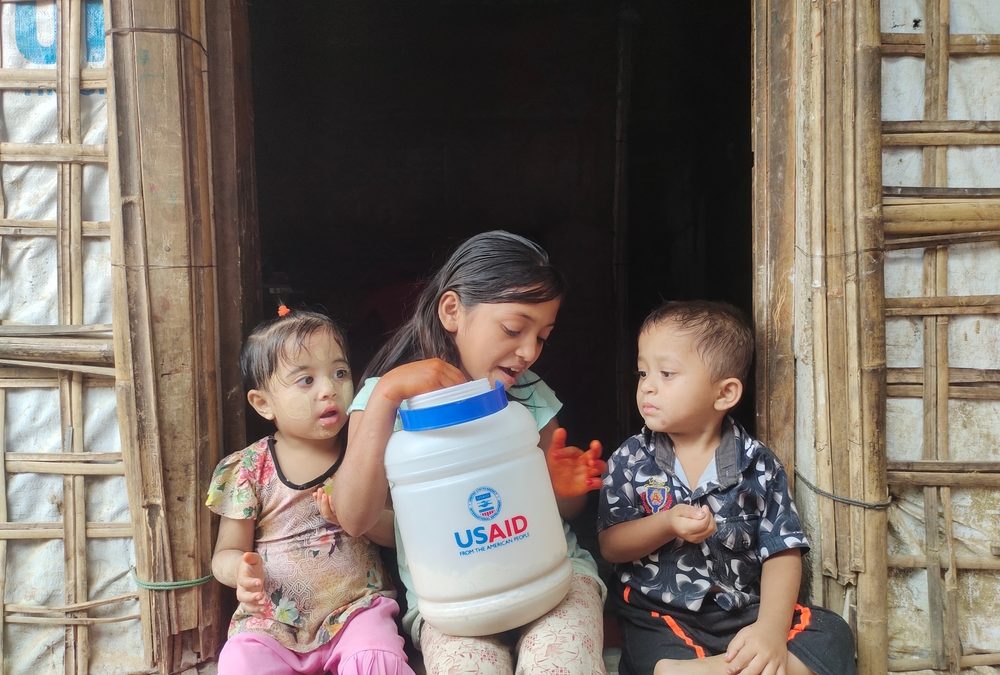
On July 1, 2025, USAID laid off thousands of staff, including me. A year later, I’m still wrestling with what it all meant. The justifications offered at the time—that USAID was riddled with corruption, fraud, and waste—didn’t match reality as I knew it.
Then in January, Jeremy Lewin, one of the leading DOGE executioners tasked with killing USAID, embraced a critique from the left and accused the agency of being “neo-colonial.” My first instinct was dismissive. Surely our intentions were too pure to deserve such an epithet.
But for all of our rhetoric of supporting local “partners,” I spent years maintaining a system that distorted their incentives. It wasn’t with the malice that Lewin ascribes. But for the hundreds of organizations around the world that the United States has abandoned, good intentions weren’t enough.
At less than one percent of the federal budget, USAID was, practically speaking, a rounding error. But for many people around the world, it was their entire business strategy. We categorized grants smaller than $200,000 as small, which was terminology I sheepishly used with leaders of shoe-string organizations in rural Nigeria whose yearly operating budget was $5,000. They either thrived on USAID money or barely survived.
In meetings with dozens of local organizations over my 14-year career, I made a point of asking, “What’s the plan without USAID?” Outreach to philanthropists? Every country has a wealthy elite, I’d tell them. A membership scheme? No prospective donor can resist a brick on a new building with their name on it, I’d say.
That conversation was never very productive. And why would it have been? In evaluating new funding proposals, USAID usually graded organizations partly on “past performance” with USAID or other donor funding. If there was a grade for “sustainability,” being better positioned to attract future donor funding was a perfectly acceptable answer. I, too, bragged on my annual performance evaluation, as I was encouraged to, if an organization whose grant I managed “graduated” to attract more donor funding.
Not all of our requirements were problematic. Insisting on attendance sheets and photos to ensure that an event took place helped organizations keep better records. Working with organizations to improve their financial processes in theory helped them to stand on their own. They usually reflected congressional mandates or legitimate accountability concerns.
During the first Trump Administration, USAID even had a major agency-wide initiative, the Journey to Self-Reliance, dedicated to “ending the need for foreign aid.” Staff worldwide spent many hours crafting elaborate scorecards to measure progress towards self-reliance. Yet there was no consistent definition of when self-reliance would happen, and to my knowledge no country completed the journey before the directive died a few years later. Moreover, there was very little discussion about what USAID’s exit would mean for local organizations.
With the incentives being what they were, and so much money potentially at stake, organizations did what any rational organization would do and they adapted. They invested in consultants who knew, or claimed to know, the jargon USAID wanted to hear. It’s still hard for me to say the acronyms (OCA, PPR, DQA) without falling asleep. They mastered our proprietary monitoring software. They spent many hours networking at U.S. embassy events or dutifully attending a meeting with a visiting congressperson at a moment’s notice. These activities had legitimate purposes and often contributed to better outcomes. But all of this time and money came at the expense of building out alternative relationships and operating models.
As for Lewin’s accusation of neo-colonialism, the USAID system did reward dependency, even as it sometimes spoke the language of self-reliance. It wasn’t neo-colonial, and reform was possible, but it also wasn’t a partnership of equals.
Because staff spent decades helping USAID grant recipients become better USAID grant recipients, the abrupt funding cutoff in the early days of the Trump administration hit like a hurricane instead of a drizzle. USAID staff were suddenly forbidden by senior agency officials from communicating at all with organizations it funded, including those where associating with the U.S. government carried personal risks. Long-standing contacts couldn’t receive the decency of a call back to receive information about what was going on and what they should do. USAID staff were simultaneously victims of the agency’s destruction and unwillingly complicit in abandoning some of the U.S. government’s most trusted relationships.
USAID did a tremendous amount of good, delivering real improvements to the health and well-being of millions of people. I still miss the work. At the same time, the system steered a lot of organizations towards the edge. Then DOGE pushed them over the edge. The U.S. government failed them twice.