
In August 2025, Donald Trump put an extra 25 percent tariff on Indian goods because New Delhi kept buying Russian oil, lifting the total duty to 50 percent. India held out for more than five months. In February it gave way. Trump’s executive order lifting the penalty recorded that India had committed to stop importing Russian oil “directly or indirectly.”
On October 9, Washington became a buyer itself. After a phone call with Vladimir Putin, Trump announced that Russia would ship more than 300,000 tons of diesel immediately, 500,000 tons in November, a million tons after that and then another 3 million. Within hours, the Treasury issued General License 135, authorizing the sale and import of Russian diesel, including into the United States, until April 7, 2027. The 2022 law banning Russian energy imports is still on the books.
Buying fuel during a shortage is not the scandal. The asymmetry is. India was told that Russian barrels paid for a war and that buying them carried a price. Washington has now decided that the same barrels become acceptable once American pump prices collide with an election calendar, and it made that trade for what amounts to about a week’s worth of diesel by one estimate. A sanctions regime that bends to the enforcer’s fuel bill stops working as a principle. It works as a price instrument, and every energy importer in the Global South will now treat it as one.
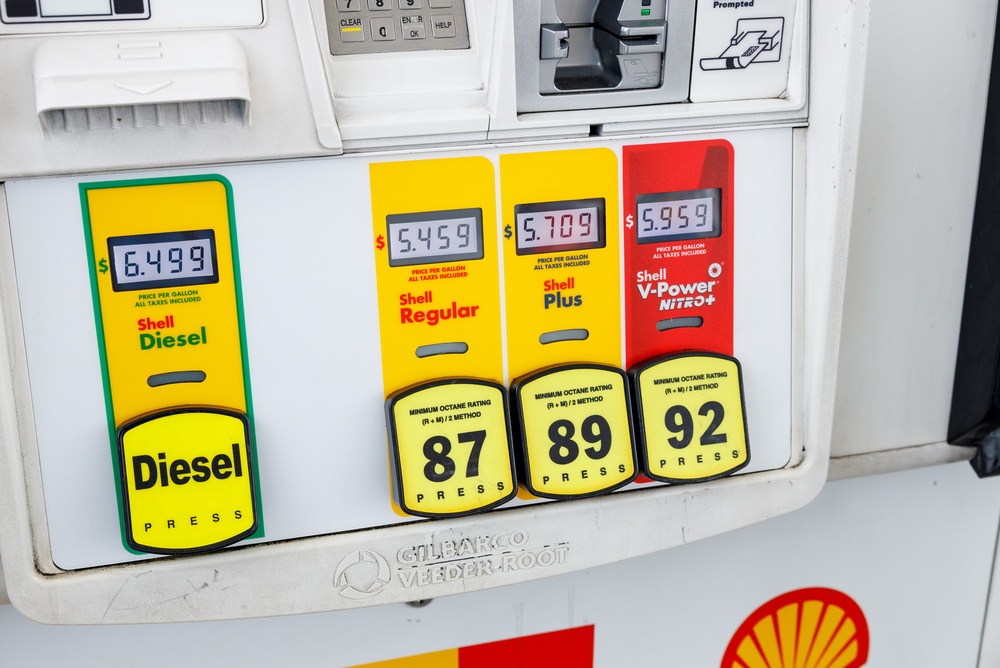
The sequence explains the decision. Ukrainian drones spent the summer hitting Russian refineries, and Moscow banned diesel exports on July 8. In late September, Trump asked Zelensky to scale back the strikes; a U.S. official told Axios that Kyiv ignored six such requests. U.S. diesel hit a record $6.52 a gallon on September 22 and still averaged $6.23 on the day of the call, with midterms set for November 3. A G7 pledge to release 100 million barrels of crude and diesel had not moved the pump price, and neither had an executive order freeing truckers to burn tax-exempt dyed diesel. Russian supply was the lever left.
Moscow priced that lever in public. On September 25, Kremlin spokesman Dmitry Peskov said that Russian diesel could saturate world markets but only sanctions stood in the way, which Putin confirmed at the Valdai forum on October 1. Eight days later Washington removed the obstacle that Putin and Peskov had named. What it received in return on the war was nothing: during the 90-minute call, Putin declined to commit to resuming peace talks with Ukraine.
The fine print matters more than the headline tonnage. Trump tied the largest tranche, 3 million tons, to “the condition of their Diesel Refineries.” That clause gives Washington a commercial stake in the very plants Ukraine has spent months trying to shut down. Zelensky called the arrangement “not fair and not honest,” noting that it was announced while his negotiators sat with U.S. envoys in Miami. The next day, Trump blamed Zelensky for American diesel prices and said Ukraine needed a new president. Russian glide bombs killed at least 20 people in Zaporizhzhia that same Saturday.
Then there is the law Trump signed in September. It directs the president to impose tariffs of up to 100 percent on goods from the five largest buyers of Russian oil and gas. Washington is now obliged to threaten its trading partners with triple-digit tariffs for buying Russian energy while it buys Russian energy. Republicans have noticed. Senator Thom Tillis said the deal may be illegal. Representative Brian Fitzpatrick is pushing a bipartisan bill to block it. Nebraska’s Don Bacon, whose state runs on farm and freight diesel, wrote that lower prices are needed “but buying Russian fuel is the wrong answer.” Treasury says it will proceed under existing authority.
Europe keeps exemptions of its own. On September 22, the EU dropped Alisher Usmanov and Mikhail Fridman from its blacklist under pressure from France and Luxembourg, the price for extending sanctions on some 3,000 others for three years. Western sanctions on Russia have always carried carve-outs. What changed on October 9 is that the largest one went to the government that wrote the rules for everyone else.
From South Asia, none of this is abstract. When the penalty tariff landed, India’s foreign ministry called it unfair, unjustified, and unreasonable, pointing out that other countries were buying the same oil untouched. New Delhi paid anyway. Its exporters absorbed a 50 percent U.S. duty, and relief came only after it promised to give up discounted Russian crude in a year when the Iran war had already squeezed Gulf supply. Nobody in Washington issued India a six-month general license. Pakistan and Bangladesh, which import most of their fuel and hold no leverage in Moscow or Washington, simply paid the higher diesel bill.
The logic now runs in only one direction. If affordable diesel justifies an exemption for farmers in Nebraska, it justifies one for farmers in Punjab, on either side of the border, and for bus operators in Nairobi. Restrictions that move world energy prices should be negotiated where the countries paying for them have a voice, starting at the United Nations. They should not arrive as a Treasury license issued on a Friday afternoon less than four weeks before a midterm vote.
Kremlin envoy Kirill Dmitriev said that Russia-U.S. cooperation on diesel “will benefit the world.” On prices, he may be right. The next time Washington asks an Asian refiner to walk away from a discounted Russian cargo, though, the refiner will have a one-word reply ready: diesel.