
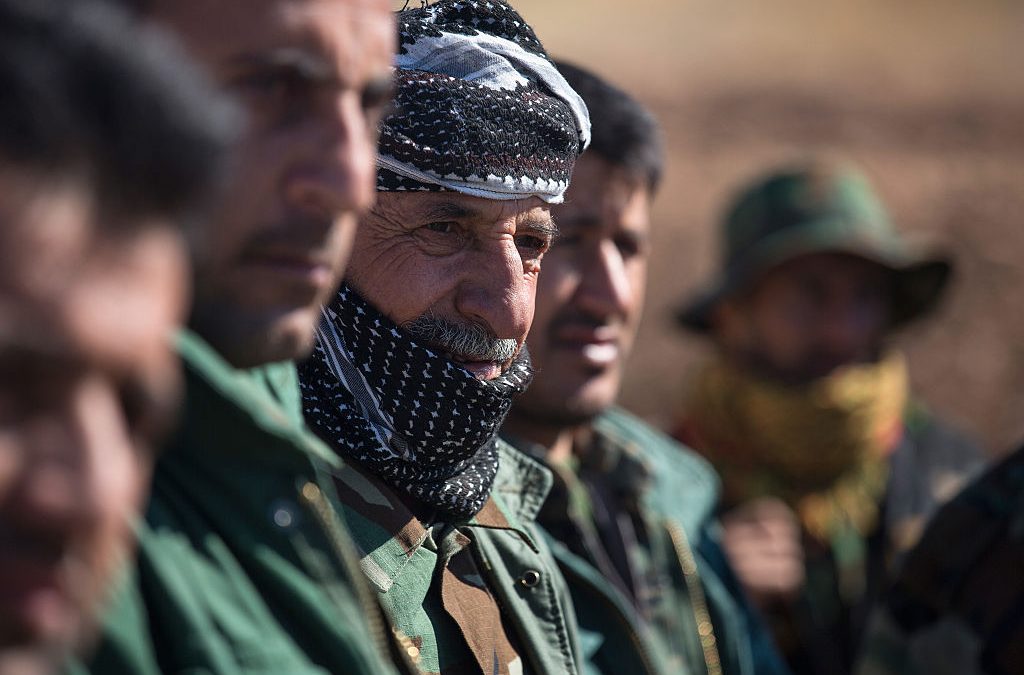
On September 30, 2026, U.S. and coalition forces left Erbil, ending their presence in the Kurdistan region of Iraq. U.S. Central Command argues that Iraqi forces, including the Peshmerga forces, can now deal with security threats with greater operational independence. From a national perspective, that may well be true. In the Kurdistan region, however, the picture is less straightforward.
Many of the Kurdistan region’s security problems were already visible before the coalition withdrawal. External military support made some of them easier to manage, but it did not resolve the continuing division of the Peshmerga along political lines. This is why the recent unification of the Peshmerga matters, since it draws together forces previously associated with different political parties. Only days before the coalition’s departure, the Kurdistan Regional Government (KRG) announced that the unification and reorganization of the Peshmerga had been completed. Under the new structure, the party-linked Forces 70 and 80 are to be replaced by two regional commands under the Ministry of Peshmerga Affairs (MoPA).
This is an important institutional step, but the personnel picture is more complicated. Reporting on the reorganization shows that figures associated with the former formations remain in leadership positions. The next question is what authority these new institutions will exercise in practice: commanders will need to answer to the ministry, personnel will need to be managed through common systems, and decisions will need to follow the new chain of command rather than established party structures.
These are critical considerations given the recent drone and missile attacks by Iran and Iran-backed militias, which have placed pressure on security structures. The attacks also affect civilian life, investment, and critical energy infrastructure at a time when Erbil is already managing a difficult relationship with Baghdad. Between February 28 and April 20 alone, the KRG recorded 809 drone and missile attacks, with civilians and private companies bearing much of the damage.
The Kurdistan Region clearly needs better protection against drones and missiles, especially after losing the defensive layer provided by coalition forces. But buying new systems would not settle the question of how they are used. Someone still must decide what is considered a threat, who can order a response, and how different units share information. These are command questions as much as technical ones. If the underlying structures remain divided, new equipment alone will not solve the problem and could make existing divisions more difficult to overcome.
Western governments still have influence over how this process develops because training, financing, and equipment remain important to the Peshmerga. They should use that influence to push the reform beyond organizational changes on paper. Future support should increasingly depend on whether the two regional commands operate through the MoPA, use common personnel systems, and follow the same chain of command. The same caution is needed with air defense. It makes little sense to build a separate system around Kurdish forces when Iraqi airspace ultimately must be defended. Any support in this area should therefore be coordinated with Baghdad while preserving the Kurdistan Region’s constitutional responsibility for its internal security forces.
A similar principle should guide future counter-terrorism cooperation. Although the coalition mission in Iraq has ended, its headquarters has moved to Jordan and the broader effort continues against the Islamic State of Iraq and Syria (ISIS). U.S. oversight reporting also points to continuing support for Iraqi and Kurdish partner forces. Training outside Iraq, intelligence exchange, and periodic joint exercises would allow this cooperation to continue without restoring the previous model of a long-term foreign military presence. Future assistance should, however, be channelled through accountable institutions rather than individual party-linked units.
This leaves both Erbil and Baghdad with a stake in making the reform work. The KRG cannot assume that external partners will continue to compensate for its internal political divisions. Baghdad, meanwhile, has little to gain from a weak Kurdish security system. Gaps along borders and in contested territories create opportunities for ISIS cells that neither government can address effectively on its own. Peshmerga reform should therefore be seen as part of the wider problem of building functioning Iraqi security institutions, rather than simply as an issue of Kurdish autonomy.
The coalition withdrawal is therefore better understood as a test of the reforms already underway than as a simple story of Western disengagement. Continued U.S. and European support still have a role, particularly in training, intelligence cooperation, and air defense. But that support will be most useful if it gives Kurdish leaders fewer opportunities to postpone the difficult parts of Peshmerga reform.
The structures announced in September are a start. What matters now is whether authority, personnel, and decision-making move into those structures. That is a political challenge inside the Kurdistan Region, and outside military assistance cannot resolve it on its own.