
This month, two international courts have faced tests that expose a central weakness in the international legal order. In October, the United States imposed sanctions on the International Criminal Court as an institution, extending earlier measures against its judges and prosecutors. On November 19, the International Court of Justice delivered its judgment in the genocide case brought by The Gambia against Myanmar, finding that Myanmar had committed genocide against the Rohingya.
Together, these developments raise an uncomfortable question: does accountability under international law depend on the political power of the state concerned?
In law, the answer should be no. The international legal system rests on the principle of sovereign equality between states, enshrined in the Charter of the United Nations. All states are bound by the same rules and obligations, whatever their size or their political, economic, or military weight. In practice, however, whether a violation is followed by consequences depends not only on its gravity but also on the balance of power, and on whether influential states are willing to cooperate with international institutions.
The weakness lies less in the absence of legal rules than in the limits of enforcement. Judgments of the International Court of Justice are binding on the parties, but the Court has no independent enforcement arm. Article 94 of the UN Charter allows a party to refer non-compliance to the Security Council, which may make recommendations or decide on measures to give effect to the judgment. That route is vulnerable to politics: the permanent members retain the power of veto. The best-known illustration is Nicaragua v. United States. After the ICJ ruled against Washington in 1986, the United States vetoed a Security Council draft resolution calling for compliance. A mechanism designed to support the Court’s rulings can therefore be blocked by the very state against which the judgment was delivered.
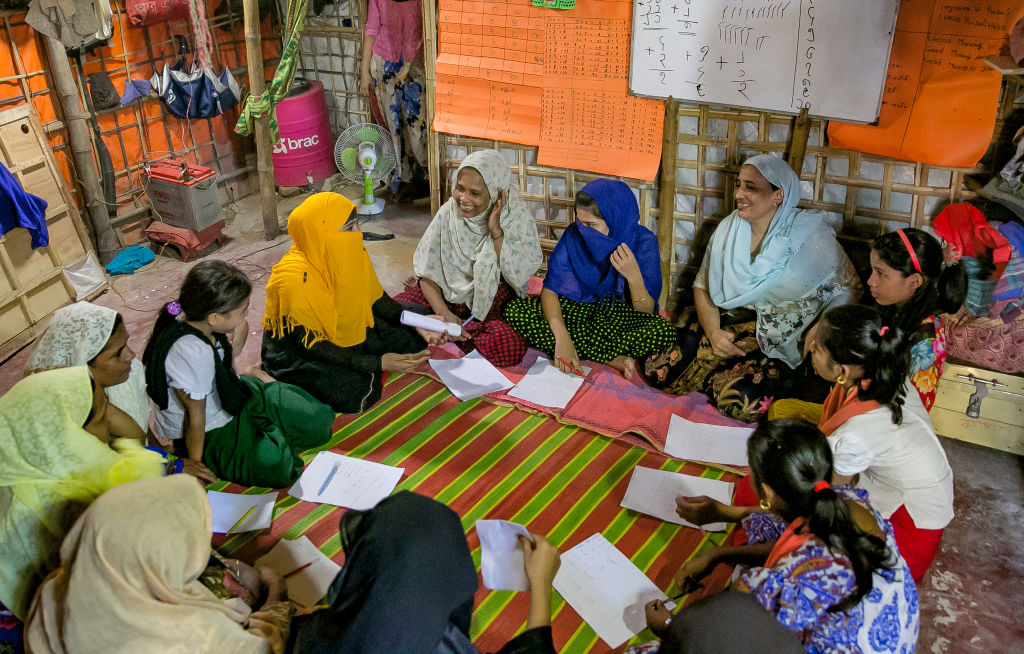
The Gambia v. Myanmar demonstrates another side of the problem. In 2019, The Gambia, a small West African state, brought proceedings alleging that Myanmar had violated the Genocide Convention in its treatment of the Rohingya. The Court indicated provisional measures in 2020 and upheld its jurisdiction in 2022. On November 19, 2026, it delivered its judgment on the merits and found that Myanmar had committed genocide against the Rohingya during the 2017 clearance operations in northern Rakhine State. The Court also found violations of Myanmar’s obligations to prevent and punish genocide and to enact the necessary legislation to give effect to the Convention.
This is a landmark legal finding. But a judgment, however significant, is not the same as accountability. Its practical effect will depend on whether Myanmar complies and whether other states are prepared to support implementation.
The International Criminal Court, which prosecutes individuals rather than states, faces pressure of a different kind. The October measures followed earlier U.S. sanctions on its judges and prosecutors. The Court has strongly rejected the institutional sanctions, describing them as an attempt to obstruct its work. Its ability to continue operating matters, but resilience should not obscure the principle at stake. The independence of an international court depends not only on legal texts but also on the political environment in which it operates. It should not hinge on the goodwill of the most powerful states, particularly when the Court’s work touches their interests.
Sanctions are another tool used in the name of accountability, and research on their effectiveness is more nuanced than the headlines suggest. A 2024 review by Daniel Drezner finds that economic coercion can be more effective than scholars once believed, while also highlighting substantial unintended consequences. Sanctions can impose heavy costs without changing a state’s behaviour, and ordinary people often bear much of the burden. Their effects vary with the objective, design, and degree of international cooperation behind them. Imposing costs is not the same as securing accountability. The contradiction is especially stark when a tool intended to enforce international norms is directed at the institution charged with applying them.
These problems do not harm only the states directly concerned; they weaken the international system as a whole. When the prospect of accountability varies with a country’s influence, confidence in the impartiality of international institutions erodes. International law becomes less able to regulate relations between states and more likely to be seen as an instrument shaped by political alliances and strategic interests.
The result is not simply selective enforcement. It is a loss of confidence in the idea that international obligations apply equally.
States can help address this problem without creating entirely new institutions. Those that support the ICC can take practical steps to protect its independence and ensure that sanctions do not obstruct its mandate or the work of those cooperating with it. Members of the Security Council can also consider commitments not to use the veto to block action in response to non-compliance with ICJ judgments. Such measures would not eliminate political influence, but they could make it harder for power to determine whether international law has consequences.
The judgment in The Gambia v. Myanmar demonstrates that international courts can make consequential findings, including against states accused of grave violations. But its significance will be measured not only by what the Court has declared but by what happens next. International law cannot guarantee that every judgment will be enforced immediately. It must, however, insist that accountability does not become a privilege reserved for states with less political power. A legal system in which the likelihood of enforcement varies with the strength of the state concerned risks losing one of its most important foundations: the confidence that it is a common framework governing all states rather than a tool whose effectiveness depends on the balance of power.