
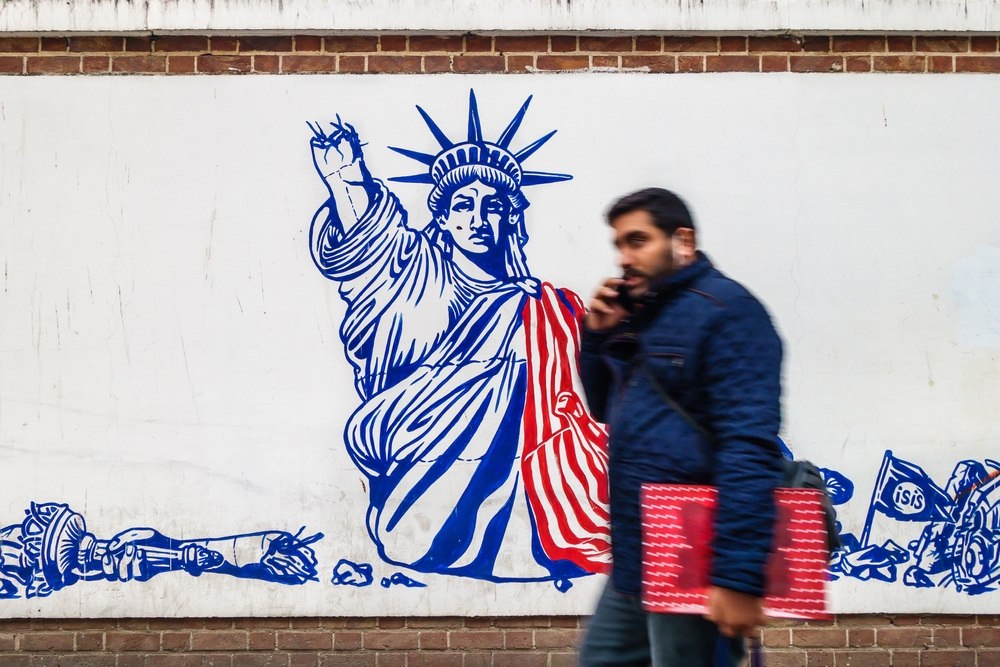
Since the initiation of the joint U.S.-Israeli campaign on February 28, 2026—known as Operations “Epic Fury” and “Roaring Lion”—the world has watched a display of military kineticism unparalleled in the twenty-first century. High-altitude precision strikes have severely damaged nuclear facilities, and “decapitation” missions have claimed the lives of the Supreme Leader and the upper echelons of the IRGC.
However, a haunting question looms over the global community: Can this war end quickly?
The answer is a sobering “no.” The conflict is not racing toward a conclusion. Rather, it is descending into a protracted, grinding stalemate of social and civilizational endurance. To understand why, it is necessary to look beyond the inventory of cruise missiles and into the deep socio-economic frameworks described by economist Zhiwu Chen in The Logic of Civilization. This war is not merely a clash of armies. It is a collision of two fundamentally different systems of risk-management and societal resilience.
In Chen’s framework, the evolution of human civilization is a persistent struggle against risk. A society’s ability to survive a crisis is determined by the “risk-response system” it has built over centuries. Iran’s system exemplifies what Chen describes as an “inward-looking” or “traditional” framework. It is anchored in religious community, ethnic bloodlines, and a centralized, ideological mobilization apparatus. The defining characteristic of such a system is its paradoxical relationship with external pressure: the greater the outside force, the higher the internal cohesion.
This civilizational logic was codified in the first official statement from the new Supreme Leader, Mojtaba Khamenei, released on March 12. Eschewing any path toward de-escalation despite the personal loss of his father, mother, and wife in the opening strikes, the new leader struck a tone of absolute defiance. Rather than a military briefing, his statement was a theological manifesto on risk-sharing.
By framing every casualty—including the 175 victims of the Minab school strike—as an “independent case for retribution,” the regime internalizes suffering and distributes it across the collective. In a traditional system, the death of a leader is not a systemic failure but a “martyrdom” that fuels the next cycle of resistance. This creates a society with a massive buffer for pain. For the Iranian leadership, surrendering to Western demands is not a pragmatic exit, but the total collapse of their civilizational risk-mitigation strategy. They would rather endure a decade of ruin than a day of perceived subjugation.
Conversely, the United States and Israel represent the pinnacle of the “modern” risk-response system. This system relies on markets, technology, global alliances, and the “externalization” of risk. By using high-tech drones and standoff munitions, the West attempts to wage war without the “risk” of significant domestic casualties or long-term economic drain. However, modern systems have a different kind of fragility. Although their intensity is unmatched, their resilience is brittle. The modern democratic state is hyper-sensitive to market fluctuations, energy spikes, and shifts in public opinion.
As of March 14, this fragility is manifest. Brent crude has settled at $103.14 per barrel, and the Strait of Hormuz remains effectively closed, stranding 20 percent of the world’s daily oil supply. The Supreme Leader’s directive to continue using the “lever of blocking the Strait” specifically exploits this weakness. The International Energy Agency has authorized a record release of 400 million barrels from emergency reserves, yet the market remains unimpressed, with Goldman Sachs strategists estimating a “geopolitical risk premium” of $18 per barrel.
In the West, the “risk-transfer” mechanism begins to fail when the cost of war is re-imported to the consumer. When a gallon of gas in California hits record highs and global supply chains for everything from fertilizer to semiconductors begin to snap, the “modern” system faces a ticking clock that the “traditional” system does not. The Iranian state understands that while it cannot win on the battlefield, it can outlast the Western voter’s appetite for economic disruption.
The Western strategic goal—a quick “regime change” from the air—is an attempt to solve a civilizational problem with a technological tool. But as the history of recent conflicts in Iraq and Afghanistan has proven, airpower can destroy a state’s capacity to govern, but it cannot force a society to adopt a new logic of coexistence. The United States and Israel may achieve “victory” on every battlefield yet find themselves trapped in a strategic vacuum where there is no authority left to sign a surrender and no population willing to accept a puppet peace.
In his March 12 address, Mojtaba Khamenei warned of expanding the war into “other fronts where the enemy has little experience and is highly vulnerable.” This suggests a shift from conventional defense to a long-term, asymmetric insurgency that targets the “soft arenas” of the global economy. By threatening to “take from the enemy’s assets” as compensation for war damages, the new leadership is signaling a transition to a “grey zone” conflict that could last years, regardless of who controls the rubble of Tehran.
The fundamental reason a quick end is impossible lies in this total divergence of strategic goals. It is a zero-sum game. The West believes more pressure will cause a “tipping point,” while Iran believes more endurance will cause a “breaking point” in Western political will. In such a landscape, conflict enters a recursive loop: Strike, Counter-strike, Escalation. Any temporary ceasefire becomes a mere “breathing spell” rather than a path to peace.
This war has ceased to be a conventional geopolitical dispute. It is now a contest between two different forms of human organization. Iran relies on the “low-tech” but high-resilience bonds of religion and nationalism. The United States and Israel rely on “high-tech” but high-sensitivity systems of market and technological dominance.
The final outcome will not be decided by whoever has the most advanced bombs, but by whoever can endure the cost of the conflict the longest. For the international community, the most realistic path is not to wait for a sudden “victory” or a collapse that may never come. Instead, the focus must shift toward “de-risking” the escalation—limiting civilian suffering, preventing regional spillover, and creating the diplomatic space for an eventual return to the negotiating table.