
Indonesia’s strategic autonomy is often described as a diplomatic effort to avoid choosing sides. Increasingly, it is something more practical: an effort to avoid having too few choices.
From Washington’s point of view, Jakarta’s simultaneous engagement with the United States, China, Russia, ASEAN, and other partners can look like a balancing act. From Indonesia, however, the calculation is also shaped by geography and development. In an archipelagic country spread across thousands of islands, connectivity, markets, technology, investment, energy, and infrastructure are not abstract geopolitical concepts. They are conditions for development.
That helps explain why Jakarta has resisted exclusive alignment.
Indonesia’s long-standing foreign-policy principle of bebas aktif – usually translated as “free and active”—does not mean standing apart from international affairs. It means retaining the freedom to make independent choices while remaining actively engaged internationally. In July 2026, Foreign Minister Sugiono described the principle as giving Indonesia room to determine its position independently while remaining active in international affairs.
That principle is becoming more consequential as economic interdependence itself becomes geopolitical. Supply chains are being reconsidered. Technology is increasingly linked to national security. Critical commodities have acquired strategic importance. Trade policy is increasingly used as an instrument of statecraft.
For Indonesia, diversification can therefore be a form of resilience.
This does not mean treating every major power equally, or assuming that every partnership serves the same purpose. Indonesia has different interests with Washington, Beijing, Tokyo, Seoul, New Delhi, Moscow, Europe, and its ASEAN neighbors. Its simultaneous engagement in forums ranging from BRICS to the OECD accession process reflects an effort to expand strategic and economic room for maneuver rather than place all its interests in one camp.
The objective is not to maximize distance from any particular power. It is to preserve enough policy space to pursue interests where they overlap.
Recent U.S.-Indonesia economic developments illustrate the point.
The two countries signed an Agreement on Reciprocal Trade in February 2026. The agreement, which remains pending entry into force, would reduce or eliminate U.S. tariff barriers on approximately 99 percent of Indonesia’s tariff lines for qualifying U.S. agricultural and industrial goods and addresses a range of non-tariff barriers. It also frames the bilateral relationship in terms of resilient supply chains and economic security.
For Washington, this is more than a trade instrument. It shows that Indonesia is prepared to deepen practical economic cooperation with the United States when the partnership produces tangible value. The agreement also creates a practical opening on critical minerals. Indonesia committed to facilitate U.S. investment across exploration, mining, refining, processing, transport and infrastructure, while the two sides agreed to cooperate on critical-mineral supply chains.
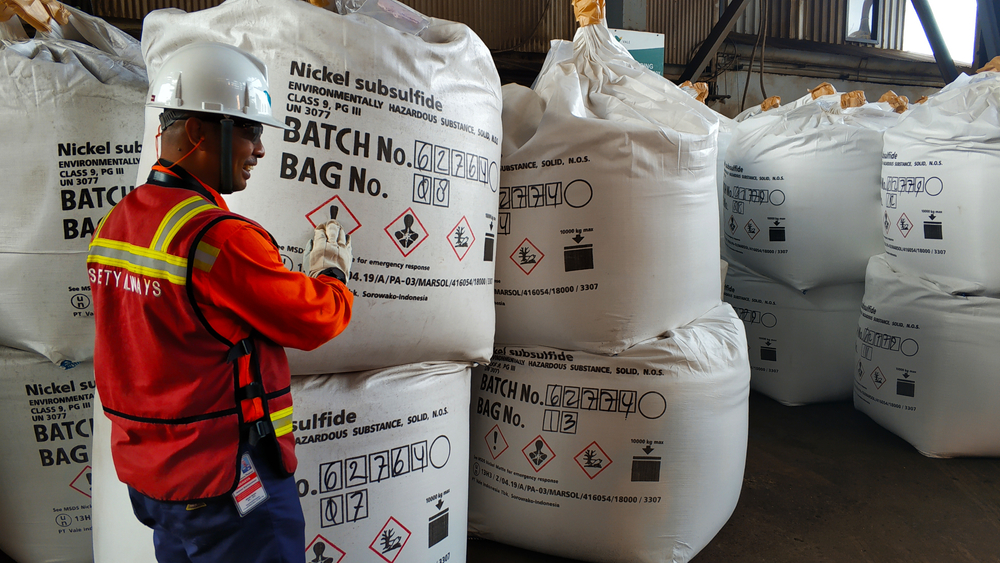
The contrast with Indonesia’s nickel sector is instructive. Chinese investment has become deeply embedded in Indonesia’s nickel industry, including mining, industrial parks, smelting and refining. The International Energy Agency reports that Chinese investment in Indonesia’s nickel refining sector reached about $30 billion in 2024, with Chinese companies accounting for around 75 percent of refining capacity. Indonesia’s experience shows why diversification can mean expanding options rather than replacing one partner with another. Deeper cooperation with Washington does not require Indonesia to disengage from other partners.
There is also a security dimension. In April 2026, Washington and Jakarta announced a Major Defense Cooperation Partnership to deepen defense cooperation, including modernization, training and professional military education, exercises and operational cooperation. Economic resilience and security cooperation can therefore advance alongside Indonesia’s strategic autonomy.
The more useful question for Washington may therefore be not whether Indonesia will choose between Washington and Beijing, but what forms of cooperation Indonesia considers valuable enough to sustain.
Technology is one area. Infrastructure, education, research, maritime cooperation, digital development, and investment offer others.
Indonesia’s current economic diplomacy in ASEAN reflects the same logic. On September 24, Indonesian officials highlighted supply-chain diversification, energy and food resilience, digital transformation, trade and investment facilitation, and stronger participation by small businesses as priorities for regional cooperation.
The message is straightforward: resilience requires options.
I write this from Bawean Island in East Java, where the meaning of connectivity is considerably less abstract.
Here, transport links, digital access, reliable energy, and connections to wider markets affect what people can produce, sell, study, and build. A regional airport is not merely an infrastructure asset. A digital connection is not simply a technology project. Both can determine whether an island community remains economically connected to the rest of the country.
This is why Southeast Asia should not be viewed only through the lens of strategic competition.
A port, airport, digital network, research partnership, investment project, or logistics connection can matter to local communities long after a geopolitical summit has ended.
For Washington, this suggests a different way of approaching Indonesia.
Rather than measuring the relationship primarily by strategic alignment, the United States can deepen its position through practical partnerships that expand Indonesia’s choices: technology cooperation, connectivity, education and research, maritime cooperation, digital development, and predictable access to markets.
Such an approach would not require Washington to ignore its strategic concerns. Nor would it require Indonesia to ignore its own.
The objective is to identify areas where interests genuinely overlap.
Indonesia’s strategic autonomy, in this sense, should thus be understood as an invitation to engage Indonesia without requiring it to become dependent on any single partner. For a country as geographically diverse as Indonesia, keeping multiple doors open is not necessarily diplomatic indecision. It can be a development strategy.
And from an island such as Bawean, the logic is simple: strategic autonomy is ultimately not about keeping the world at a distance. It is about keeping enough doors open for people to reach it.