
All Commentaries

My Non-intervention Problem
Progressives are advised to temper their reflexive antipathy toward intervention.

Review: Tahrir 2011
In the recent documentary Tahrir 2011: The Good, The Bad & The Politician, three directors present varying perspectives on the Egyptian Uprising and provide a comprehensive overview of what was happening on Tahrir Square, and why. The documentary is divided into three sections: The Good, directed by Tamer Ezzat, The Bad, directed by Ayten Amin, and The Politician, directed by Amr Salama. Executed in a cinematic style, each section includes visuals, live footage of protests, and interviews, as well as considerable wit and sophistication, to tell the story of the Egyptian Spring.
Syria, the United States, and the El Salvador Option (Part One)
The United States has been funding Syria opposition groups since 2005.

Blogging the Rio+20 Earth Summit for the Rest of Us: The Eurozone Crisis
Just enough Greek voters gritted their teeth and switched their votes to give the center-right New Democracy party another shot at government in their June 17 elections. Amid this victory for fear over hope it’s bear in mind the metoric rise of the radical anti-austerity Syriza coalition, which polled a close second. Syriza’s support rose from 5 percent in 2009 to 27 percent on Sunday, narrowly avoided the fate of presiding over the next phase of the country’s economic collapse.
Big Meetings
Conservative activist Andrew Breitbart, who died earlier this year, created an empire of websites that attack big, fat liberal targets. There’s Big Government, Big Hollywood, and Big Journalism. In 2010, he intervened into foreign policy with his final effort, Big Peace. Not surprisingly, he never got around to launching websites that attacked Big Money or Big Military. Nor did Big Mouth ever appear, for that would have been a wholly uncharacteristic foray into self-criticism.
Taliban Vaccination Ban: Paranoia or Based in Fact?
CIA taints polio vaccination campaigns by using them as a cover for espionage.

Playing the Spoiler in Colombia
When Barack Obama entered office in 2009, many Latin America specialists reveled in the prospect that U.S. policy would reform its Cold War approach to a region that is a major source of foreign oil, illegal immigration, and illicit narcotics. The United States would at last recognize and address the complex political and economic dynamics of a region still struggling with its colonial legacy, and where one-third of people still endure often extreme poverty.
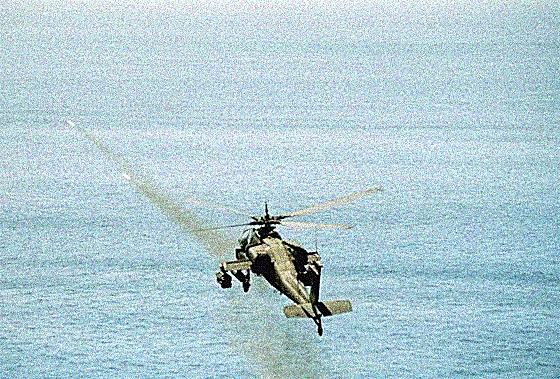
U.S. in No Position to Condemn Alleged Russian Transfer of Helicopter Gunships to Syrian Regime
The Obama administration’s opposition to the alleged Russian arms sale is the result reflects a desire to weaken the Syrian regime’s ability to combat rebels armed by U.S. allies Saudi Arabia and Qatar.
Congress Attempts to Legislate Away Containment of Iran and Replace It With War
Iran could be forgiven for interpreting our coercive diplomacy as a reason, were it so inclined, to arms itself with nuclear weapons.
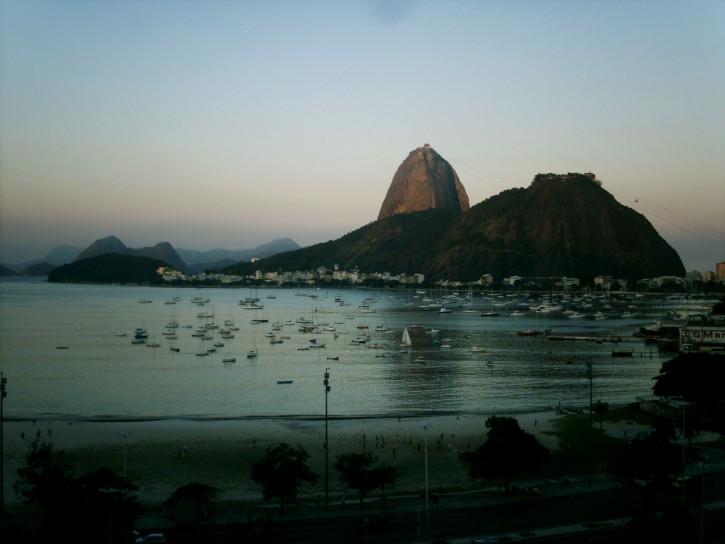
Blogging the Rio+20 Earth Summit for the Rest of Us: What’s at Stake with the Green Economy
President Barack Obama may be steering clear of the Rio+20 summit, but thousands of government delegates, civil society activists, and business lobbyists are already streaming into Brazil.