
All Commentaries

Review: The American Way of War: How Bush’s Wars Became Obama’s
Since the attacks of September 11, protection from terrorism has become the United States’ national obsession. Demands for security from the terrorists that seemingly menace the country at every turn have led the U.S. military to occupy two countries and expand the hundreds of bases that it maintains in dozens of foreign nations.
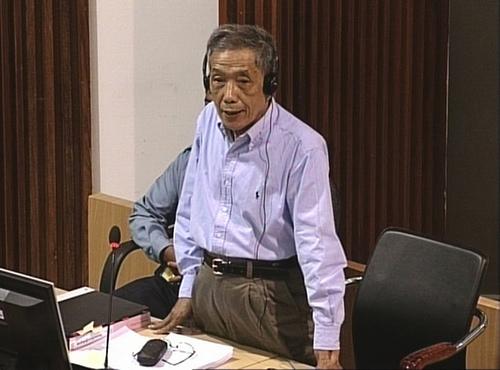
Wrestling with the Khmer Rouge Legacy
The Khmer Rouge Tribunal delivered its first verdict in July against Kaing Guek Euv, alias “Duch,” the director of the notorious S-21 prison, a torture and extermination center under the rule of Cambodian dictator Pol Pot. After a 77-day trial, the five judges — two international and three Cambodian — unanimously convicted Duch of committing crimes against humanity. He was sentenced to 35 years in prison.
What You Will Not Hear About Iraq
Iraq has between 25 and 50 percent unemployment, a dysfunctional parliament, rampant disease, an epidemic of mental illness, and sprawling slums. The killing of innocent people has become part of daily life. What a havoc the United States has wreaked in Iraq.
The US-Japan Alliance Must Evolve: The Futenma Flip-Flop, the Hatoyama Failure and the Future
In the raging currents of world history, the framework of Cold War-style “alliance diplomacy” has reached its limit. In particular, the mechanism of the US-Japan alliance that has become fixed by inertia and vested interests in the 65 years since the end of the war has clearly begun to squeak, and the need for the rejuvenation of this alliance is becoming sharply visible.
The Lowest Form of Military Aggression
On July 1, 2010, Costa Rica’s Legislative Assembly authorized the U.S. military to undertake policing duties in Costa Rica, based on an expired “Cooperation Agreement.” Just one small problem: Costa Rica abolished its army in 1949 and since then has had no national military forces.
The Problem with Lee’s Reunification Plan
The people of South Korea, North Korea and the United States are already paying a tax, not for reunification, but for preparation for war
Where’s Our Money?
I have a simple question for Robert Gibbs, the outspoken press secretary of the Obama administration, where’s the money?
Sixty Years of Failed Sanctions
In response to the March 26 sinking of the South Korean ship, the Cheonan, allegedly by a North Korean submarine, the United States is poised to adopt even more stringent sanctions against North Korea. Robert Einhorn, the U.S. State Department’s special advisor for nonproliferation and arms control, recently announced in Seoul that after legal and other questions were sorted, sanctions would be in place “in the next several weeks.”

Review: ‘The Most Dangerous Place’
In a speech he gave on March 27, 2009, President Obama referred to the remote areas of the Pakistani frontier as, “for the American people…the most dangerous place in the world.” It is from this speech that Imtiaz Gul drew the title of his book, The Most Dangerous Place: Pakistan’s Lawless Frontier. Gul provides a comprehensive, inside look at the chaotic situation in Pakistan’s tribal areas, which have become an epicenter for extreme Islamic militancy.
Beating Swords Into Ploughshares
In last month’s blitzkrieg tour of Central and Southeast Asia, two of the four stops Secretary Clinton made share the unfortunate bond of enduring an invasion by U.S. air and ground forces. In the space of a few days, Clinton visited both Vietnam and Afghanistan, thus physically linking what had once been, and then what has now become the United States’ longest war. One of the more insidious links that tie these conflicts together was highlighted in a few of the news stories about Clinton’s trip. That link, in a word, is agribusiness.