
All Commentaries
Starting Where North Korea Is
Social workers are fond of saying that they must start where their clients are. This basic principle of social work is not theoretical. It comes from decades of practice. Simply telling people what they should do rarely translates into their actually doing “the right thing.” So instead, social workers have turned the tables by beginning not with the desired endpoint, as determined by the social work profession, but with the client’s articulated fears and concerns.
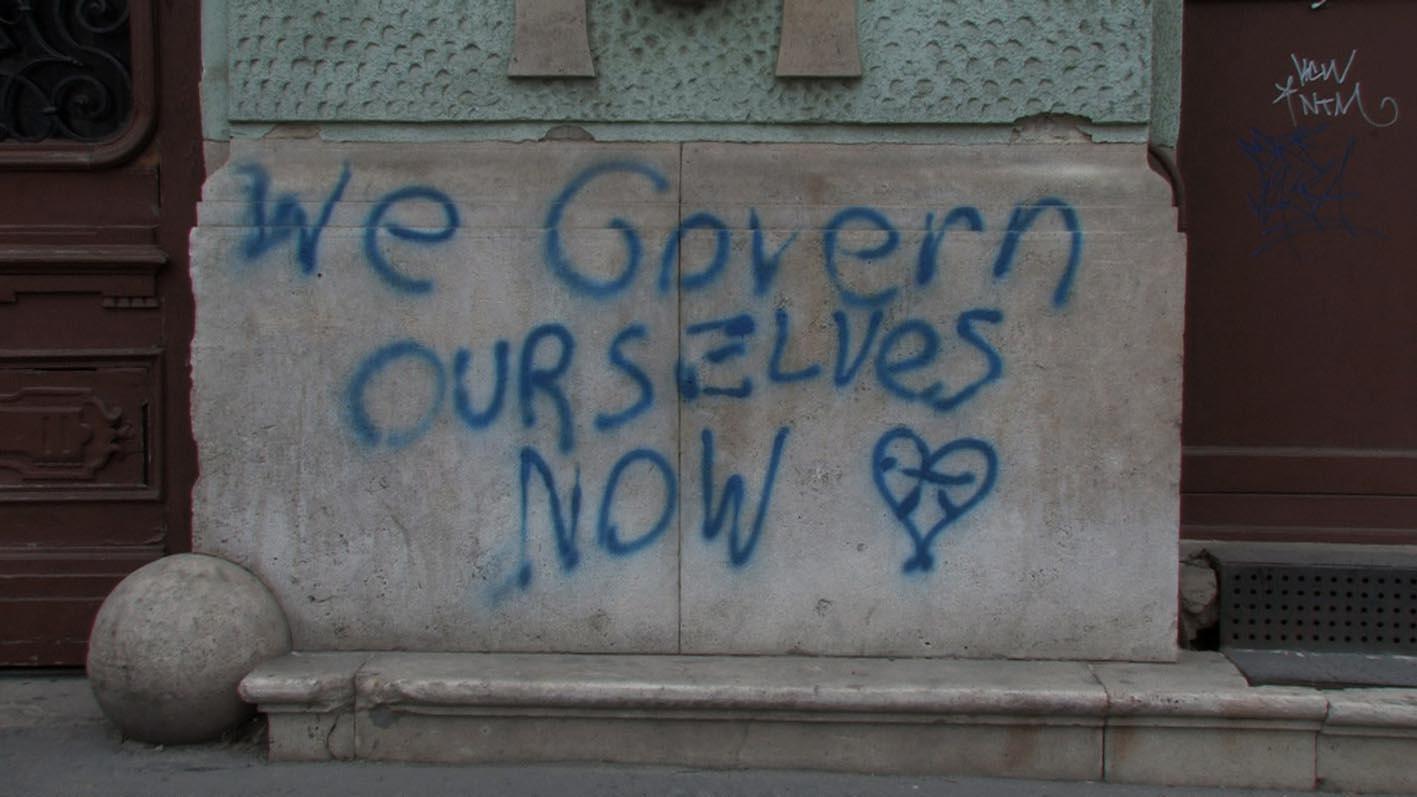
What is Democracy?
Intentionally blurring the boundaries between art and activism, Vienna-based artist Oliver Ressler has produced a prolific body of explicitly political works. His theme-specific exhibitions, projects in public space, and multi-part video installations embody new methods of global resistance. Through these works, he relentlessly tackles a wide range of critical topics such as racism, economic globalization, and genetic engineering.
Coverups in Afghanistan
The conflict in Afghanistan, which will enter its 10th year this fall, shows no signs of abating. The United States has expended substantial blood and treasure to try and stabilize the country. However, recent events suggest that U.S. efforts are problematic in themselves and that the chaos will only worsen. There are critical problems with accountability, transparency, and public scrutiny, all of which not only make it harder for the United States and NATO to shift away from unproductive policies. These also create serious domestic political issues in Afghanistan.

Postcard From…Kogelo
Since Senator Barack Obama became the president of the United States, visiting his paternal grandmother — “Mama Obama” — in her remote west Kenyan village of Kogelo became slightly more difficult. A small military camp had been built next to the access road to her house, and the compound is protected by a metal gate and security post.

Allied Regime Change
Earth Day was a big event this year. Sting sang on the Mall here in Washington. The citizens of Qatar turned off their power for an hour. The U.S. Navy rolled out its new biodiesel-fueled Green Hornet fighter jet.
Does Israel Belong in the Club?
Next month, the Organization for Economic Cooperation and Development (OECD) is expected to invite Israel to join its 30-strong club of rich, mostly Western countries pursuing a “stronger, cleaner, fairer world economy.” Accession would conclude three years of formal negotiations and almost two decades of lobbying from successive Israeli governments, with Foreign Minister Avigdor Lieberman especially keen to align his country with the world’s advanced democratic nations. OECD status will accelerate investment, raise Israel’s credit rating, and strengthen its voice in international affairs.
Marines Go Home: Anti-Base Activism in Okinawa, Japan and Korea
The U.S. military’s Kooni Firing Range in the South Korean village of Maehyang-ri was closed in 2005, following a concerted effort by anti-base activists. Kageyama Asako (narrator and co-producer of Marines Go Home) discusses the lessons from Maehyang-ri in the context of the Futenma relocation debate that is at the heart of current U.S.-Japan conflict.
Of Donors and Disasters
When representatives from 136 countries attended the high-level International Donors’ Conference in New York on March 31, it looked like good news for Haiti. The conference, co-hosted by the United States and the UN, garnered commitments of large sums from donors and called for coordination with the Haitian Government, charged with leading the efforts. In total, donor states publicly pledged over $9.5 billion to be disbursed over 10 years.
Obama’s “Remainees” Will Not One But Two Guantanamos Define the American Future?
On his first day in office, President Barack Obama promised that he would close the Bush-era prison at Guantanamo Bay, Cuba, “as soon as practicable” and “no later than one year from the date of this order.” The announcement was met with relief, even joy, by those, like me, who had opposed the very existence of Guantanamo on the grounds that it represented a legal black hole where the distinction between guilt and innocence had been obliterated, respect for the rule of law was mocked, and the rights of prisoners were dismissed out of hand. We should have known better.
By now, it’s painfully obvious that the rejoicing, like the president’s can-do optimism, was wildly premature. To the dismay of many, that year milestone passed, barely noticed, months ago. As yet there is no sign that the notorious eight-year-old detention facility is close to a shut down. Worse yet, there is evidence that, when it finally is closed, it will be replaced by two Guantanamos — one in Illinois and the other in Afghanistan. With that, this president will have committed himself in a new way to the previous president’s “long war” and the illegal principles on which it floundered, especially the idea of “preventive detention.”
Environmental Protection of Bases?
Just weeks before today’s Earth Day, and for the second time in little more than a year, environmental groups have teamed with governments to create massive new marine protection areas across wide swaths of the world’s oceans. Both times, however, there’s been something (pardon the pun) fishy about these benevolent-sounding efforts at environmental protection.