Energy
Dismantling Elmina Castle

Dismantling Elmina Castle

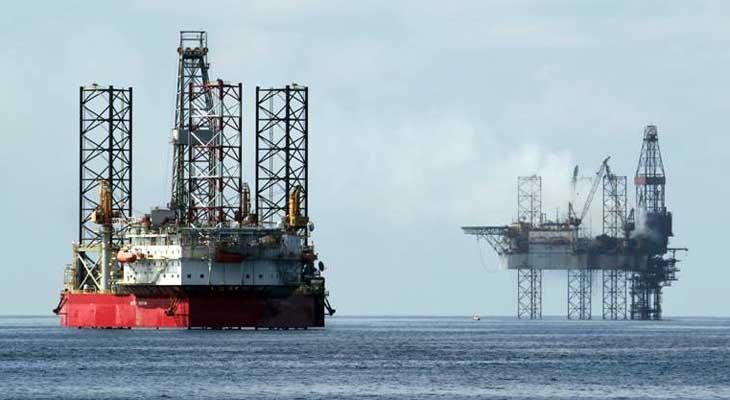
According to Ghana’s Minister of Energy, 13 different petroleum operations are in different stages of oil exploration off Ghana’s shore, and more companies are seeking production rights all the time. The British, Dutch, Chinese, Italians, Russians and Americans are all salivating at Ghana’s front door. Ghana has long been a leading cocoa exporter, but cocoa and its end product chocolate do not elicit the intensity of lust that oil does. 

read more

The Politics of Nuclear Crisis and Renewable Energy in Japan

On August 26, 2011, Prime Minister Kan Naoto resigned from office after a tempestuous fifteen months in power. Since May 2011 a virtual lynch mob egged on by the media bayed for his resignation. Kan’s ouster became an obsession of the nation’s powerbrokers. This article examines why, in the midst of an unprecedented cascade of disasters, natural and nuclear, the Kan problem trumped all others.

read more
The New Scramble for Africa

The New Scramble for Africa

Is current U.S. foreign policy in Africa following a blueprint drawn up almost eight years ago by the right-wing Heritage Foundation, one of the most conservative think tanks in the world? Although it seems odd that a Democratic administration would have anything in common with the extremists at Heritage, the convergence in policy and practice between the two is disturbing.

read more
Is China Heading for Collapse?

Is China Heading for Collapse?

An implicit social contract underlies the Chinese people’s relationship with its government. The people accept the autocratic Communist Party of China regime with its corruption and minimal public participation, and the regime delivers a continuous and rapid improvement in the economic standard of living. But that social contract is now at risk, as China is on an unsustainable path that will result in economic stagnation or decline in the coming decades. 

read more
Timor’s Oil: Blessing or Curse?

Timor’s Oil: Blessing or Curse?

Oil has different meanings for different societies. For developed societies like the United States, Japan, and Western Europe, oil is like an addictive drug that people only want more and more of. It enables them to go everywhere. It helps them cook and regulate the temperature of their dwellings. Without oil, people in these societies couldn’t sustain their way of life. For these reasons, many countries go to war for the sake of securing access to oil.

However, oil has different significance for developing countries whose economies heavily depend on exporting oil and gas.

read more

Israel and the Futility of Attacking Iran: Interview with Abolghasem Bayyenat

Given the largely conflicting political identity of the two governments which in most contexts has defined conflicting foreign policy interests for the two countries , the United States views its relations with Iran as a zero-sum game and will thus struggle to contain Iran’s growing power and influence in the region, even if this would mean swimming against the tide and creating unnecessary costs for its foreign policy in the region.

read more

Japan’s Decline as a Robotics Superpower: Lessons From Fukushima

The first robot to go into one of the plant’s reactor buildings, where high radiation was measured after the accident, was a U.S. PackBot. Japanese-made robots, said to be the best in the world, were not at the vanguard of such a crucial event. This has begged the question: Where has the country’s pride as a scientific and technological giant gone?

read more
Japan’s Version of Kool-Aid

Japan’s Version of Kool-Aid

Lady Gaga went to Japan for a charity concert, proceeds of which go to victims of the March 11 earthquake. All week, Lady Gaga commanded the airwaves, Japan’s current turmoil notwithstanding. The panda eyes she wore on a morning talk show could be the single greatest make-up event ever. But it was something else that Lady Gaga did that really commanded my attention, and the attention of so many Japanese. 

read more

The Energy Landscape of 2041

Over the coming decades, we will be embroiled at a global level in a succeed-or-perish contest among the major forms of energy, the corporations which supply them, and the countries that run on them. 

read more