Environment

Gender and U.S. Bases in Asia-Pacific

The power dynamics of militarism in the Asia-Pacific region rely on dominance and subordination. These hierarchical relationships, shaped by gender, can be seen in U.S. military exploitation of host communities, its abuse and contamination of land and water, and the exploitation of women and children through the sex industry, sexual violence, and rape. Women’s bodies, the land, and indigenous communities are all feminized, treated as dispensable and temporary. What is constructed as “civilized, white, male, western, and rational” is held superior to what is defined as “primitive, non-white, female, non-western, and irrational.” Nations and U.S. territories within the Asia-Pacific region are treated as inferiors with limited sovereignty or agency in relation to U.S. foreign policy interests that go hand-in-hand with this racist/sexist ideology.

read more
Toward a Defensible Climate Realism

Toward a Defensible Climate Realism

It’s a tough time to be an American climate realist. After all, which realism will you choose? The Beltway realism that limits U.S. commitments, and even U.S. initiatives, to those that are immediately sustainable by veto-proof congressional majorities? The internationalist realism that begins instead with the recognition that – as the recent multilateral climate talks in Bali clearly indicated – a viable global accord will necessarily require substantial rich-world financial commitments? How about a straightforward scientific realism that proceeds differently, ignoring the politics of the moment and stressing instead the physical demands of the climate system?

read more

Military vs. Climate Security

Accepting his Nobel Peace Prize, Al Gore called on the nations of the world to mobilize to avert climate disaster “with a sense of urgency and shared resolve that has previously been seen only when nations have mobilized for war.”

This report measures in fiscal terms how far our own nation has to go to reach that goal.

read more
Elites vs. Greens in the Global South

Elites vs. Greens in the Global South

Last month’s conference on climate change in Bali, Indonesia, brought the North-South fault line in climate politics into sharp relief. While U.S. intransigence on the question of mandatory cuts in greenhouse gas emissions took center stage, not far behind was the issue of what commitments fast-growing developing countries like China and India should make in a new, post-Kyoto climate change regime.

read more

McCain’s Two Wars

For many Democrat voters, John McCain represents the least bad Republican presidential candidate on the ballot. Democrats not wanting the Bible in the White House are disinclined toward southern Baptist Mike Huckabee, and those not wanting a doubled-in-size Guantanamo or an immigrant-free America find Mitt Romney completely unlikable. McCain seems to be the most willing to build bipartisan coalitions, the most willing to give detainees legal representation, and the most willing to tackle global warming – all of which makes many Democrat voters fonder of McCain than any other Republican candidate.

read more

Letter to South Korea’s New President

South Korea’s new president underwent his own personal green revolution when he became mayor of Seoul. In charge of major construction projects at Hyundai for three decades, Lee Myung-bak reversed himself in the new millennium. He made rivers spring from concrete and grass grow where there had once been only cars.

read more

A Green Bulldozer?

South Korea’s new president underwent his own personal green revolution when he became mayor of Seoul. In charge of major construction projects at Hyundai for three decades, Lee Myung-bak reversed himself in the new millennium. He made rivers spring from concrete and grass grow where there had once been only cars.

read more

Balis Business-As-Usual Mandate

Following two weeks of climate talks in Bali that brought together nearly 190 countries and more than 10,000 delegates, observers and activists, it looks like there’s very little to show for negotiations that were less about urgent climate action than business as usual.

read more

The Day After

A day after the dramatic ending of the Bali climate talks, many are wondering if the result was indeed the best outcome possible given the circumstances.
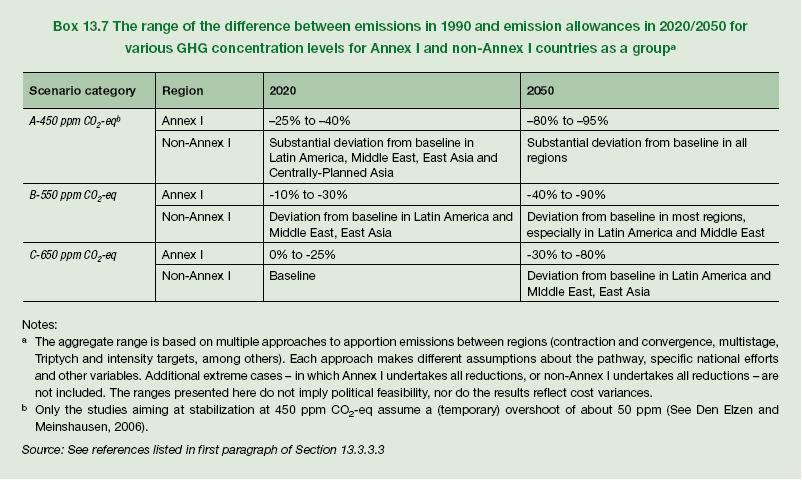
The United States was brought back to the fold, but at the cost of excising from the final document — the so-called Bali Roadmap — any reference to the need for a 25-40% reduction in greenhouse gas emissions from 1990 levels by 2020. Such reductions are necessary to keep the mean global temperature increase in the 21st century to 2.0-2.4 degrees Celsius. This lack of mandatory cuts prompted one civil society participant to remark that “The Bali roadmap is a roadmap to anywhere.”

read more