Part 2 of an interview with Drug War Mexico co-author Peter Watt.

In Mexico, No Matter Which Party Holds the Reins, the People Lose
read more

Part 2 of an interview with Drug War Mexico co-author Peter Watt.
When it fails to protect its women and children, a state’s very legitimacy is called into question.
The Magnitsky Act imposes asset freezes and visa bans on Russian officials suspected to be responsible for the death of Sergei Magnitsky, who accused the Russian IRS of tax fraud and later died in jail.

The Mexican government’s heavily militarized fight against narcotraffickers has helped keep the country mired in violence and inequality.
Egypt’s President Morsi made Time’s short list for the person of the year, but his inability to steer Egypt to safety after his election cost him the accolade.
America is suffering from a failure to commit.

Anyone expecting Obama to be decidedly more pro-peace this time around is likely to be sorely dispirited. However, there is a diverse, growing peoples’ movement in the United States linking human and environmental needs with a demand to end our wars and liberate the vast resources they consume.
President Morsi seems more interested in consolidating the power of the Muslim Brotherhood than in governing.

On October 13, 2012, Mexican teenager José Antonio was hit by a hail of bullets coming from the U.S. side of the metal fence that lacerates the border city of Nogales. Some seven shots penetrated the boy’s body through the back and the head. He died instantly. The culprit? The U.S. border patrol.
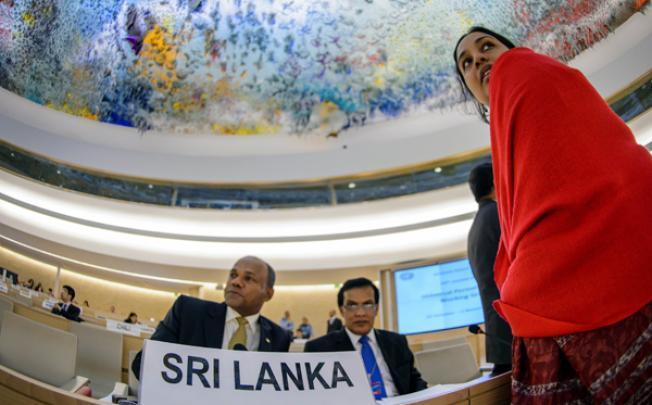
In March 2012, the United States led a resolution calling on the government of Sri Lanka to implement the recommendations of the Lessons Learnt and Reconciliation Commission (LLRC), which examined the breakdown of the truce between the country’s warring factions, and “to take all necessary additional steps” to “ensure justice, equity, accountability and reconciliation for all Sri Lankans.” But is the U.S. more interested in military cooperation than human rights?