Human Rights

Obama’s “Remainees” Will Not One But Two Guantanamos Define the American Future?

On his first day in office, President Barack Obama promised that he would close the Bush-era prison at Guantanamo Bay, Cuba, “as soon as practicable” and “no later than one year from the date of this order.” The announcement was met with relief, even joy, by those, like me, who had opposed the very existence of Guantanamo on the grounds that it represented a legal black hole where the distinction between guilt and innocence had been obliterated, respect for the rule of law was mocked, and the rights of prisoners were dismissed out of hand. We should have known better.

By now, it’s painfully obvious that the rejoicing, like the president’s can-do optimism, was wildly premature. To the dismay of many, that year milestone passed, barely noticed, months ago. As yet there is no sign that the notorious eight-year-old detention facility is close to a shut down. Worse yet, there is evidence that, when it finally is closed, it will be replaced by two Guantanamos — one in Illinois and the other in Afghanistan. With that, this president will have committed himself in a new way to the previous president’s “long war” and the illegal principles on which it floundered, especially the idea of “preventive detention.”

read more

The Really Really Long War

Let’s imagine that the Cold War was a detour. The entire 20th century, in fact, was a detour. Since conflicts among the 20th-century ideologies (liberalism, communism, fascism) cost humanity so dearly, it’s hard to conceive of World War II and the clashes that followed as sideshows. And yet many people have begun to do just that. They view the period we find ourselves in right now — the so-called post-Cold War era — as a return to a much earlier time and a much earlier confrontation. The wars in Afghanistan and Iraq aren’t discrete battles against a tyrant (Saddam Hussein) or a tyrannical group (the Taliban). They fit together with Turkey’s resurgence, the swell of Muslim immigration to Europe, and Israel’s settlement policy to form part of a much larger struggle.

read more
The Problems of Partnering with Yemen

The Problems of Partnering with Yemen

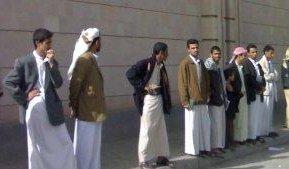
The March capture in San`a of a New Jersey man with alleged ties to al-Qaeda has renewed public concern over potential threats of terrorism from Yemen. On March 14 and 15, Yemen’s air force again carried out airstrikes against what the government said were terrorist hideouts in Abyan province, in the south of the country. But as in other countries where terrorist organizations coexist with corrupt and repressive central governments and home-grown insurgencies, the fight against terrorism in Yemen is fraught with the pitfalls that come with a rampant disregard for human rights.

read more

Ghosts Threaten to Return to Haiti

Some of the advice for how Haiti ought to rebuild after the earthquake sounds hauntingly familiar. There are echoes of the same bad development advice Haiti has received for decades, even before the nation faced its current devastating situation. To avoid repeating past failures, we would be wise to review how previous aid models led down the wrong path.

read more
Genocide in Burma

Genocide in Burma

Nearly 50 years after a military-led coup overthrew Burma’s last democratically elected government, the Southeast Asian country has suffered some of the world’s most egregious human rights abuses. For activists, Burma has become synonymous with institutionalized rape, torture, forced labor, and ethnic cleansing. In the popular imagination, however, the enormity of Burma’s crisis remains obscured by indifference and the overshadowing presence of disasters in Iraq, Afghanistan, and Darfur.

read more

Obama and the Denial of Genocide

The Obama administration, citing its relations with Turkey, has pledged to block the passage in the full House of Representatives of a resolution passed this past Thursday by the Foreign Relations Committee acknowledging the 1915 genocide by the Ottoman Empire of a 1.5 million Armenians.  Even though the Obama administration previously refused to acknowledge and even worked to suppress well-documented evidence of recent war crimes by Israel, another key Middle Eastern ally, few believed that the administration would go as far as to effectively deny genocide.

read more

Sudan’s Divorce Proceedings

The Obama administration is grappling with a volatile diplomatic crisis in Sudan this year. With two violent conflicts on the brink of escalation, a president indicted for war crimes, and an election next month, Sudan is set to explode. The country is also preparing for a January 2011 referendum on independence for the south that will determine the fate of the country.

read more

Obama Stumbles on Human Rights

It was a relatively short response to a question in a town hall-style meeting in Florida, yet it said much about President Barack Obama’s lack of concern about human rights in his foreign policy. The question came not from a hostile Republican opponent, but from a young college student who had volunteered on Obama’s campaign. She spoke directly to an issue that has alienated much of Obama’s Democratic base since the president took office: ongoing U.S. support for Israeli and Egyptian human rights abuses. The Israeli and Egyptian governments, both of which have notoriously poor human rights records, are the two largest recipients of U.S. security assistance.

read more