Labor, Trade, & Finance

The Dracula Round

Like the good Count of Transylvania, the World Trade Organization’s Doha Round of negotiations has died more than once. It first collapsed during the WTO ministerial meeting held in Cancun in September 2003. After apparently coming back from the dead, many observers thought it passed away a second time during the so-called Group of Four meeting in Potsdam in June 2007 — only to come back yet again from the dead. Now the question is whether the unraveling of the most recent “mini-ministerial” gathering in Geneva was the silver stake that pierced the trade round’s heart, rendering Doha dead forever.

read more
Heroes of Beijing: The Triumph of the West

Heroes of Beijing: The Triumph of the West

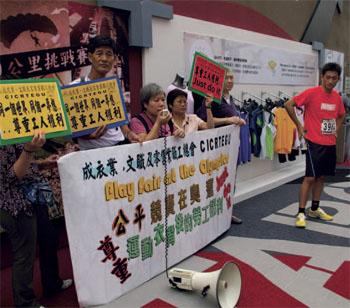
While most of the recent attention that has been focused on the Beijing Olympic Games has been concerned with civil rights and environmental issues, virtually no comment has been made on the fact that by hosting the games, China becomes yet one more country to enter into what is essentially a pact with the devil with capital on the one hand and western sporting “ideals” on the other.

read more

Obama Should Stay Tough On Trade

Speaking at a February campaign rally, Sen. Barack Obama decried “leaders [who] change their positions on trade with the politics of the moment.” He argued, “We need a president who will listen to Main Street – not just Wall Street; a president who will stand with workers, not just when it’s easy, but when it’s hard.”

read more

The WTO’s Raw Deal on Services

Desperate to clinch a new global trade deal, World Trade Organization chief Pascal Lamy is planning to convene a "mini-ministerial" meeting in the third week of July. The aim of the meeting is to come up with agreements to liberalize trade in agriculture, industry, and services. These sectors have been the focus of the so-called Doha Round of WTO negotiations that have dragged on since 2001.

read more

The Commodities Bubble

For those following economic trends, the past 18 months are notable primarily for two reasons. First, the U.S. housing market, long seen as overvalued by alternative economists and even powerful economic institutions including the International Monetary Fund (IMF), finally went from boom to bust. Over the span of a few months, housing in some markets depreciated by as much as 30%, and some economists estimate that losses may ultimately reduce value by as much as 50% in some cities.

read more

Africa’s Unnatural Disaster

While the mainstream media doesn’t always ignore the pressing issue of hunger in Africa, it rarely explores the root causes of this problem. Behind most news on the issue, there’s an assumption that casts hunger as a natural result of unfortunate weather conditions, coupled with bureaucratic inefficiency and bad economic planning.

read more

South Korea’s Beef with America

On June 10, one million South Koreans from all walks of life poured onto the streets of Seoul, the nation’s capital, to protest the newly elected President Lee Myung Bak’s deal with the United States to fully open Korean markets to U.S. beef.

read more

The Failed Expectations of U.S Trade Policy

As the principal negotiator for the landmark market access agreement that led to China’s accession to the World Trade Organization (WTO), I have reflected on whether the agreements we negotiated really lived up to our expectations. A sober reflection has led me to conclude that those trade agreements did not.

read more
Destroying African Agriculture

Destroying African Agriculture

Biofuel production is certainly one of the culprits in the current global food crisis. But while the diversion of corn from food to biofuel feedstock has been a factor in food prices shooting up, the more primordial problem has been the conversion of economies that are largely food-self-sufficient into chronic food importers. Here the World Bank, International Monetary Fund (IMF), and the World Trade Organization (WTO) figure as much more important villains.

read more

Hungry for Justice

When Paul Konar left his native India for the United States in 2006, he could never have imagined that less than two years later, he and several of his co-workers would be giving a lesson in Indian-style change making. Yet Konar, joined by his supporters and fellow fasters, has been on a vigil in Washington, DC for 17 days. He hasn’t eaten anything since May 14.

read more