Uncategorized
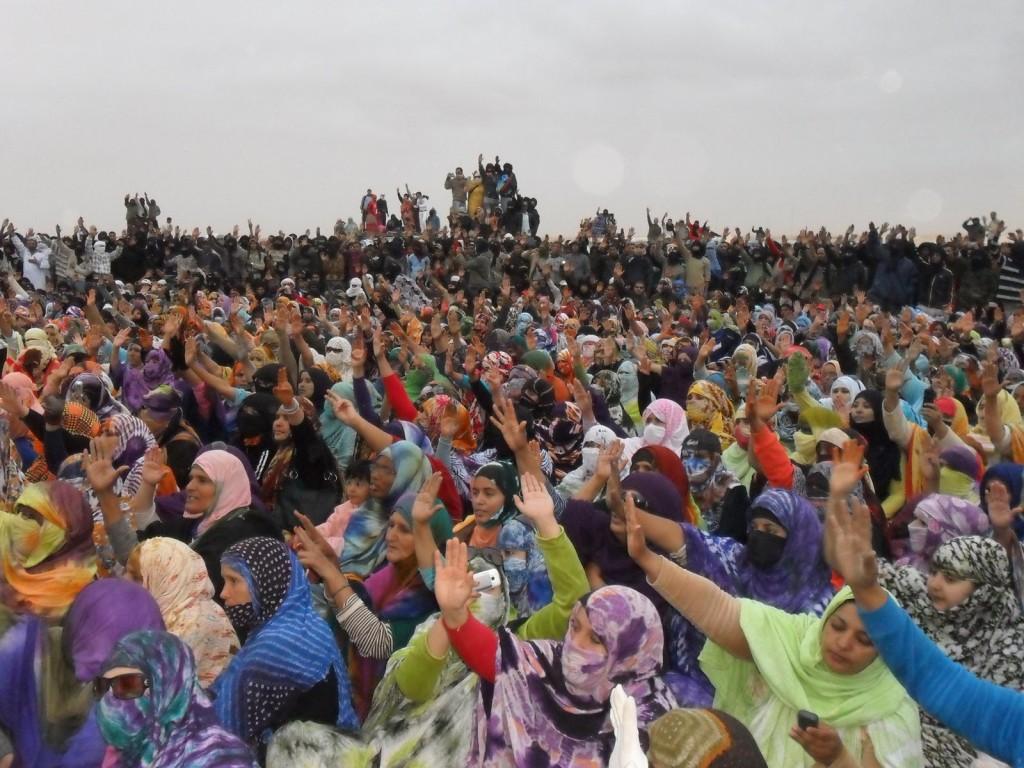
Echoes of Occupy in Western Sahara

Echoes of Occupy in Western Sahara

Even with millions of dollars of aid at its disposal, it seems unlikely that Morocco will be able to put off the issue of Western Sahara’s right to sovereignty indefinitely. The Gdeim Izik case has drawn the scrutiny and condemnation of the international press, and already the sentenced prisoners have planned a hunger strike to protest their trial and the torture many of them received while detained.
read more
The Somaliazation of Syria

The Somaliazation of Syria

As Syria’s civil war enters its third year, the country’s humanitarian crisis worsens each day and the Levant grows increasingly vulnerable to the conflict’s spillover. Unless a tactical shift in the balance of power occurs, it is unlikely that either the regime or the rebels will gain control of Syria’s entire territory, leaving open the possibility that the state will fragment along sectarian lines.

read more
Revisiting the Velvet Divorce

Revisiting the Velvet Divorce

This velvet divorce might not have been the most democratically orchestrated event in history. The leaders who executed the decision have seen their political careers take a nosedive. And the two sides might well look at the results very differently. But Czechoslovakia, though it no longer exists, remains a symbol of courageous resistance and sensible conflict resolution. It’s a legacy of which the offspring of these hyphenated parents can be proud.

read more
Chavez: Lest We Forget

Chavez: Lest We Forget

Comparing Hugo Chavez’s accomplishments to his U.S. obits was like taking a trip through Alice’s looking glass. Virtually none of the information about poverty and illiteracy was included, and when it was grudgingly admitted that he did have programs for the poor, it was “balanced” with claims of soaring debts, widespread shortages, rampant crime, economic chaos, and “authoritarianism.”

read more
I’ll Miss Hugo

I’ll Miss Hugo

Hugo Chavez put an end to the reign of neoliberal IMF policies that had impoverished the masses of Latin America and inaugurated a new order of resource nationalism and income redistribution that favored the poor and the marginalized.

read more
What Went Right at Almaty

What Went Right at Almaty

After eight months of diplomatic hiatus, Iran and the so-called “P5+1” powers—including the United States, China, Russia, France, Germany, and the United Kingdom—were finally able to return to the negotiating table. And, to the surprise of many observers, they managed to pull off a potential breakthrough in the decade-long standoff over Iran’s nuclear enrichment program.

read more
President Suu Kyi?

President Suu Kyi?

Aung San Suu Kyi has shown great strength as Burma’s opposition leader. During her years of house arrest, she became a symbol of freedom and democracy. Yet these qualities will not necessarily bode well for a potential presidency, given the demands of governing a divided country.

read more
Defense Braces for a Bad Decade

Defense Braces for a Bad Decade

The unthinkable has happened. Sequestration — automatic cuts falling equally on the defense and nondefense parts of the budget — is now in effect. And whatever the results of political maneuvering in the weeks and months to come, “The defense industry,” as a recent article in Politico put it, “isbracing for a bad decade … Senior Republicans on the House and Senate Armed Services Committees acknowledge a shrinking military is inevitable as the U.S. withdraws from Afghanistan after more than a decade of war.”

read more
Camel Wrestling on the Aegean Coast

Camel Wrestling on the Aegean Coast

Drums pound along the Aegean coast. In a natural amphitheater only miles from the ruins of ancient Ephesus the air is split by wailing horns and the raucous cheers of 10,000 spectators drunk on raki and the brute intoxication of camel wrestling.

read more
Eating History

Eating History

The GDR Museum in Berlin is actually two museums in one. And these two parts, both devoted to everyday life in the German Democratic Republic, subtly contradict one another. That might not have been the intention of the museum founders. But this tension actually captures the ambiguities of East Germany and the ambivalence that many Germans feel today about the erstwhile communist state. 

read more