Uncategorized

Widespread Muslim Scepticism of U.S. as Democracy Advocate

Despite continuous assurances that the United States favours democratic rule during the 18-month-old “Arab Spring”, majorities or pluralities in six predominantly Muslim countries see Washington as an obstacle to their democratic aspirations, according to a new survey released here Tuesday.

read more
Coups Return to Latin America

Coups Return to Latin America

On June 22, the Paraguayan Congress impeached President Fernando Lugo, a progressive who assumed office in 2008. Although technically legal, Lugo’s removal threatens the very integrity of democracy in Paraguay. It is the latest in a disconcerting series of attacks against progressive governments in South America that highlights the vulnerability of its nascent democratic institutions and calls into question the trend of democratization in the region.

read more
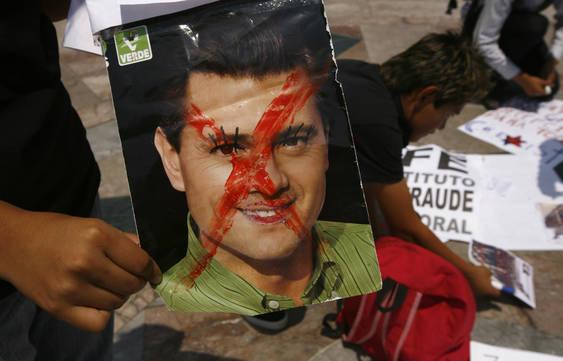
Mexico’s Ruling Party Rebound

Mexico’s Ruling Party Rebound

In December 2010, at the end of a study abroad semester in Puebla, some students and I organized a student expression project. Hundreds of students wrote complaints or ideas for their university, state, or country. Despite discouraging looks, I posted these note cards in a busy pathway at my public university the week that the campus was celebrating the centennial of the Mexican revolution.

read more
Will the Burma Road End in Democracy?

Will the Burma Road End in Democracy?

Most visitors to Myanmar these days, when the country is opening up, limit their trips to Yangon, better known in better times as Rangoon. They rarely make the five-hour trip to Naypyitaw, the site upcountry to which the ruling military regime has transferred the capital.

read more
South Sudan’s Unhappy Anniversary

South Sudan’s Unhappy Anniversary

The status of the province of Abyei is an unresolved issue from the June 2011 détente between Sudan and South Sudan. In the year since South Sudan’s independence, the two countries have managed to avoid a full-scale war. But minor skirmishes on the border and illegitimate air raids on the Heglig oil field in April 2012, however, have disrupted that faulty peace.

read more

Kenya: Postcolonial Imperial Hangover

I distinctly remember watching on television with concern how young men from the Coast province of Kenya were ambushed and rounded up by security forces who busted them in the midst of military training with homemade wooden rifles a few years ago. Given the ragtag nature of this wannabe “army,” my initial reaction was to dismiss them as a bunch of loonies. But a few months to roughly a year later, I again saw in the news this time a group of well-clad young men being frog-marched by police in the streets of Mombasa, the second biggest and oldest trading city in Kenya on the Indian Ocean that is also home to the country’s naval force. This group, it was later to emerge was the secessionist Mombasa Republican Council (MRC) that is no doubt one of the biggest headaches for Kenya’s political leadership, and to some extent a great concern to the international community of nations considering the geo-political significance of Mombasa, which is a remarkable commercial and military nerve centre. The MRC has dominated national news for the last few months as their secessionist demands have hit a new high octave. These young men, women and children are not a passing cloud that can be wished away and their existential frustrations and subsequent pain and distress motivating them to secede from Kenya after almost fifty years ought to be an issue of great concern to all.

read more
Blogging the Rio+20 Earth Summit for the Rest of Us: The Eurozone Crisis

Blogging the Rio+20 Earth Summit for the Rest of Us: The Eurozone Crisis

Just enough Greek voters gritted their teeth and switched their votes to give the center-right New Democracy party another shot at government in their June 17 elections. Amid this victory for fear over hope it’s bear in mind the metoric rise of the radical anti-austerity Syriza coalition, which  polled a close second. Syriza’s support rose from 5 percent in 2009 to 27 percent on Sunday, narrowly avoided the fate of presiding over the next phase of the country’s economic collapse.

read more