Uncategorized
Africa and the Economic Crisis

Africa and the Economic Crisis

As the world turns its attention to Afghanistan and President Obama sends additional troops to that volatile region, pivotal events happening in Africa are falling further below the radar. The global economic crisis has brought negative impacts to the continent, such as a dramatic fall in commodity prices, from cotton to iron ore. There has also been a steep decline in remittances, as Africans in the diaspora lose their jobs and homes. And meanwhile, international development funds have cut back on the amount of money they are disbursing. Nevertheless, the financial crisis and economic recession create an opportunity to challenge flawed existing models and assert new strategies for Africa’s economic progress.

read more

Zambia: Riches to rags

Zambia is a “riches to rags” story — a story that is being repeated in former resource colonies across the continent, which although “politically liberated” have “remained economically chained”.

read more

Annotate This! President Obama’s Afghanistan Escalation Speech

There was one way in which President Obama’s escalation speech brought significant relief to the 59% of people in this country, as well as the overwhelming majorities of people in Afghanistan, Pakistan, the Middle East and elsewhere who oppose the U.S. war in Afghanistan: It was a pretty lousy speech. That is, it had none of the power, the lyricism, the passion for history, the capacity to engage and to persuade virtually every listener, even those who may ultimately disagree, that have characterized the president’s earlier addresses.

read more

The Battle for Angola’s Oil

Resource-rich Angola was once known as the scene of Africa’s longest-running civil war. Today, life expectancy hovers around 44 years — not unlike that of an average Briton living in the 1800s. Over 70% of the population lives in poverty, and the country has one of the highest child mortality rates in the world. And the nation’s lifetime dictator of 30 years, Jose Dos Santos, leader of the liberation-party-turned-permanent-government, the MPLA, does not appear to have lost his lust for the throne.

read more

Iraq Throws Obama a Curve Ball, Key 2010 Elections in Peril

Reminiscent of the political problems in Afghanistan that have plagued the Obama White House, on Monday Iraqi Vice-President Tareq al-Hashemi vetoed a set of amendments to Iraq’s election law approved by the Iraqi parliament. The veto may lead to a delay of the Iraqi elections, currently scheduled for January 21, 2010, and could trigger a debate over U.S. plans to withdraw from Iraq.

read more
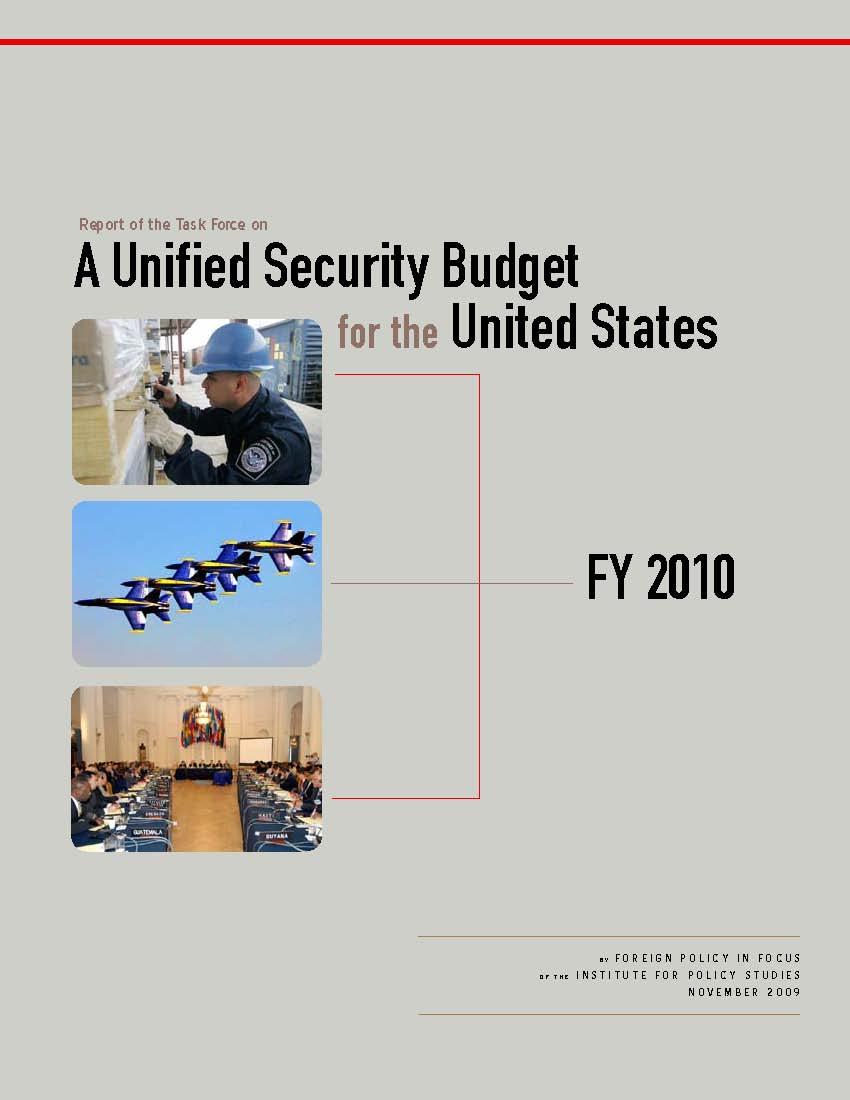
A Unified Security Budget for the United States, FY 2010

A Unified Security Budget for the United States, FY 2010

The Obama administration promised “a sweeping shift of priorities and resources in the national security arena.” The sixth yearly Report of the Task Force on a Unified Security Budget for the United States, FY 2010 finds that the promise of resource shifting has not yet been kept. The needle tracking the overall balance of spending on offense (military forces), defense (homeland security) and prevention (non-military foreign engagement) stayed stubbornly in place. In the FY 2010 request, like the one before it, 87% of the nation’s security resources were allocated to the tools of military force. This is true even excluding the appropriations for wars the country is currently fighting.

read more