After nearly a decade of war, close to 700 U.S., allied, and Afghan military bases dot Afghanistan.

The 700 Military Bases of Afghanistan
read more

After nearly a decade of war, close to 700 U.S., allied, and Afghan military bases dot Afghanistan.
The wonder weapon of our present moment is the missile-armed unmanned aerial vehicle, or drone, now doing our dirty work, an endless series of targeted assassinations, in the Afghan-Pakistani borderlands.
Afghanistan and the U.S. military escalation in the civil war there dominated foreign-related news coverage by the three major U.S. television networks in 2009, according to the latest annual review by the authoritative Tyndall Report.
The Afghan problem can’t be addressed, let alone solved, by force. Nor can it be solved through negotiations between the Afghan government and the Taliban. The conflict, after all, is not between two distinct segments of the population. Negotiation is an appropriate strategy when there is indeed a two-party conflict—as in a civil war—and both sides have support among different factions of the population. But neither the government nor the Taliban has much popular support. The problem is not the presence of the Taliban; it’s the absence of good governance.

Six months ago, President Obama dazzled audiences from Cairo to Jakarta—and everywhere in between and beyond—with his call for a “new beginning” with the Muslim world. It came after the new president made a series of confidence-building statements, speeches, and diplomatic overtures with a consistent, sobering message: It is time for relations based on “mutual respect” and “mutual interest.” Obama declared at Cairo University that there “must be a sustained effort to listen to each other; to learn from each other; to respect one another; and to seek common ground.”

Split This Rock offers the following poems for your vigils, demonstrations, and actions.
The first poem at a reading
Should always shock and awe
It should be a love poem
Of overwhelming force
Maybe the mother
Of all poems
War reduces everything
To silence
Every soldier’s grave a place
Too loud for sleep
E. Ethelbert Miller
From D.C. Poets Against the War (Argonne House Press, 2004). Used with permission.
President Barack Obama recently announced an escalation of the war in Afghanistan, outlining plans to send an additional 30,000 troops. In search of an “end game,” he also declared that the U.S. occupation of Afghanistan would end in the summer of 2011, though the administration has since stated this will be a long and slowly phased withdrawal. The additional troops — even had they been the 40,000 originally requested by General Stanley McChrystal, the top American commander in Afghanistan — will be unable to score a military victory. Washington realizes that military force is not enough, particularly in the face of the loss of public support in the United States and the recent failure of democratic elections in Afghanistan. The end game will require a political settlement.
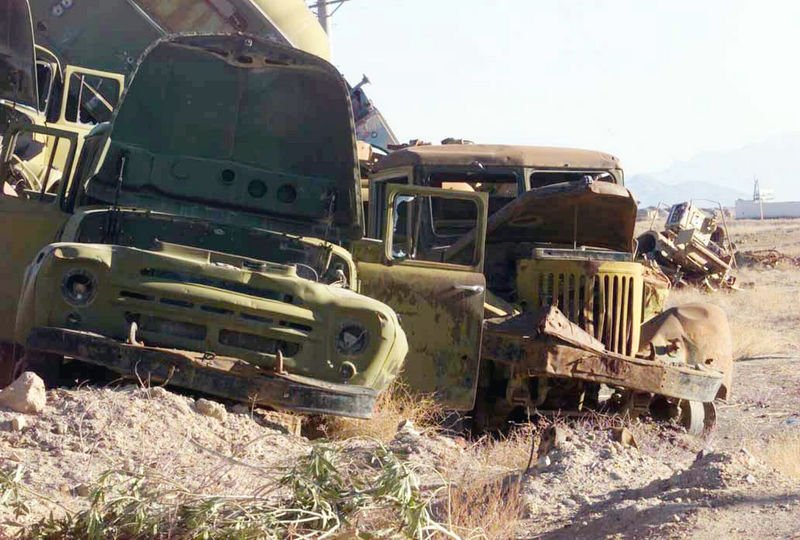
When President Barack Obama laid out his plan for winning the war in Afghanistan, behind him stood an army of ghosts: Greeks, Mongols, Buddhists, British, and Russians, all whom had almost the same illusions as the current resident of the Oval Office about Central Asia. The first four armies are dust. But there are Russian survivors of the 1979-89 war that ended up killing 15,000 Soviets and hundreds of thousands of Afghans as well as virtually wrecking Moscow’s economy.
There was one way in which President Obama’s escalation speech brought significant relief to the 59% of people in this country, as well as the overwhelming majorities of people in Afghanistan, Pakistan, the Middle East and elsewhere who oppose the U.S. war in Afghanistan: It was a pretty lousy speech. That is, it had none of the power, the lyricism, the passion for history, the capacity to engage and to persuade virtually every listener, even those who may ultimately disagree, that have characterized the president’s earlier addresses.
The United States has spent nearly a trillion dollars over the past seven years, fighting two wars in vastly different places. A small portion of this effort has been dedicated to what has commonly been called nation-building. In fact, our mission has been a mixture of both state-building, which further develops the institutions of government, and nation-building, which constructs roads, schools and other projects. This approach is not entirely new, but these initiatives have become an important and accepted paradigm for the conduct of war in this century.