Africa

Memo to the Somali Government

Imagine a reconciliation process in Iraq that fails to include militias or Sunni and Shia hardliners? How about a reconciliation process in Afghanistan that sidelines violent Pashtos in the south? The chances of either process succeeding would be slim. In both cases, the excluded parties comprise a powerful majority and thus must be included for reconciliation to produce a lasting peace. Keep anyone out and they are bound to want in. That type of exclusion is exactly what is being proposed in Somalia. The country remains in turmoil following the U.S.-backed Ethiopian invasion in December that toppled the Islamic Courts Union. Ethiopian troops continue to fight resistance in the capital Mogadishu and elsewhere in the country. Yet, amid this violence, Somali leaders in the Transitional Federal Government (TFG) refuse to include the former Islamic leadership, along with other sectors of society, in forthcoming talks. This grave mistake is bound to instigate further violence, much like Mogadishu has witnessed in the last months as hundreds have died in clashes in the city. As long as the current Somali government continues to exclude parties that are more popular than the TFG, Ethiopia, and the United States combined, reconciliation will be a mere façade.

read more

IMF Confidence Crisis

As International Monetary Fund (IMF) and World Bank officials engage in their joint semi-annual meetings in Washington, the Fund has a nettlesome new task: convincing its shareholders (most of the world’s governments, represented at the meeting by Finance Ministers and Central Bank Governors) that the institution should continue to exist.

read more
Another Africa is Possible: The World Social Forum

Another Africa is Possible: The World Social Forum

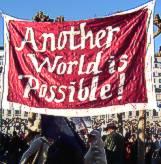
Tens of thousands of activists and advocates from around the globe gathered in Nairobi, Kenya for the seventh World Social Forum (WSF) in January. The rallying cry, “Another world is possible,” served as a catalyst for debate and mobilization: what might this new world look like, and how are we to achieve it? The agenda was expansive. It included discussions on many campaigns and challenges across the spectrum of social, political and economic justice issues. Notably, the 2007 WSF marked the first time that the gathering was hosted in Africa, shedding new light on the role of African civil society in the work towards global justice.

read more

60-Second Expert: China Eyes Africa

China’s direct investment into Africa has gone from $5 million back in 1991 to over $50 billion last year. The driving force behind this investment is China’s enormous appetite for raw materials. In return for oil, minerals, or timber, China offers a package deal featuring a mix of cash, investment, cheap credit, technical expertise and training, and in-kind benefits such as new presidential palaces, stadiums, roads, dams, and railways.

read more

China in Africa: It’s (Still) the Governance, Stupid

Deep inside the tropical forest of Gabon, 500 miles from the coast, China is going where no other investors dare. A Chinese consortium, led by the China National Machinery and Equipment Import and Export Corporation, has won the contract to develop Gabon’s massive Belinga iron ore deposit. In return for purchasing the entire output, Chinese operators will build not only the extractive infrastructure at Belinga but a hydro-electric dam to power it, a railway to the coast, and a deepwater port north of the capital, Libreville, for exporting the ore.

read more

Investors Aim to Profit from Zambia’s Poverty

A British court recently ruled that Donegal International, a “vulture fund” that makes short and long-term investments for huge profits, has the right to profit from its purchase of millions of dollars worth of Zambia’s debt – acquired for a tiny fraction of its face value eight years ago. This bizarre legal and financial tangle is a clear example of global profiteering at its worst.

read more

Slavery Persists

This year marks the 200th anniversary of the end of the trans-Atlantic slave trade and the 175th anniversary of the first meeting of the New England Anti-Slavery Society.

read more

Force Won’t Bring Peace to Somalia

The sudden defeat of the Islamic Courts Union (ICU) by the Ethiopian army and their U.S. backers proved easier then expected. A reported 15,000 Ethiopian troops and U.S. aerial bombardment succeeded in installing the Transitional Federal Government, two years after its formation in neighboring Kenya.

read more

Nothing to Laugh At

On January 15, a Moroccan court gave editor Driss Ksikes and journalist Sanaa al-Adzi three-year suspended sentences for publishing jokes related to Islam. Here, Dawid Warszawski of Poland’s leading daily Gazeta Wyborcza comments on the case.

read more

World Bank OK With Blood For Oil

It has been a year since the horror of the bloodshed in Sudan’s Darfur region–with over 200,000 dead in three years–began leaking across the border into Chad. It has also been a year since a simmering conflict boiled over into a full-scale confrontation between World Bank President Paul Wolfowitz and Chadian President Idriss Deby. Are the two connected? In a word, yes. Here’s how.

read more