The United States, fearing a new Taliban had come to power in Somalia, recently did what many expected it would do: invade Somalia. Not directly though. In the final weeks of 2006, Ethiopian forces that were trained, financed, and outfitted by the United States pounded Somalia’s capital and port cities with air attacks, routing the poorly equipped militias of the Islamic leadership.
The Making of Another Iraq
A new front in the Âglobal war on terror has emerged with its center in war-torn Somalia. The target of the new front, the Islamic Courts Union (ICU), both brought back normalcy to seemingly untamable southern Somalia and anxiously legislated morality to the point of social suffocation. According to the U.S. State Department, its greatest sin was its purported link to al-Qaida.
Spirit of Christmas Pastand Future
> George Washington samples some rum.
Stopping Firestone: Getting Rubber to Meet the Road
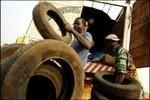
Liberia is rich in natural resources and Africa’s largest producer of natural rubber. It is also one of the world’s poorest countries. Liberia’s impoverishment is directly related to the wealth generated from its natural resources; wealth that because of a history of inequality and exploitation benefits multinational corporations and some wealthy Liberians at the expense of the citizens of Liberia. However, many Liberians, along with international allies, are actively resisting this unjust system.
Free Market Famine
In the summer of 2005, the world rocked to Live Aid concerts, and the Make Poverty History Movement celebrated developed countries’ fresh commitments toward the International Development Goals (IDG), development assistance, and debt cancellation at the G8 summit in Gleneagles.
The Perils of Globeerization
The world’s cup runneth over with living beer traditions. But this vast repository of cultural brewing capital is under attack by global corporations. The top five brewing companies, all of which are American- or European-owned, control 41% of the world market. Perversely, economists and politicians calculate the conquest by industrial breweries as economic growth while the value of small-scale traditional brewing goes uncounted. Much will be lost if this global Âbeerodiversity is lost to the forces of corporate-led homogenization.
Oil Trip
It is almost impossible to imagine, as we sit in a well-lit, fully functioning gas station on Main Street, USA, that a community blessed with oil riches under its soil could look as impoverished as Yenagoa in the Nigerian state of Bayelsa.
South Africa’s Political Turmoil
South Africa has entered the most difficult political period since the end of apartheid in 1994. At the heart of the crisis is the question of the future direction of the country.
The Collapse of the Second Front
It started in 2002 with a few hesitant probes that were low on intelligence, high on imagination, and short a couple of helicopters reportedly lost in the desert wastelands of northern Mali. Then, in 2003, the U.S. launch of a second front in its Âwar on terror moved into top gear. In collaboration with its regional ally Algeria, the Bush administration identified a banana-shaped swath of territory across the Sahelian regions of the southern Sahara that presumably harbored Islamic militants and bin Laden sympathizers on the run from Afghanistan.
Africa Falls Off the IMF Agenda (Again)
World leaders and celebrities declared 2005 to be the "year of Africa" with much fanfare. Beginning with the UK’s Commission on Africa report, and culminating in some supposed gains for the continent at the summit meeting of the Group of Eight (G8) wealthy countries, who were cajoled at several musical extravaganzas featuring the likes of U2, Madonna and Youssou N’Dour to do more to end global poverty, the year was billed as a "turning point" for Africa.