It’s old, and likely thoroughly forgotten now, but last summer the Washington Post ran an excellent article on the U.S. military‘s “pivot” toward Asia, its origins, and its budget implications. It presented some meaningful background on where the pivot came from, and how it so quickly became dogma in Washington as the decade-long ground wars receded in the national rear-view mirror.
When Soft Power Fails
Washington has been reluctant to reevaluate “soft power” when it seems so obviously a fig leaf for the assertion of military dominance. But perhaps by looking at the palpable failures of Chinese efforts in Asia, U.S. policymakers could learn some lessons about strategy. Other countries in Asia that aspire to cultivate both hard power and soft power – Japan, South Korea – should also take note: you rarely can have it both ways.
Orientalizing Rape
The coverage of the Damini case has sparked a lively debate about how the Western media portrays rape culture abroad.
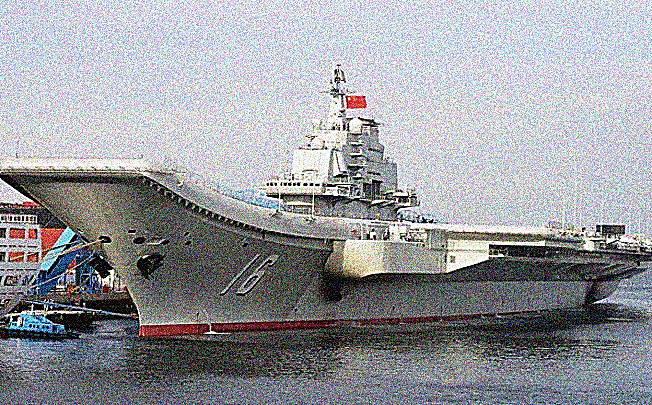
Don’t Call China’s Liaoning a “Starter” Aircraft Carrier
China understands that aircraft carriers are no longer flagship crafts.
Four More Years: The Asia Pivot
The United States is a Pacific power, but Asia is a very different place than it was two hundred years ago. You can’t dispatch “Chinese” Gordon and a couple of gunboats and get your way anymore. Nor can you deal with rivals by building Cold War-style alliances and threatening to use force. The world is too small, Asia is too big, and war would be catastrophic. The Pacific is no one’s “lake,” but an ocean vast enough for all.
Is Rape in India Having Its Newtown Moment?
When it fails to protect its women and children, a state’s very legitimacy is called into question.
North Korea’s Nuclear Theater
The most important rule in the world of theater is to keep the attention of your audience. If they become distracted or bored, if they start to fidget in their seats, the illusion of the spectacle is at risk. Once word gets out that you can’t deliver as a playwright or a director, the audiences dwindle. And fewer people are interested in your next offering. North Korean leaders have always understood the importance of theater.
Does Pakistan’s National Pride Hinge on India Considering It a Threat?
Pakistan may not frighten India as much as it would like.
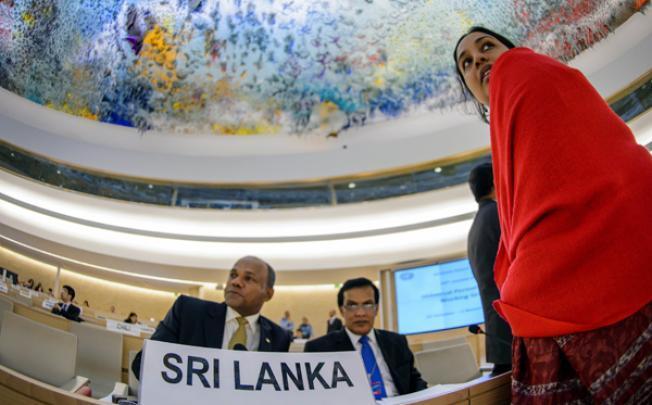
Pressing the Case for Reconciliation in Sri Lanka
In March 2012, the United States led a resolution calling on the government of Sri Lanka to implement the recommendations of the Lessons Learnt and Reconciliation Commission (LLRC), which examined the breakdown of the truce between the country’s warring factions, and “to take all necessary additional steps” to “ensure justice, equity, accountability and reconciliation for all Sri Lankans.” But is the U.S. more interested in military cooperation than human rights?
Deja Vu on the Korean Peninsula
“It’s déjà vu all over again.” The classic quote from the great American philosopher Yogi Berra, originally in reference to the home run chase between baseball greats Roger Maris and Mickey Mantle in 1961, could just as well describe the hand-wringing currently taking place from Beijing to Washington over North Korea’s planned missile launch in late 2012.