Asia & Pacific
Pivotal Election in Okinawa

Pivotal Election in Okinawa

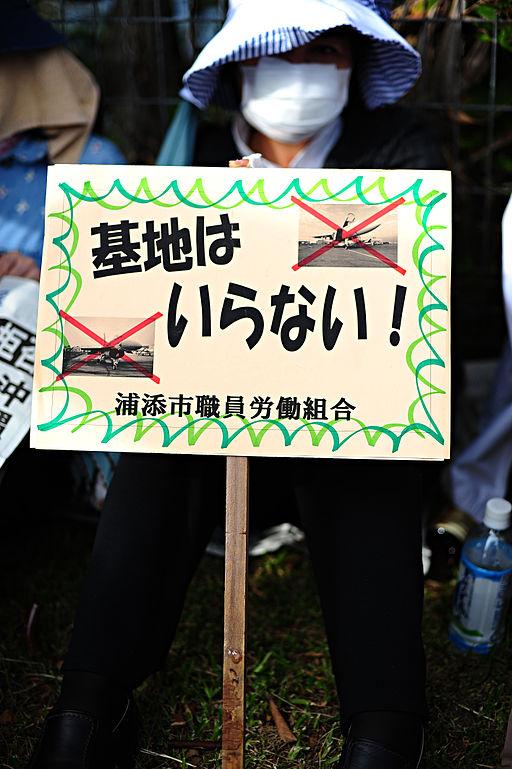
The debate over the controversial plan to relocate a U.S. Marine air base from Futenma to Henoko is set to heat up again.  Last June, then-Prime Minister Yukio Hatoyama resigned after failing to keep his campaign promise to move the air base off of Okinawa and acquiescing to U.S. pressure to hold to the original 2006 force realignment agreement.  His successor, Naoto Kan quickly reiterated his administration’s willingness to adhere to the agreement, and both Washington and Tokyo sought to move on from what had grown into an ugly conflict between the two allies.
read more

China: Already on Top?

“The Communists have taken over the World Bank!” So far, this phrase hasn’t appeared on Glenn Beck’s infamous chalkboard. I’m still waiting for Beck or Rush Limbaugh to make a big stink that the World Bank’s chief economist is from Mainland China. Justin Yifu Lin has been in his position for more than two years and the right-wing crazies have been largely silent. Maybe they’re too busy attacking their fantasy version of President Barack Obama – the Muslim/elitist/socialist-in-chief – to pay much attention to what’s going on in the real world.

read more
With a Lot of Help from Our Friends

With a Lot of Help from Our Friends

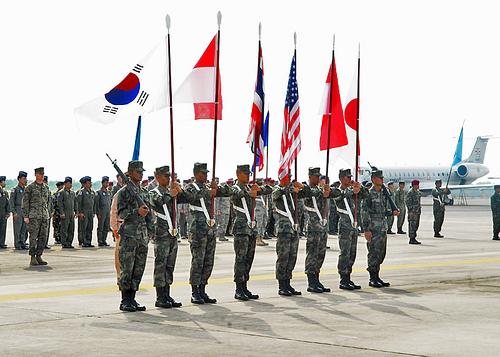
The Pentagon has more on its plate but, because of domestic factors, will have comparatively less money to deal with it all. Washington has concluded that the only way to solve this particular dilemma is to rely more on partners in the region. The United States has always emphasized its partnerships with Japan, South Korea, and (less so) Taiwan. At times of austerity, Washington is putting more emphasis on burden-sharing. Today, however, the United States will be pushing for more than just additional resources from its allies. More and more, these allies will have to do the heavy lifting themselves.

read more
Fighting Finance from Below

Fighting Finance from Below

At the onset of the Third World debt crisis in the 1980s, many economic justice activists were afraid to engage on the issue because they felt it was just too complicated.  Then, in the 1990s, the hot issue was trade. And again, many people thought, “I’ll never understand the World Trade Organization.”  But eventually, in both of these cases, large numbers of people bit the bullet and learned enough to have a voice in these debates.  And they built strong movements for debt and trade justice that continue today.

read more

The Battle of Okinawa 2010: Japan-U.S. Relations at a Crossroad

Five decades after the adoption of the (revised) US-Japan Security Treaty, and two decades after the end of the Cold War, Cold War assumptions still underpin the relationship between the world’s leading industrial democracies. A belated Japanese attempt to change and reform the relationship in 2009-2010 ended in failure and the collapse of the Hatoyama government. Whether the Kan government can do better, remains to be seen. The “Client state” relationship proves difficult to transcend. The “Okinawa problem” has emerged as a crucial bone of contention, not only between the US and Japanese governments but between the people of Okinawa and both governments.

read more