Asia & Pacific
The Battle for Thailand

The Battle for Thailand

Nearly a week after the event, Thailand is still stunned by the military assault on the Red Shirt encampment in the tourist center of the capital city of Bangkok on May 19. The Thai government is treating captured Red Shirt leaders and militants like they’re from an occupied country. No doubt about it: A state of civil war exists in this country, and civil wars are never pretty.

read more
Postcard From…Thailand

Postcard From…Thailand

On May 19, the Thai military used bullets, water cannons, and tear gas when it stormed the makeshift barricades manned by the “Red Shirts.” Since protests began in mid-March, over 70 people have been killed, the great majority of them civilians. The Red Shirts are demanding social justice, an end to the rule of notorious Thai elite, and new elections. They are saying that Prime Minister Abhisit Vejjajiva lacks a proper mandate after coming to power with military support in a controversial parliamentary vote in 2006. The UK-born and Oxford-educated prime minister is often accused of being an unapologetic supporter of the Thai throne and the elites. Just a few days before the deadly crackdown, Abhisit withdrew an offer of fresh elections.

read more

The Breakup

“I need a little space.”

When lovers utter these words, it’s usually a bad sign for the relationship. They feel suffocated. They’re reexamining their commitment. They’re checking out other options. But they don’t have the courage to make a clean break.

read more
Allied to Race? The U.S.-Korea Alliance and Arms Race

Allied to Race? The U.S.-Korea Alliance and Arms Race

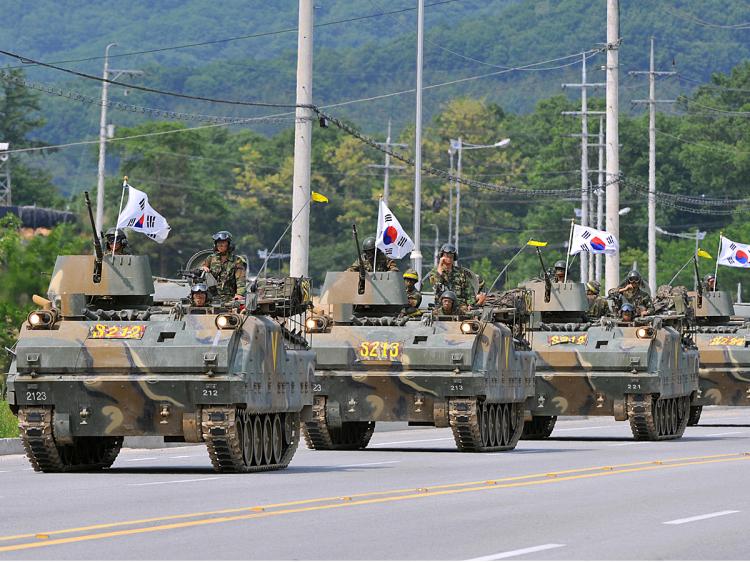
The Republic of Korea has rapidly increased its defense budget in recent years. Last year’s spending of 26.6 trillion won represents a twofold increase from ten years ago. Now the Ministry of National Defense projects an annual average increase of 7.6 percent to 53.3 trillion won by 2020, another doubling over the next decade. South Korea, notably, raised its defense spending at a higher rate than North Korea at a time when Seoul was taking a more conciliatory policy of engagement. While the Roh Moo-hyun administration increased defense spending ostensibly in response to its policy goal to build a more autonomous military, the U.S.-Korea alliance motivated and shaped South Korea’s military transformation. This article examines the degree to which external threats, domestic interests, and the alliance have affected the South’s military spending and transformation.

read more

Fortress Guam: Resistance to US Military Mega-Buildup

United States presidents rarely visit the U.S. territory of Guam (or Guåhan in the Chamorro language), but President Obama may visit in June 2010. This will be a significant stop for residents of this small island, 30 miles long and eight miles wide, dubbed, “Where America’s day begins.” Guam is the southern-most island in the Northern Mariana chain that also includes Rota, Tinian, and Saipan. It is the homeland of indigenous Chamorro people whose ancestors first came to the islands nearly 4,000 years ago. Formed from two volcanoes, Guam’s rocky core now constitutes an “unsinkable aircraft carrier” for the United States military in the words of Brig. Gen. Douglas H. Owens, a former commanding officer of Guam’s Andersen Air Force Base.1

read more
An Emerging Trend in East Asia: Military Budget Increases and Their Impact

An Emerging Trend in East Asia: Military Budget Increases and Their Impact

The recent military budget increases in East Asia are motivated by various factors—flash point-driven, hedging strategy-driven, or governance-driven—but they do necessarily trigger an arms race in the region. Domestic politics within Japan, South Korea, China, and the United States have had a complicated impact on regional security. Furthermore, the potential crisis points on the Korean peninsula and in the Taiwan Strait are also driving factors that test the stability of the region. Despite competing interests and challenges, the U.S.-led system seems to be enduring and a great-power rivalry stemming from the increases in military spending between the United States and China appears unlikely.

read more