Asia & Pacific

Taiwan: A Key to Chinas Rise and Transformation

The peaceful rise of China is in the fundamental interest of the Chinese people and world peace. But as Chinese power and confidence increase rapidly, so has international scrutiny and reaction. The United States and its allies, the currently dominant powers, will very likely develop more misgivings about China’s rise, unless Beijing also becomes a responsible stakeholder in and shares the basic values and norms of the global community.

read more
Postcard from  Pyongtaek

Postcard from Pyongtaek

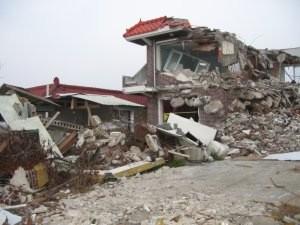
Just three hours south of the De-Militarized Zone, the South Korean government is waging alarming levels of violence and repression against villagers in the city of Pyongtaek near the U.S. base Camp Humphrey. For over four years, residents have refused to hand over their homes and farmland to the U.S. military.

read more

Using India to Keep China at Bay

U.S. attempts to construct and consolidate an alliance to contain China’s seemingly inexorable rise registered another milestone in November when the U.S. Senate passed a bill to allow the government to transfer nuclear fuel and technology to India. The nuclear deal with India flies in the face of long-standing U.S. rhetoric about nuclear proliferation and is yet another blow to the Nuclear Non-Proliferation Treaty (NPT).

read more

China and Southeast Asia

For those concerned about a rising China, Southeast Asia is of particular interest. It is a region of diverse states and cultures that involves all the major powers in the Asia-Pacific in a multiplicity of strategic interests. It is thus a fluid arena, offering the potential of different strategic games, options, and uncertain outcomes, but without a significant crisis hotspot such as those in Northeast Asia.

read more
China: What’s the Big Mystery?

China: What’s the Big Mystery?

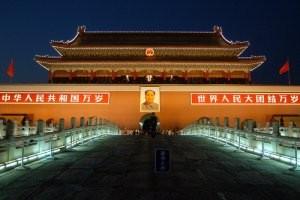
The latest recruitment brochure from the Central Intelligence Agency, which beckons the uninitiated to “be a part of a mission that’s larger than all of us,” opens to reveal an image of the red-roofed entrance to Beijing’s Forbidden City. From an oversized portrait on the ancient wall, Chairman Mao and his Mona Lisa smile behold the vast granite expanse of Tiananmen Square. The Cold War is over, and the Soviet Union is gone. The cloak-and-dagger games of Berlin and Prague have been replaced by business and tourism. But China—land of ancient secrets, autocratic leaders, and memories of suppressed uprisings—still holds out the promise of world-historical struggle that can help the CIA meet its recruitment goals.

read more

Central Asia Between Competition and Cooperation

Great power competition in Central Asia ebbs and flows in a timeless and tireless fashion. Unlike in Europe and East Asia during the Cold War and after, the fault line for the current jockeying for position in Central Asia between Washington and Beijing is not easily discernible. Instead, fluidity, uncertainty, and even outright reversal of fortunes among the major players have been the norm.

read more

Strategic Partnership or Strategic Competition

As part of our China Focus, we asked two leading scholars to reflect on the tensions and possibilities in U.S.-China relations. Bonnie Glaser is a senior associate at the Center for Strategic and International Studies. James Nolt is a senior fellow at the World Policy Institute. We asked them first about the potential for a strategic security partnership between the United States and China, then about their economic relationship.

read more

Wrangling Over Arms Sales to China

On June 4, 1989, the world watched in horror as the Chinese government’s crackdown on student protestors took a deadly turn. As Chinese soldiers fired their weapons indiscriminately and Chinese tanks rolled through Tiananmen Square, an unknown number of students and soldiers were killed. The Chinese military continued its campaign of terror throughout the summer of 1989, drawing strong international condemnation.

read more

Nepal: Peace In, Terrorism Out?

The agreement reached on November 8, 2006 between the ruling seven-party alliance (SPA) and the Communist Party of Nepal (Maoist) holds the promise of ending the decade-long bloody conflict in Nepal. For years, the Maoist guerrillas have struggled to seize power by force of arms. Their decision to support a political resolution to the current conflict is comparable to the peaceful transformations of the Irish Republican Army and the African National Congress.

read more